
Design · 2024-06-15
How Panerai built a tiny power station inside a mechanical watch
A technical design deep dive into the Elux LAB-ID PAM01800: six spring barrels, a 240 Hz microgenerator, 160 LEDs and the astonishing engineering required to light moving hands and a rotating bezel.
Save this watch to revisit later.
Share this article
By Chronolume digest · Original English summary · Based on Hodinkee (17 June 2024); Panerai technical focus; WIRED (June 2024); Fratello; Time+Tide
What to know
Can a traditional automatic watch produce electricity without a battery? Panerai's Submersible Elux LAB-ID PAM01800 demonstrates that it can—but there is an important distinction. The electricity is not created from nothing, and it does not run a quartz oscillator or motor to tell the time. The wearer puts mechanical energy into springs by winding the watch or moving the wrist. Panerai then converts part of that stored energy into electricity, on demand, solely to light up the watch. The model was introduced in June 2024.
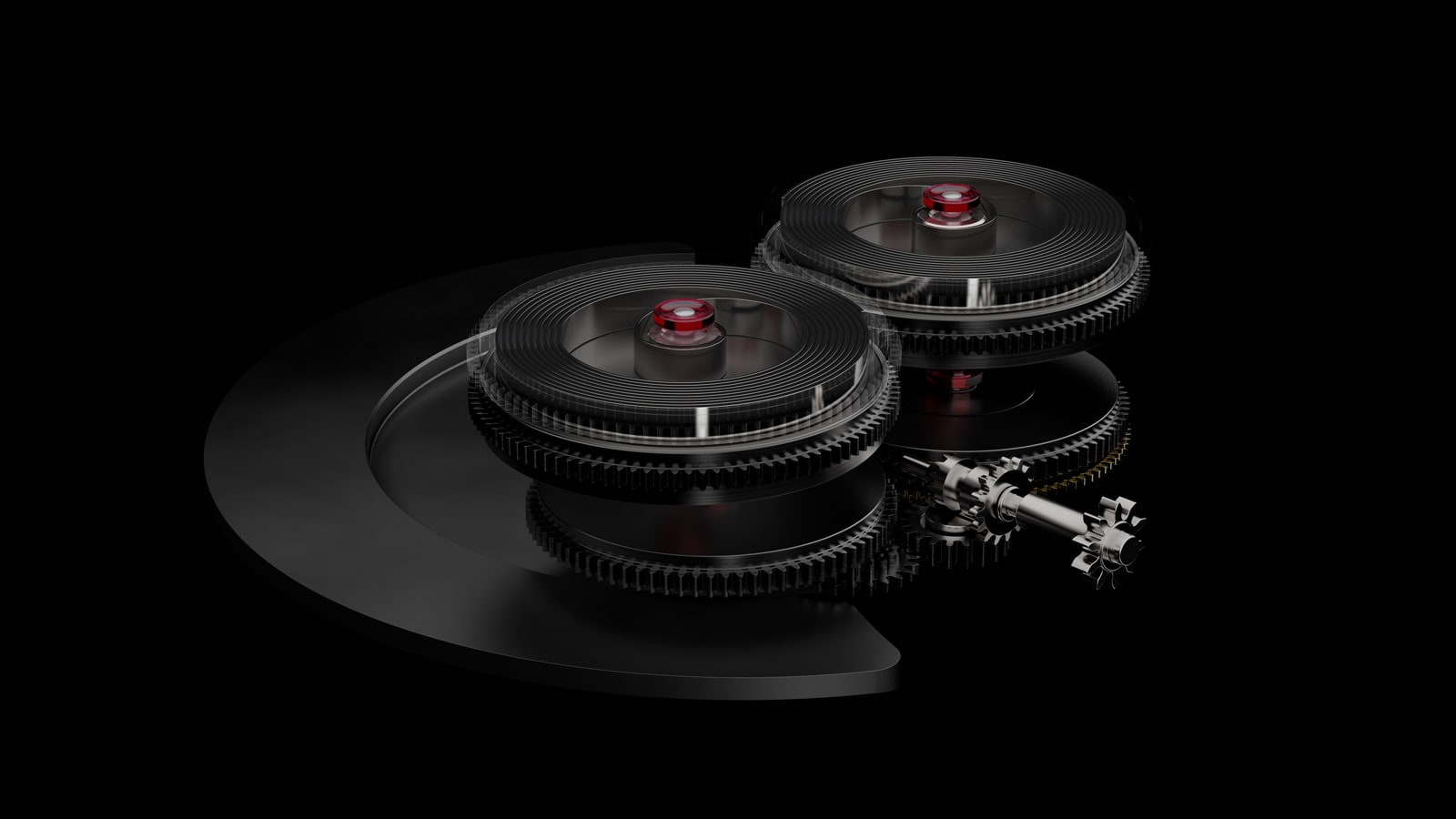
1. WINDING AS THE ENERGY SOURCE. The P.9010/EL automatic movement contains six mainspring barrels and 363 parts. The same oscillating weight that winds a normal automatic watch replenishes these springs; manual winding is possible too. Two barrels are reserved for the actual time display and provide about 72 hours of autonomy. Four further barrels form an independent energy reservoir for Power Light. Separating those functions is essential: illuminating the dial should not require consuming the movement's primary timekeeping reserve.
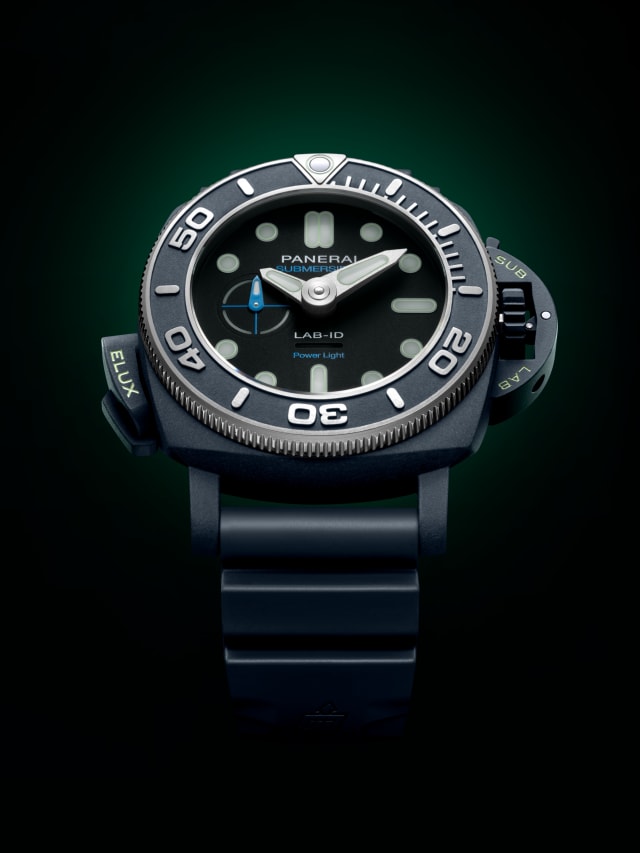
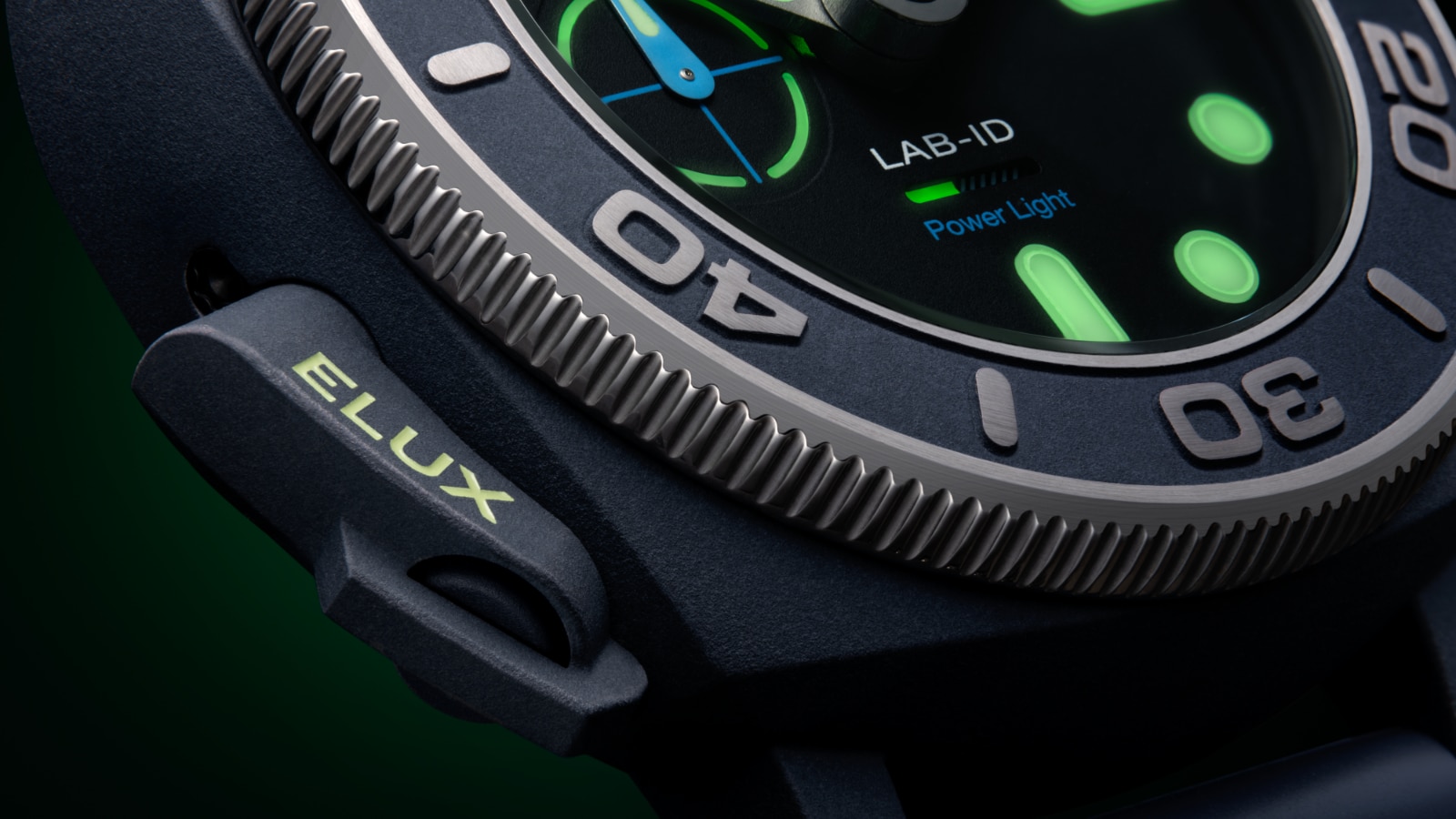
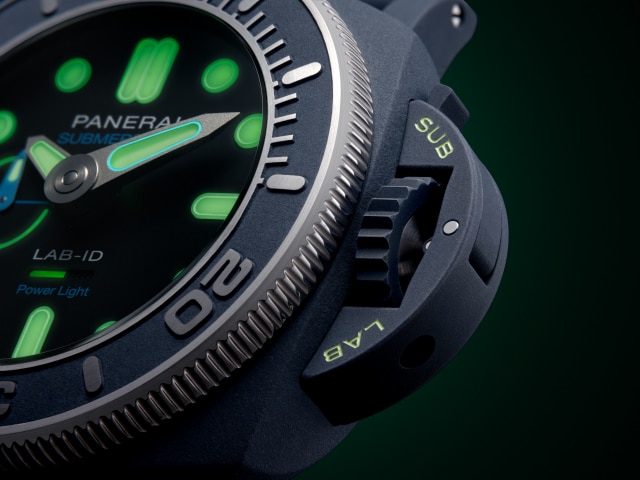
2. RELEASE THE LIGHTING RESERVE. An extra control sits near eight o'clock, opposite Panerai's familiar bridge-protected crown. Its own hinged guard protects the operating button against accidental shocks. Pressing it starts the lighting mechanism, allowing energy stored in the four lighting barrels to turn a miniature generator. The small horizontal gauge at six o'clock measures how much lighting power remains. At full reserve, Panerai specifies 30 minutes of LED operation, which can be used on demand rather than constantly.
3. TURN ROTATION INTO CURRENT. This is the inventive centre of the system. A purpose-built microgenerator measures roughly 8 by 2.3 millimetres and uses a rotor, magnets, coils and stator. Spring power spins the rotor at about 80 revolutions per second, producing a 240 Hz alternating electrical signal. As the magnetic field changes through the generator coils, mechanical movement becomes electrical energy. No disposable or rechargeable battery is required for the illumination. The watch is still mechanical timekeeping plus an electrical lighting subsystem—not a solar watch or smartwatch.
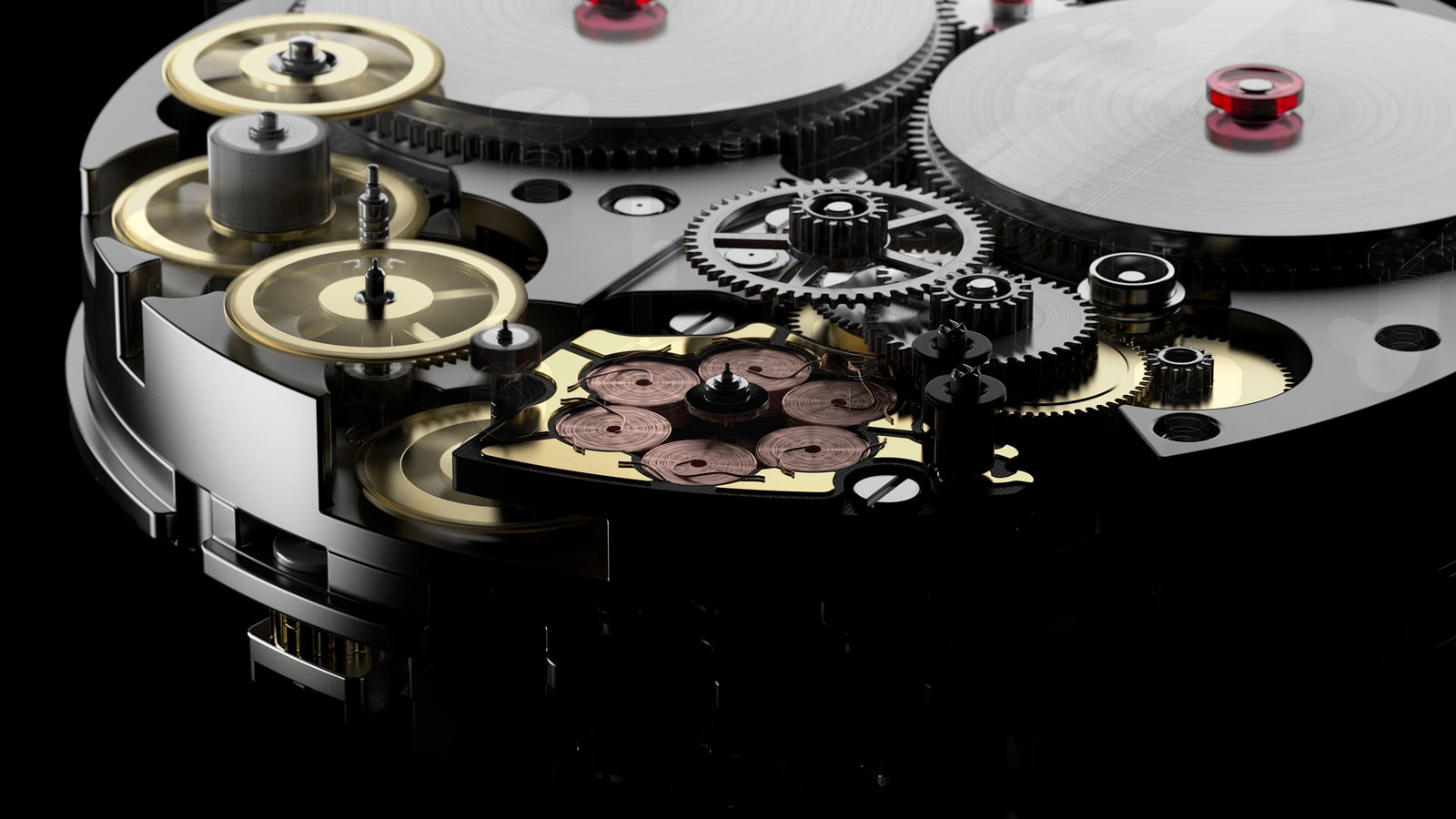
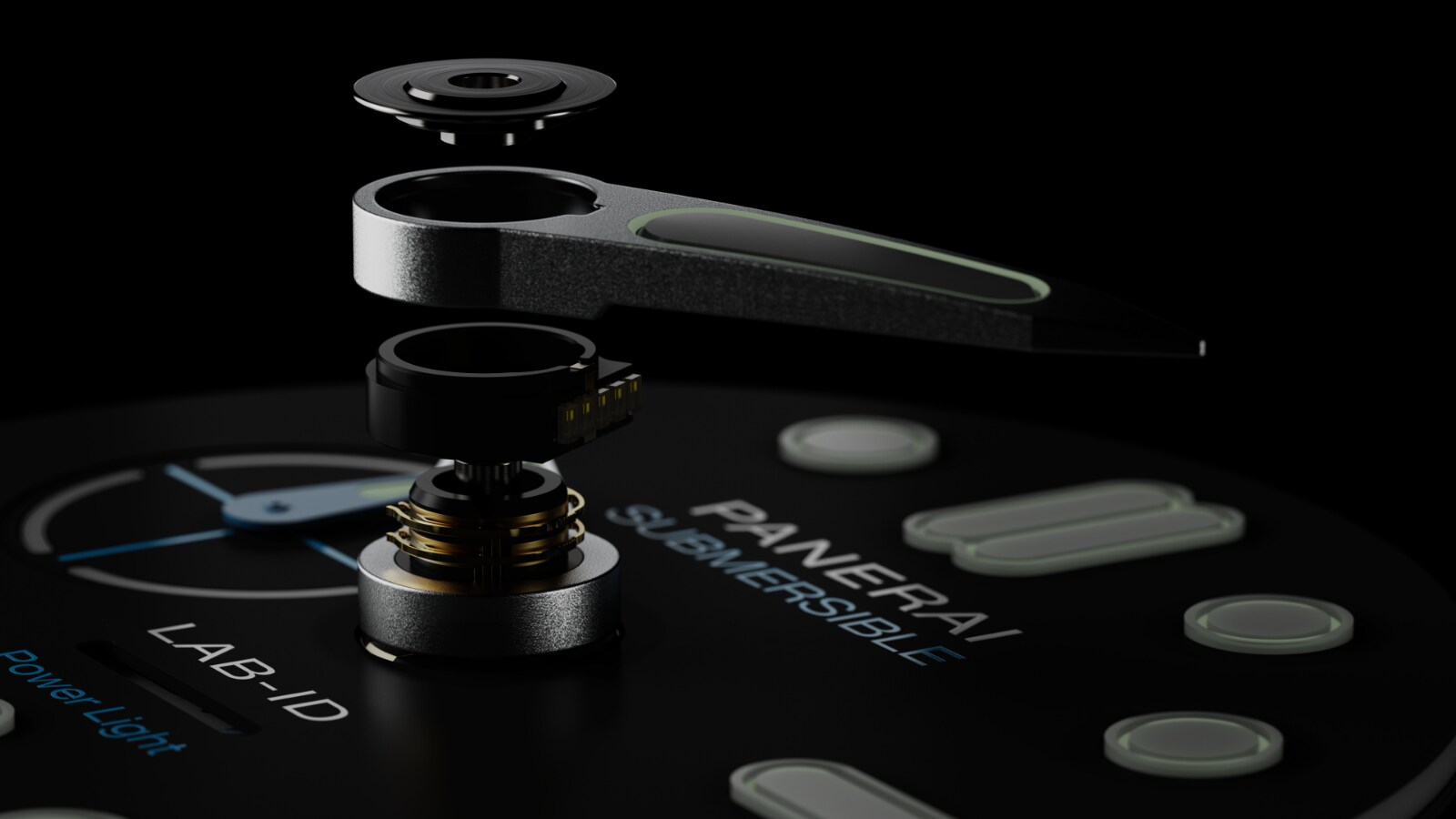
4. DISTRIBUTE LIGHT TO 160 MICRO-LEDS. Generating current is only the first hurdle. Panerai routes it into the dial hour markers, the hands and the single luminous index on the rotating timing bezel. Lighting fixed elements is relatively simple; lighting moving parts without impairing timekeeping is not. The company developed a high-precision sprung electrical contact and a three-dimensional circuit to conduct electricity from the stationary dial structure into the moving hands while limiting extra drag on their rotation.
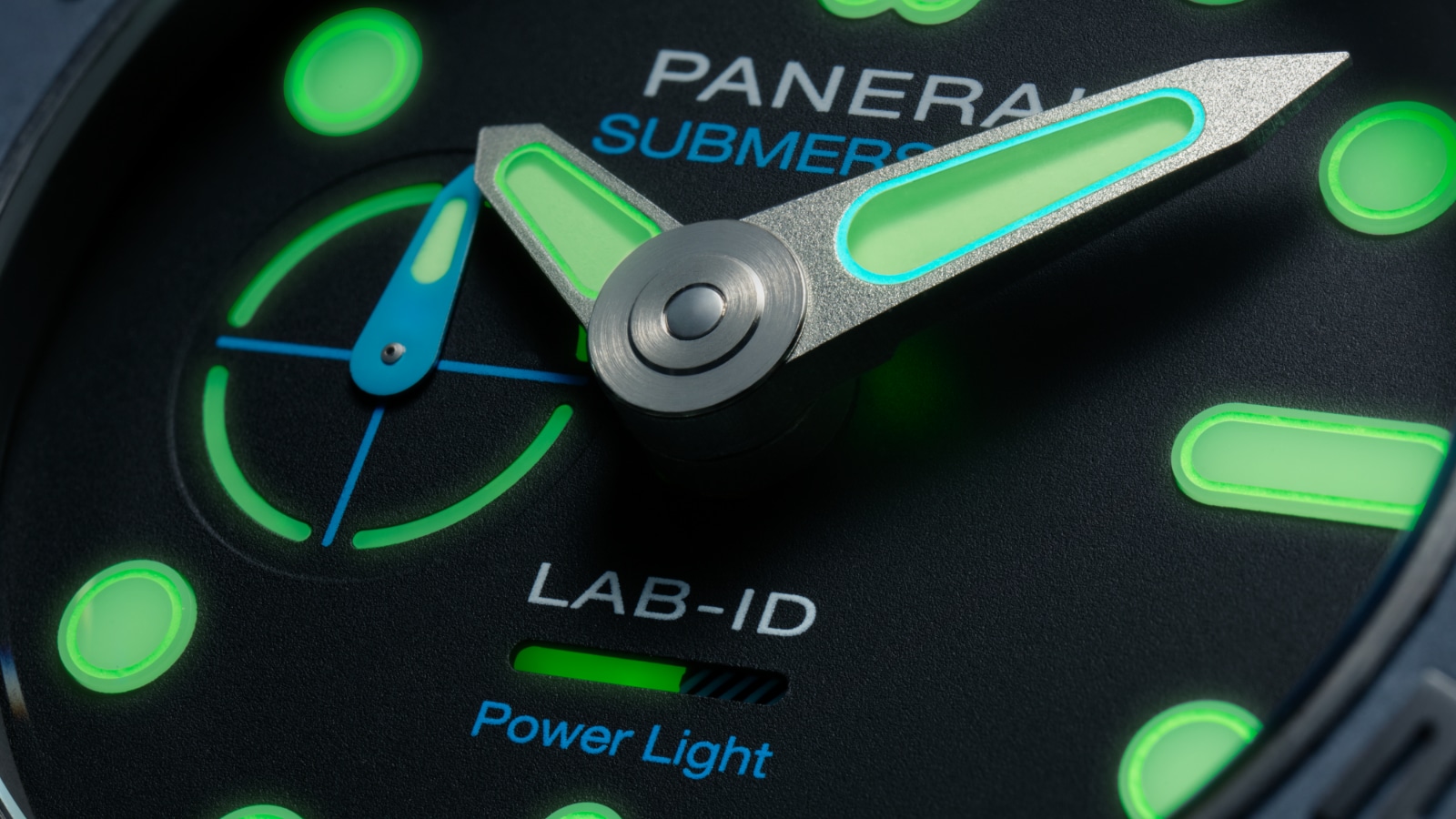
5. THE ROTATING BEZEL IS THE CLEVER PART. The timing bezel must turn independently, and its glowing reference marker must follow its position. Panerai places 60 micro-LEDs in a ring beneath the bezel and uses 12 magnetic switches so that only the appropriate section lights up beneath the bezel's marker. The arrangement keeps electrical wiring and sensitive components protected while maintaining the watch's 500-metre water-resistance rating. It is an unusually elaborate response to a seemingly simple design question: how can a moving dot shine when the watch supplies the power?
6. DESIGNING AROUND THE MECHANISM. The 49 mm case uses Panerai's blue Ti-Ceramitech, made by creating a ceramic layer on a titanium alloy through plasma electrolytic oxidation. Panerai claims the result is 44% lighter than steel and ten times more resistant to fracture than conventional ceramic, a brand-supplied comparison rather than an independently measured test here. The oversized case and protected pushers turn the machinery into an overt industrial design statement. Green and blue Super-LumiNova remain present for conventional passive luminescence when Power Light is inactive.
7. FROM 1966 ELUX PANELS TO A 2024 LAB EXPERIMENT. The name revisits Panerai's 1966 electroluminescent naval instrument panels, but the PAM01800's micro-LEDs and spring-fed microgenerator are contemporary inventions rather than the old panel technology miniaturised. The project took roughly eight years and involved multiple patents or patent applications. Limited to 150 pieces over three years, it exists as much to showcase experimentation as to solve a practical dive-watch problem. Panerai's technical documentation sets out the mechanism; contemporary reporting in Hodinkee, WIRED, Fratello and Time+Tide adds the independent watchmaking context.

THE DESIGN VERDICT. The Elux is exceptional precisely because its light is neither passive paint nor a hidden button cell. It asks watch designers to reconcile rotating hand geometry, watertight housing, energy efficiency and legibility in a single mechanical object. A 49 mm concept diver is unlikely to be the universal answer to reading time in darkness. But as an exercise in turning a nearly invisible engineering process into a deliberately visible experience, it is one of Panerai's most intriguing modern designs.
Explore the watches
Source & attribution
Related perspectives
YEMA Granvelle Renaissance CMM.29: architecture under sapphire ↗
YEMA Superman Bronze CMM.10 lets the diver age with its owner ↗
IWC's black-ceramic TOP GUN turns the pilot chronograph into a stealth instrument ↗