Culture · 2026-10-25
The Quartz Prejudice: Why Accuracy Deserves a Place in Watch Culture
Collectors celebrate mechanical imperfection, yet dismiss the precision that transformed watchmaking. From Grand Seiko’s 9F to Citizen’s Eco-Drive and the humble F-91W, quartz deserves a more thoughtful conversation.
By Chronolume digest · Original English summary · Based on Chronolume editorial; Grand Seiko; Citizen; Seiko Museum; Casio

Save this watch to revisit later.
What to know
Ask an enthusiast what makes a watch special and the answer often starts with a mechanical movement. The balance oscillates, the rotor spins, the mainspring slowly unwinds. Those details are worth loving. But somewhere along the way, appreciation hardened into a hierarchy: mechanical became serious, while quartz became merely convenient. It is a strange outcome for a hobby devoted to instruments built to measure time. Precision, durability and accessibility—the qualities that made the wristwatch useful—are sometimes treated as less romantic than a complicated machine that needs adjusting every few days.
Mechanical enthusiasm makes sense when we understand it as an affection for *how* something works. A traditional movement turns stored spring energy into regulated motion, and its craftsmanship is often visible through an exhibition back. A quartz watch answers a different question: how can an oscillator, electronics and a motor make timekeeping more precise, robust and practical? Neither question is inherently superior. The conflict begins when one engineering philosophy is mistaken for a universal measure of taste.
The history makes the irony sharper. Seiko’s commercially pioneering Quartz Astron arrived in 1969, when electronic timekeeping was an ambitious technical achievement rather than the cheap alternative it later became. Quartz technology radically expanded accurate ownership. That democratisation inevitably reduced the status of ordinary mechanical timekeeping as a technical necessity, and helped mechanical watches find a second life as expressive objects. The romance collectors prize today was partly created by the very revolution they sometimes dismiss.
Consider Grand Seiko’s 9F. Introduced in 1993, the calibre embodies an almost stubborn determination to treat quartz with watchmaker-level seriousness. Its twin-pulse motor drives substantial hands; its instant date change is engineered for crispness; its protective construction and temperature compensation address long-term precision. Grand Seiko specifies around ±10 seconds **per year** for its standard 9F calibres. These are not the choices of a company seeking the cheapest possible way to move two hands. They reflect an aesthetic of precision in which the invisible mechanics still matter.
The 9F is also a useful reminder that the word *craftsmanship* should not be reserved for springs and gear trains. Grand Seiko describes its 9F assembly as hand-executed work, requiring intricate hand alignment and adjustment. The owner may never see the precision of the electronics or the effort involved in preventing a seconds hand from trembling. That hidden quality is part of the argument. A finely made quartz watch asks to be appreciated not because it imitates a mechanical watch, but because it takes its own brief exceptionally seriously.
Citizen makes a different case with light. The brand introduced its first analogue light-powered watch in 1976, and its 2026 Eco-Drive Photon turns the technology into a design story. The layered dial manages to interact with light visually while allowing light to reach the cell below. Its E036 movement is rated for up to 365 days on a full charge. Here the movement and the appearance of the watch are not separate departments: the need to harvest light becomes a constraint that encourages inventive materials, structure and colour.

That does not make solar quartz maintenance-free forever. Rechargeable cells age, seals wear and cases still require care. Nor should an impressive laboratory accuracy figure excuse an uncomfortable bracelet or a poorly designed dial. What matters is the complete object. The point is simply that not needing to wind a watch, reset it after a weekend or routinely replace a disposable battery can be a positive design decision rather than a confession of diminished enthusiasm.
At the other end of the cultural spectrum sits the Casio F-91W. Its enduring appeal is not luxury finishing, scarcity or an expensive calibre. It is the extraordinary discipline of a small object that is light, legible, affordable and immediately understandable. An inexpensive digital watch and a meticulously finished high-accuracy quartz Grand Seiko are not equivalents, but they demonstrate the range of things electronic timekeeping can achieve. One offers functional clarity; the other pursues refinement. Both can be collected for reasons more interesting than resale value.

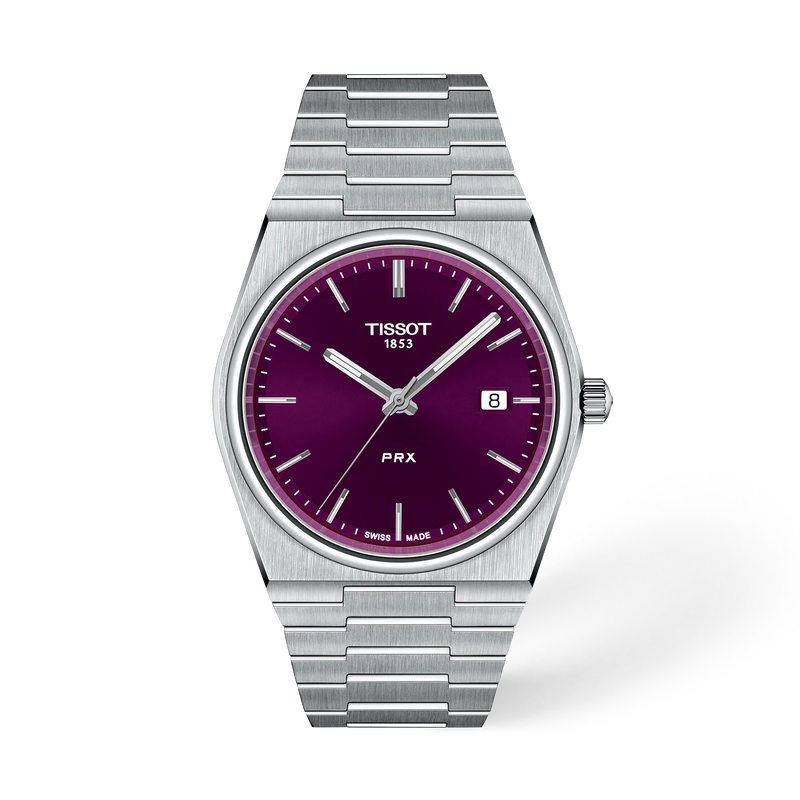
Design complicates the old prejudice still further. Think about the quartz Tissot PRX: its slim profile, bracelet geometry and recognisable silhouette do not stop mattering because a stepper motor drives the hands. A mechanical movement might change the thickness, cost or servicing proposition, but it does not automatically improve every interaction the wearer has with the watch. The case, finishing, typography, proportions and emotional response can still be the main event.
The choice also changes with the owner’s life. A watch worn through commuting, swimming, travel and long stretches in a drawer might be better served by accurate, low-intervention timekeeping. Another owner may treasure the daily ritual of winding and the sound of a rotor. Collecting becomes richer when those preferences can coexist. The important distinction is between *I enjoy mechanical watches more* and *quartz watches are inherently unworthy*. The first describes a taste; the second closes off an entire field of watchmaking.
Quartz does not need to defeat the mechanical movement to deserve respect. It only needs to be judged on what it sets out to accomplish: reliable timekeeping, thoughtful engineering, convincing design and a good ownership experience. The more interesting future for collecting is not a single winning technology, but a broader vocabulary for appreciating watches. If we can admire a beautifully finished escapement, we can also admire a hand-assembled 9F, a dial that harvests light and an almost perfect little Casio. Precision is not the enemy of romance; it is another form of it.
Explore the watches
Tissot PRX Quartz T137.410.11.401.00 · PRX Quartz T137.410.11.401.00 ↗
Share this article
Source & attribution
Chronolume editorial; Grand Seiko; Citizen; Seiko Museum; Casio · Published 2026-10-25 ↗