Design · 2026-11-04
PS Horology Tsuba 1720: when the hands must follow a new set of rules
The Tsuba 1720 moves the hour scale outside the minutes, then redesigns its hands to make that reversal readable. This is historical inspiration with a practical design consequence.
Chronolume · Source-based analysis · Research checked 2026-11-04
Save this watch to revisit later.
Official page retrieved directly and text extracted; exact-model photos downloaded and visually inspected. Launch reporting corroborates specifications and supplies attributed commercial details. No hands-on testing or archival claims beyond attributed maker account.
The analysis
The most revealing feature of PS Horology’s new Tsuba 1720 is a small extension on the hour hand. It is easy to overlook beside the gold dial and scalloped steel case, yet it explains the watch’s central design problem. Put the hours outside the minutes and the traditional relationship between a short hour hand and a longer minute hand no longer maps neatly onto the dial.
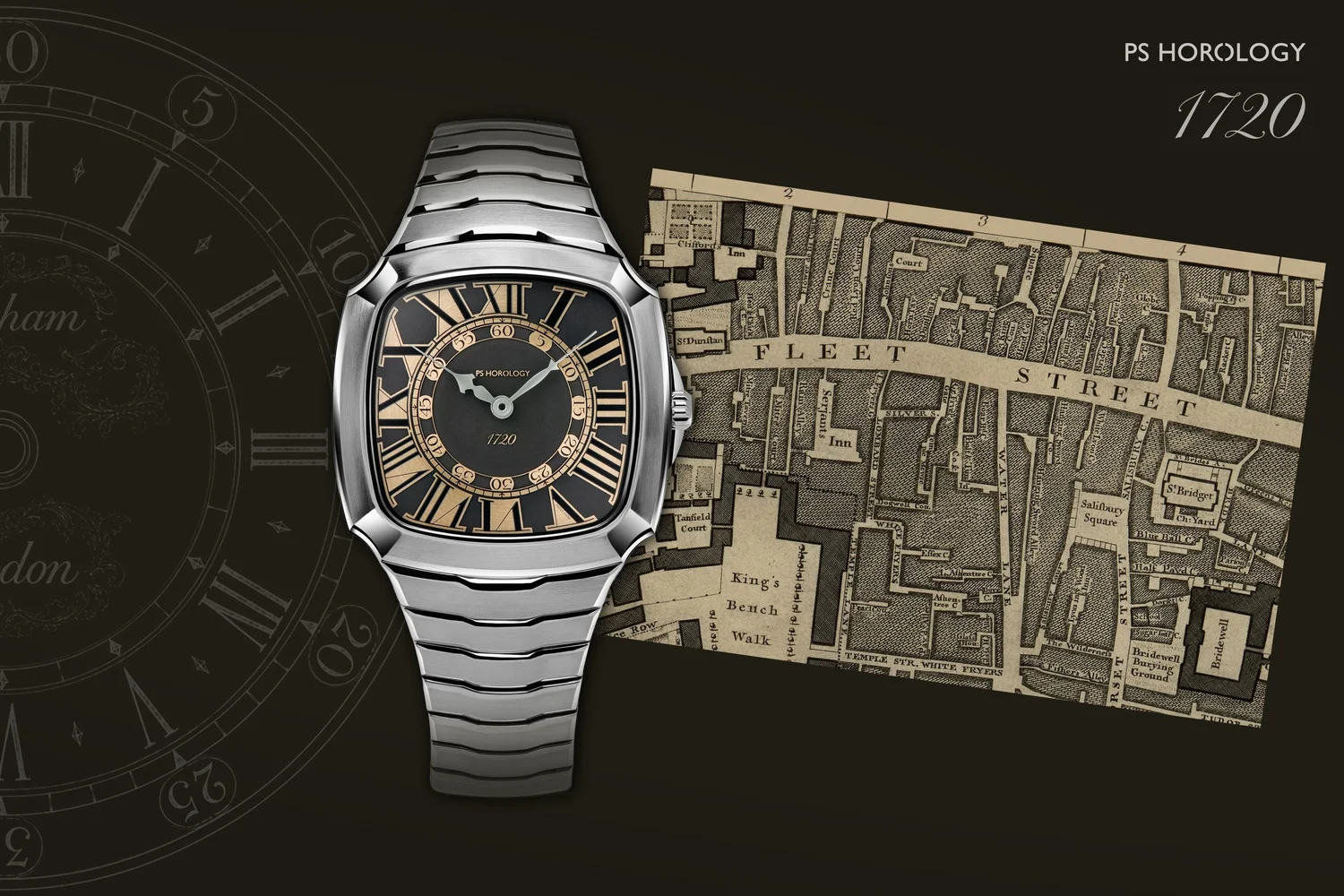
PS Horology identifies a George Graham pocket watch from 1720 as the starting point. Its presentation traces the project to the double chapter ring, Roman numerals and beetle-and-poker hands of the historic object. Peter Speake and Farhana Safa adapted that vocabulary to the Tsuba’s square geometry, reversing the chapter rings so that hours occupy the outer scale and minutes sit within.
A conventional short hour hand would now aim towards the wrong scale. The solution preserves the broad, decorative beetle shape but adds a slender needle reaching to the outer hours. The minute hand receives a shelf-like feature that follows the inner minute ring. The hands carry two kinds of information: an inherited silhouette, and a more specific cue about where to read their values.
This is a useful test for historical watch design. Borrowing a numeral style establishes an atmosphere; changing the relationship between a hand and its scale changes how the object communicates. Here the adaptation creates a problem and then makes the solution visible. The needle is not an incidental flourish. It is part of the explanation.
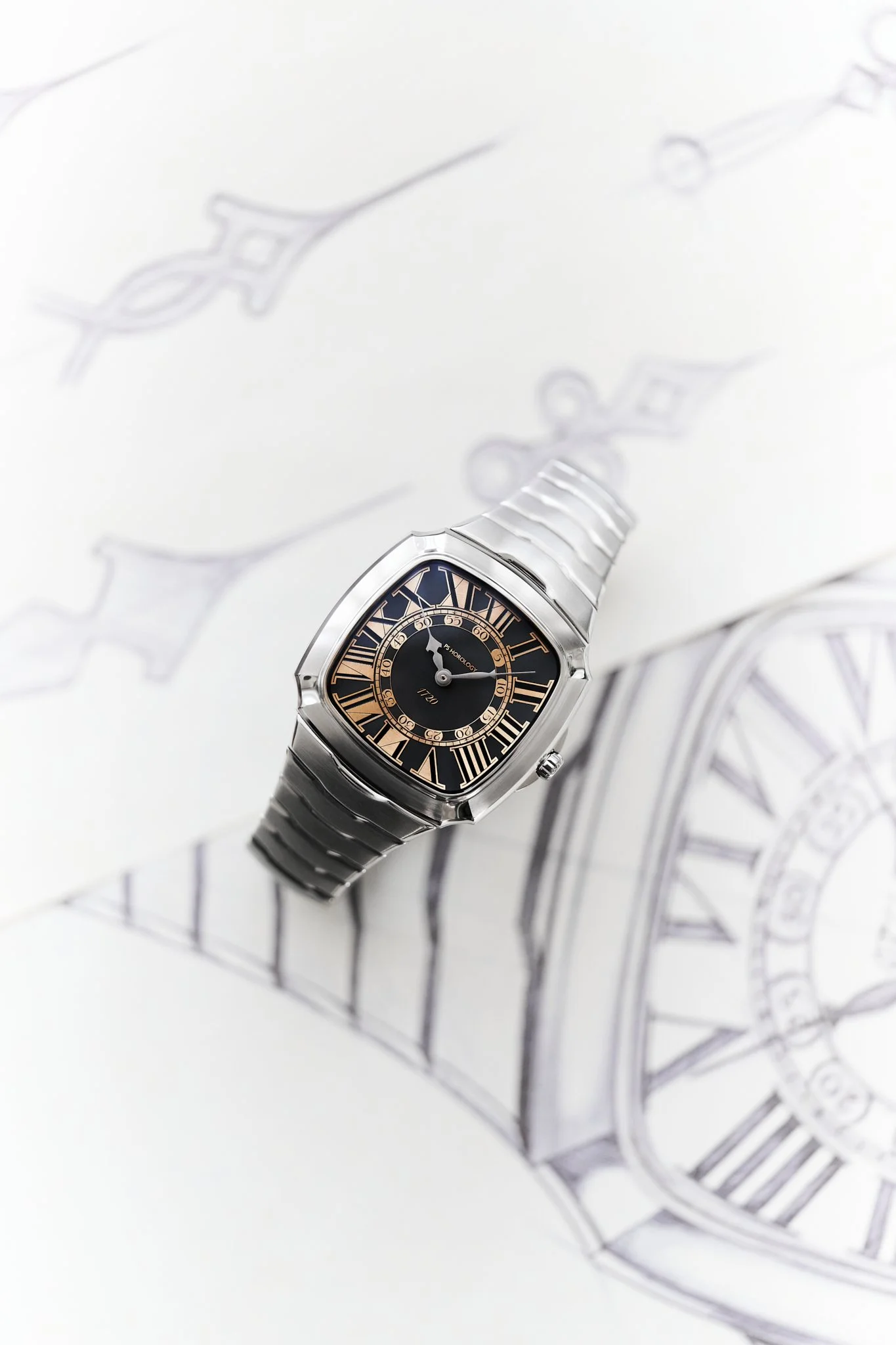
The official photographs show a dark central field separated from a densely marked perimeter. That division gives the decorative hands room to remain recognisable. At the same time, the two scales demand attention: a viewer expecting the minute track at the outer edge must adjust. The maker describes improved processing fluency from the revised hands, but photographs cannot establish how quickly different wearers will learn the arrangement.
The 18-carat gold dial is hand finished, with Roman numerals lacquered by hand. PS Horology describes laser engraving, ceramic lacquering and polishing as contemporary methods for obtaining the desired depth and contrast. The distinction is worth preserving: the watch interprets a historic champlevé effect through its stated modern processes. Its appearance should not silently turn into a claim that the modern dial uses the original enamel technique.
The steel case measures 38.3 mm from three to nine o’clock excluding the crown, and 8.91 mm thick. An integrated bracelet extends its scalloped form. Inside is Vaucher’s automatic calibre 5401 with a micro-rotor and a stated 48-hour reserve. These are manufacturer specifications, not independent measurements. The 30-metre water-resistance rating also deserves to remain visible beside the sporting bracelet-and-steel appearance.
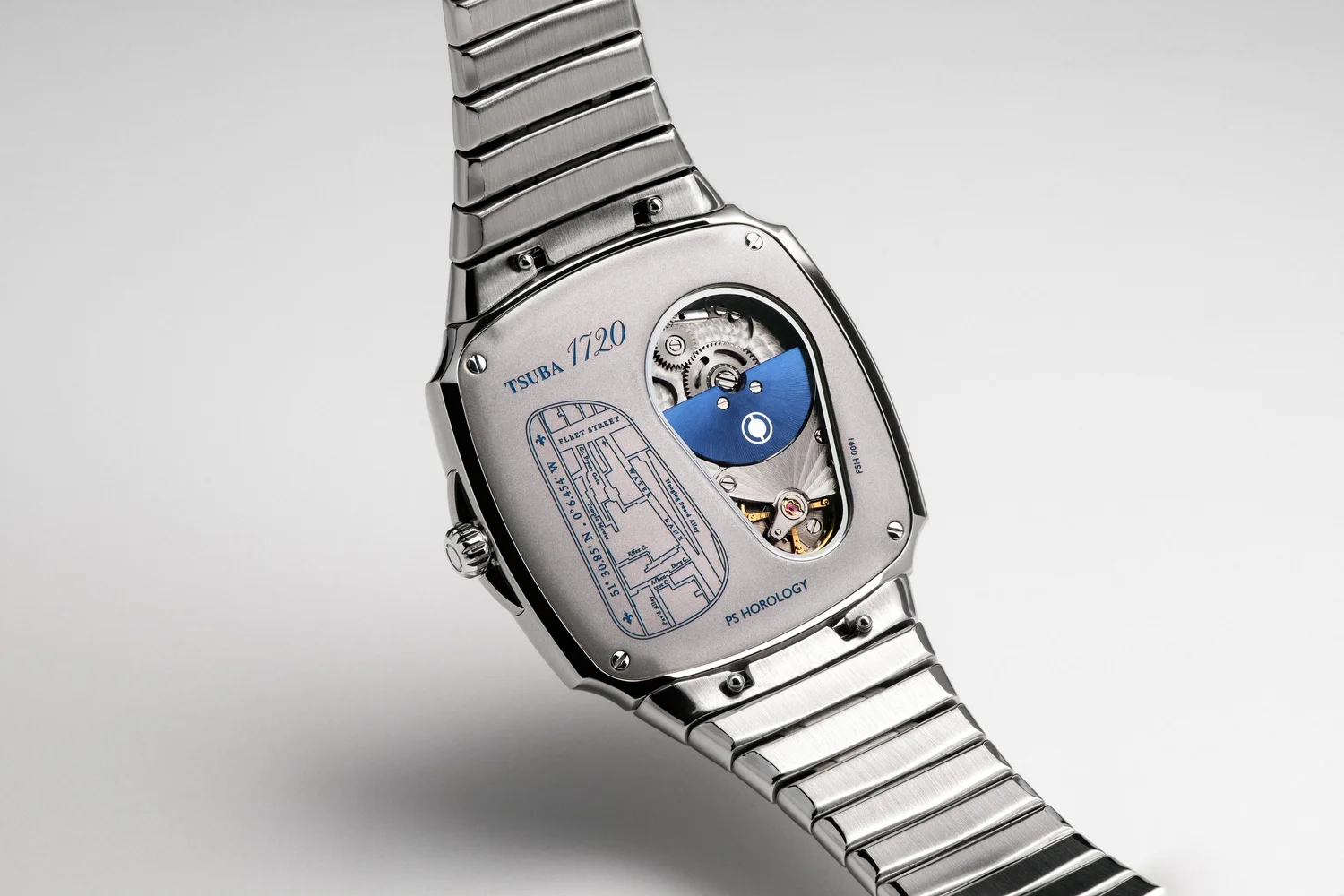
The reverse adds an engraved map and coordinates associated with Graham’s Fleet Street workshop, beside the movement window. This changes the role of historical reference again: on the front it shapes the reading system; on the back it identifies a place. The distinction makes the front the more consequential part of the story. A map can commemorate a location without affecting use. Reversing the scales cannot.
PS Horology lists an edition of 28 watches. MONOCHROME reports CHF 26,000 before taxes and shipping, with deliveries expected in February 2027; those commercial details are reporting, not a confirmed Belgian offer. The design question survives either way: can historic forms remain recognisable while being altered to do a different job? The Tsuba 1720 offers a concrete answer in the structure of its hands.
Research note — 4 November 2026. Source-based visual analysis of the official model presentation and exact-model photographs, corroborated with MONOCHROME. No hands-on access, legibility testing or comfort assessment is claimed. The maker’s page was retrieved directly when the search reader could not open it.
At a glance
| Model | Tsuba 1720 |
|---|---|
| Case | 38.3 × 8.91 mm steel |
| Movement | Vaucher 5401 automatic micro-rotor |
| PowerReserve | 48 hours |
| WaterResistance | 30 m |
| Edition | 28 pieces |
Share this article
Sources & research
Research checked 2026-11-04. Specifications are manufacturer figures; interpretation and calculations are identified in the text.
- https://ps-horology.com/tsuba-1720
- https://monochrome-watches.com/ps-horology-tsuba-1720-integrated-bracelet-watch-inspired-george-graham-pocket-watch-introducing-price/