Design & Culture
A place on the wrist: where does a watch really come from?
Atelier Wen, AWAKE and Auret reveal how workshops, shared craft and personal symbols give a watch a sense of place beyond the country on its dial.
- Release date
- Unknown
- Source published
- 2026-11-10
- Added to Chronolume
- 2026-11-10
- Article published
- 2026-11-10
- Research checked
- 2026-11-10
Chronolume · Source-based analysis · Research checked 2026-11-10
Save this watch to revisit later.
Cultural interpretation based on three existing Chronolume articles, the makers' official pages checked on 10 November 2026, and visual inspection of their three existing self-hosted images. Manufacturing and craft statements are attributed to the brands. No workshop visits, interviews, hands-on testing or independent supply-chain audit; the Auret front photograph does not document the rotor.
The analysis
Ask where a watch comes from and the answer often begins with a country. Look more closely and it becomes a story about people: someone cutting a dial, a workshop layering lacquer, a designer choosing a symbol that matters to them. A national label can be useful, but it cannot tell that whole story. Three watches already in the Chronolume archive suggest a more rewarding way to read origin: follow the work, then ask how the finished object expresses it.
Atelier Wen: a place becomes a workshop
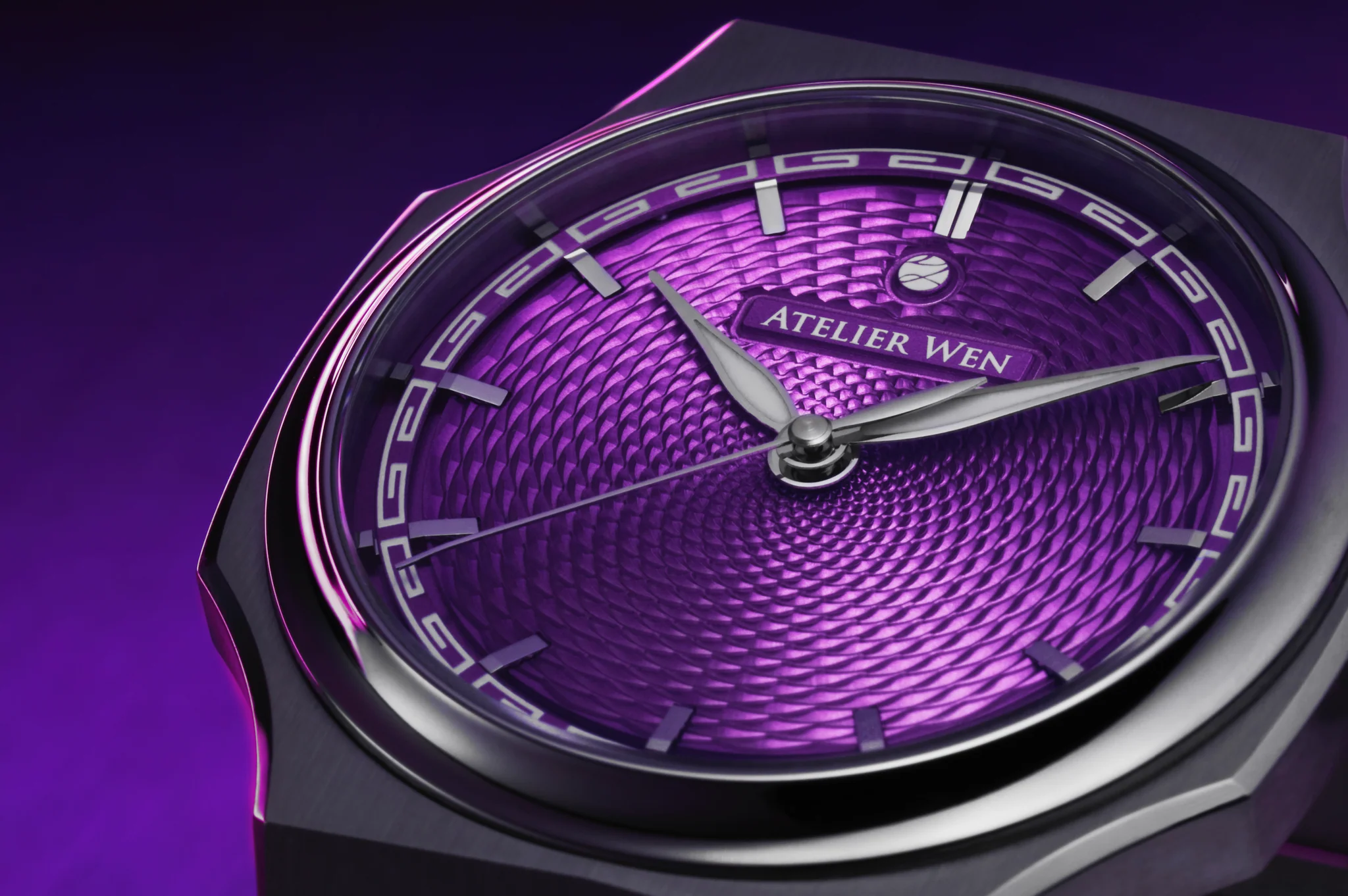
The purple dial of Atelier Wen’s Perception Mù looks almost woven in its close-up photograph. Overlapping cuts catch the light in small, ordered steps. Atelier Wen identifies the pattern as hand-turned guilloché, produced on rose engines in Master Cheng’s atelier. The purple comes from a PVD treatment. These are specific processes attached to a particular workshop, giving the surface a history beyond its colour.
That specificity changes the conversation about Chinese watchmaking. A collector can discuss the pattern, the machinery and the maker instead of treating a country as a shortcut for quality. Nor does the dial need to stand for an entire national tradition. Its value as a cultural object lies in making one practice visible. Knowing who worked on it gives the eye somewhere to return: the pattern becomes evidence of a decision and a skill.
AWAKE: several places, one object
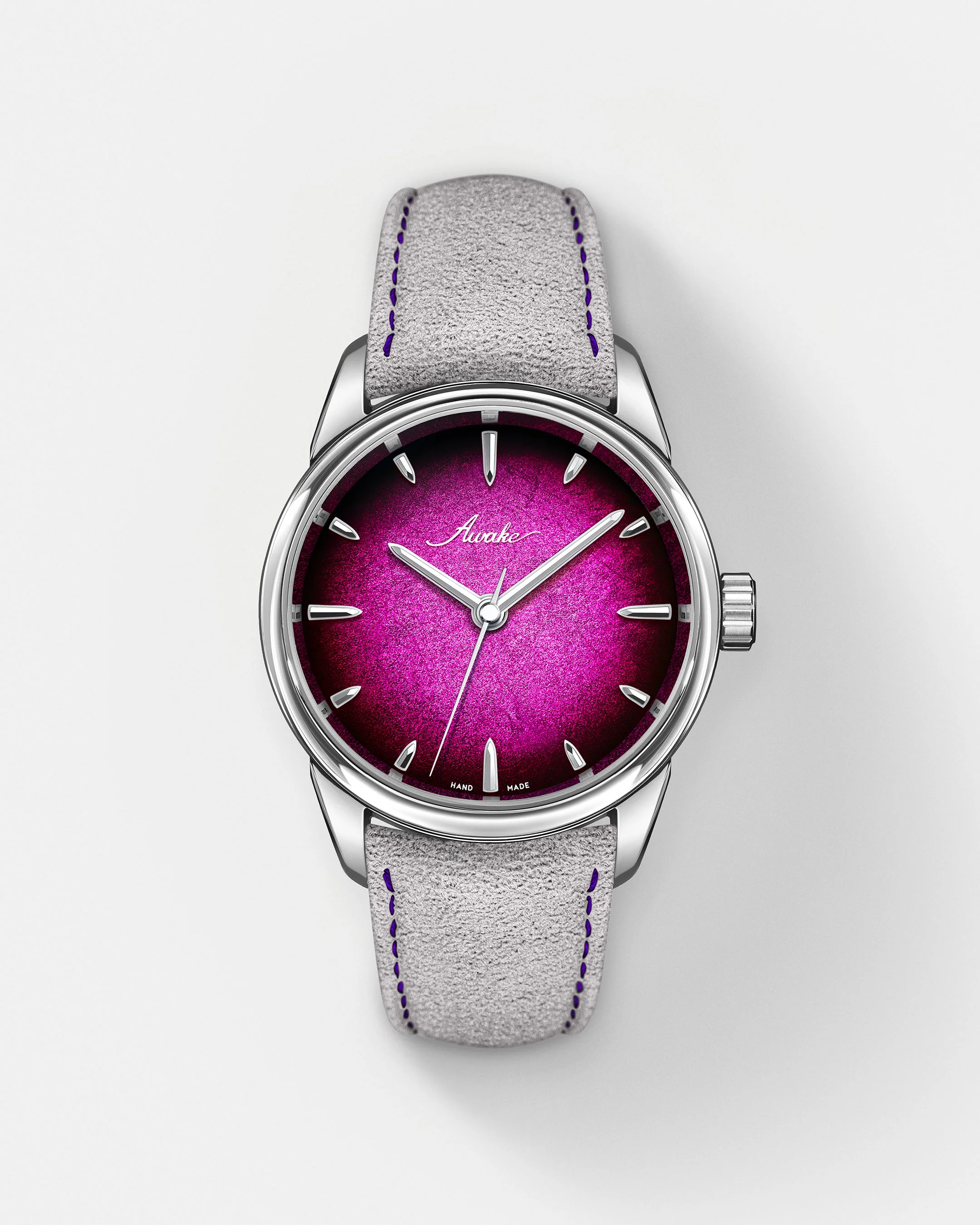
AWAKE’s Silver Leaf Vignette family offers a different kind of origin story. On the Purple Viola product page, the brand describes a dial made with Vietnamese Sơn Mài lacquer and silver leaf, developed with artisans in Hanoi. It also identifies a Swiss La Joux-Perret movement and a strap handcrafted in France. The watch brings several kinds of work together within a single, recognisable design.
The photograph reveals the contrast with Atelier Wen. Here, a granular shimmer sits beneath the purple colour, while a darkening perimeter draws attention towards the centre. According to AWAKE, that surface comes from silver leaf beneath successive lacquer layers. Calling the watch simply French or Swiss would leave much of its character unexplained. For the collector, the more interesting map follows the dial, movement and strap separately, and gives each contribution its place.
Auret: belonging through a chosen symbol
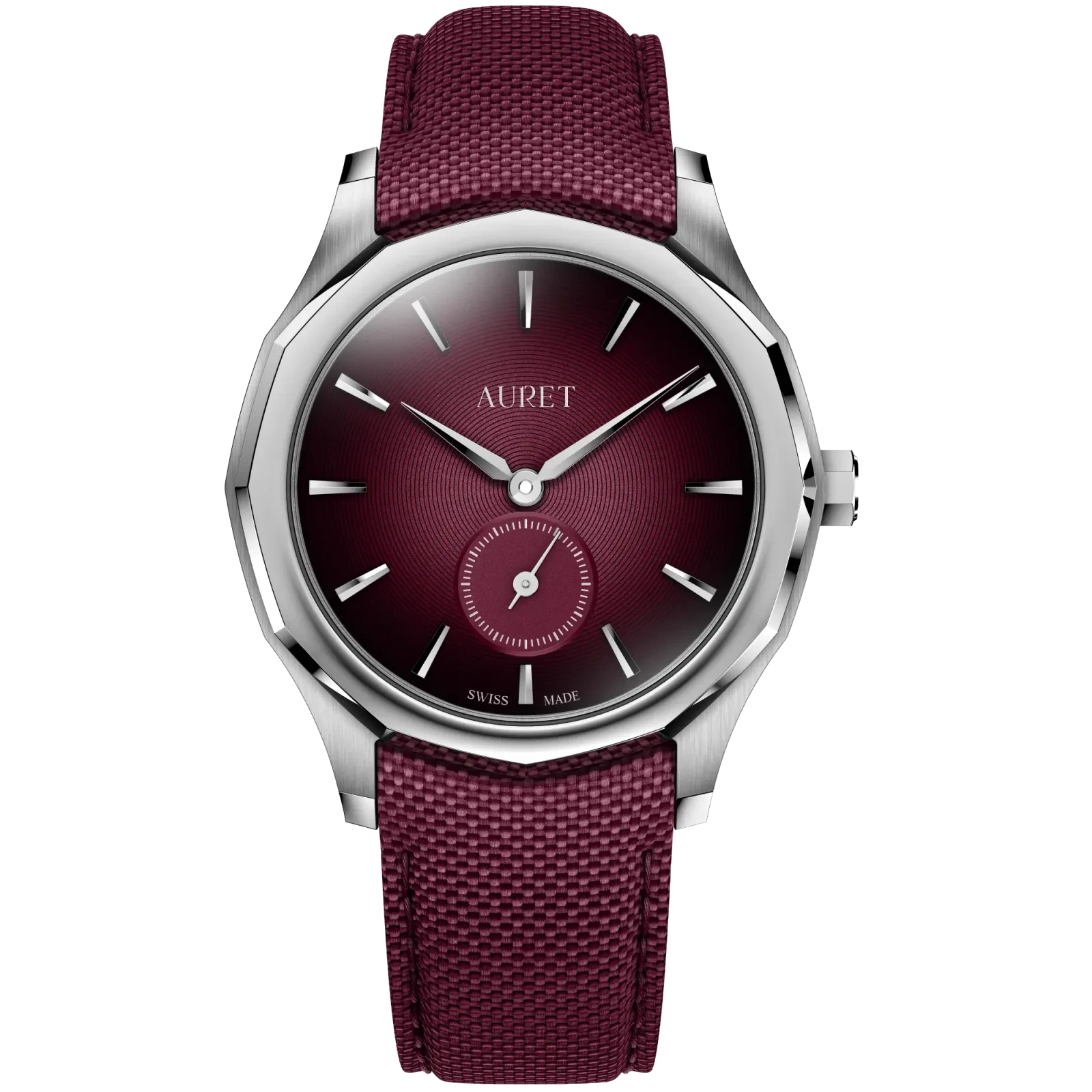
The Auret Mederi family adds another distinction. Its official specifications identify a Sellita SW260 D4 movement and describe a customised brass rotor inspired by the Colombian coffee flower. Auret also states that its watches ship from Switzerland. The Colombian reference therefore needs to be understood as a deliberate part of the design; it is not evidence that every component was manufactured in Colombia.
A symbol can still matter. It gives an otherwise familiar mechanical component a personal association, especially when it lives on the back of the watch, where the wearer chooses to look. But its meaning should remain precise. A coffee-flower rotor represents this brand’s connection to Colombia; it cannot summarise Colombian culture. The strongest interpretation leaves room for that modest scale: a particular object, carrying a particular relationship.
Follow the work before the flag
These three examples give collectors a useful set of questions. Which part carries the cultural connection? Is it a documented technique, a named workshop or a visual reference? What can the maker explain about it? The answers need not form a complete supply-chain audit to be worthwhile. They should, however, distinguish what is known from what a photograph or a brand story merely invites us to imagine.
There is pleasure in looking this way. Two purple dials become an opportunity to notice how different kinds of labour produce different surfaces. A decorated rotor becomes a reason to ask why a maker chose that form. The collection gains connections between objects without requiring another purchase.
A watch can belong to several places at once. Giving those places and their makers accurate credit makes the object more interesting to live with. The next time a dial catches your attention, linger over the description of how it was made. You may find that the most memorable name belongs to someone whose name is not printed on the watch.
Share this article
Sources & research
Research checked 2026-11-10. Specifications are manufacturer figures; interpretation and calculations are identified in the text.
- https://chronolume.page/article/atelier-wen-perception-mu-millesime-2024-profile
- https://chronolume.page/article/awake-son-mai-silver-leaf-vignette-family-2026
- https://chronolume.page/article/auret-mederi-origin-horizon-permanence-2026
- https://atelierwen.com/blogs/journal/perception-mu-millesime-2024
- https://awakewatches.com/products/son-mai-silver-leaf-purple-viola
- https://auret.co/es/coleccion/mederi/origin