
Design · 2026-10-15
Why the Royal Oak Is an Octagon: The One-Night Design That Changed Watchmaking
From Gérald Genta's diver’s-helmet memory to eight fixed hexagonal screws, the 1972 Royal Oak’s shape was born from engineering, material and light—not just a geometric sketch. We trace the 5402 and compare four 2026 descendants.
Save this watch to revisit later.
Share this article
By Chronolume digest · Original English summary · Based on Chronolume original design essay; Audemars Piguet Heritage/AP Chronicles, official 5402 archive, case and dial histories, and February 2026 Royal Oak introductions
What to know
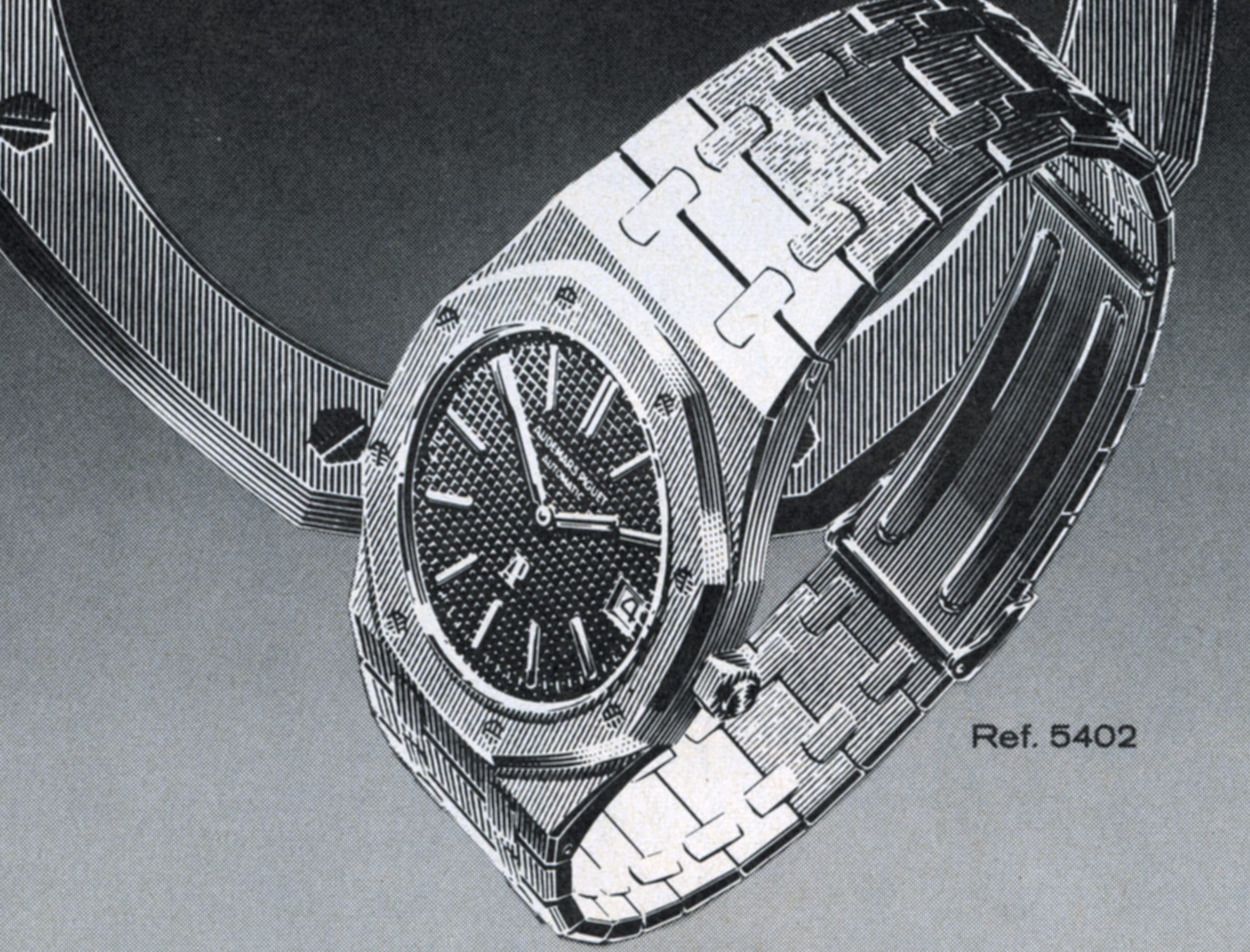
THE MOST FAMOUS OCTAGON IN WATCHMAKING. Imagine being asked to design an unprecedented steel sports watch in the afternoon and deliver the drawing the following morning. No sketches to iterate over for months, no focus groups, no refined mood board. In April 1970, Audemars Piguet's managing director Georges Golay gave independent designer Gérald Genta a version of exactly that brief. The resulting drawing would become the Royal Oak 5402, launched on 15 April 1972. Fifty-four years later, its octagonal bezel and integral bracelet are still instantly legible from across a room. But the important question is not simply who drew the octagon. It is why an octagon made sense in the first place.
THE OVERNIGHT SKETCH, NOT THE OVERNIGHT WATCH. AP's historical archives place Golay's request on 10 April 1970 and describe Genta presenting the idea at the Basel fair the next morning. According to Genta's later recollection, he thought the assignment concerned extraordinary water resistance, rather than only an unprecedented sports watch. That misunderstanding prompted a childhood memory: a diver being sealed into a heavy helmet, with bolts, a rubber seal and an enclosing shell. The concept was created quickly, but the watch itself needed two years of prototyping, engineering and specialist manufacture before it could be launched. Legend compresses the story into one night; the archives restore the hard work behind it.
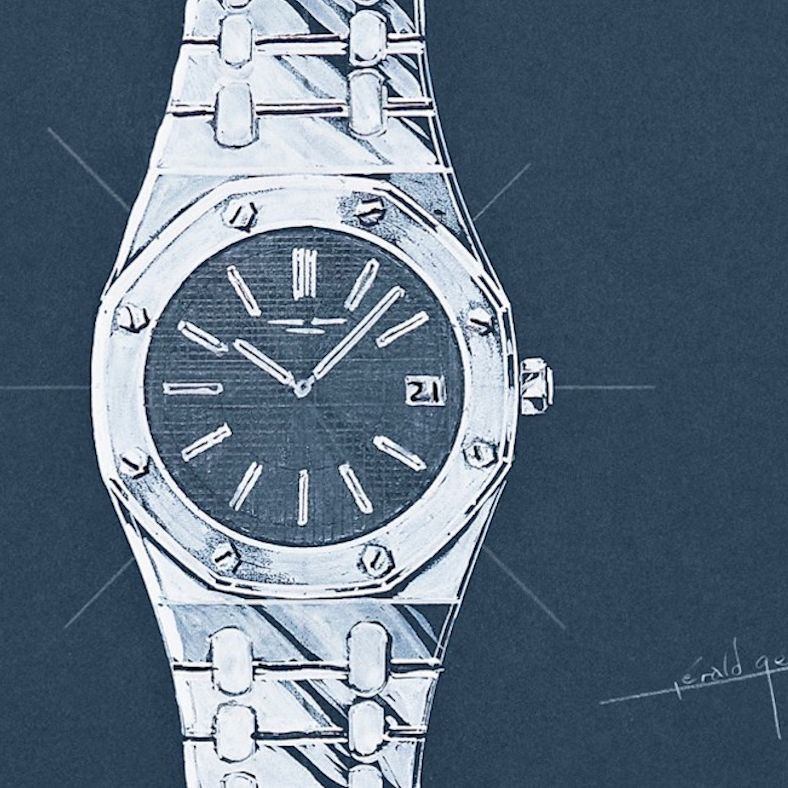
FROM DIVING HELMET TO DESIGN SYSTEM. The diver's helmet is best understood as the starting image, not a literal template copied onto a dial. A diving helmet suggested a shell that protects something precious, hardware left visible rather than hidden, and a watertight joint between components. Those ideas translated into a one-piece steel case middle and back, a wide separate bezel, a large gasket and a fastening system that compressed the assembly together. Genta also drew a tapering bracelet that continued directly from the watch head. A timepiece stopped being a circle attached to a strap and began to look like one designed object.
WHY EIGHT SIDES? The Royal Oak is not merely a neat regular octagon placed on top of a round watch. AP's case research describes a circular inner opening, a rounded eight-sided perimeter and a tonneau-shaped foundation. Eight fasteners needed space around the periphery of the movement and seal; sculpting the outer circle into eight faces removed visual mass between them. Wide polished bevels, about 40 degrees on the original bezel, dissolved the bulk with sharp reflections. AP's historians also observe that the flat sides harmonise with the broad case flanks and align the upper and lower fasteners with the bracelet. Function supplied the constraints; a jeweller's sense of proportion turned them into a signature.
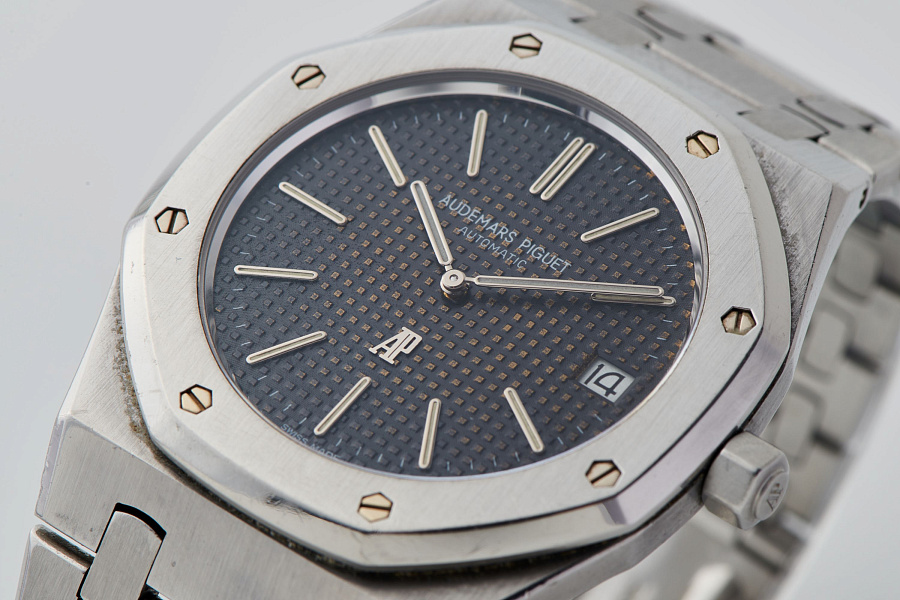
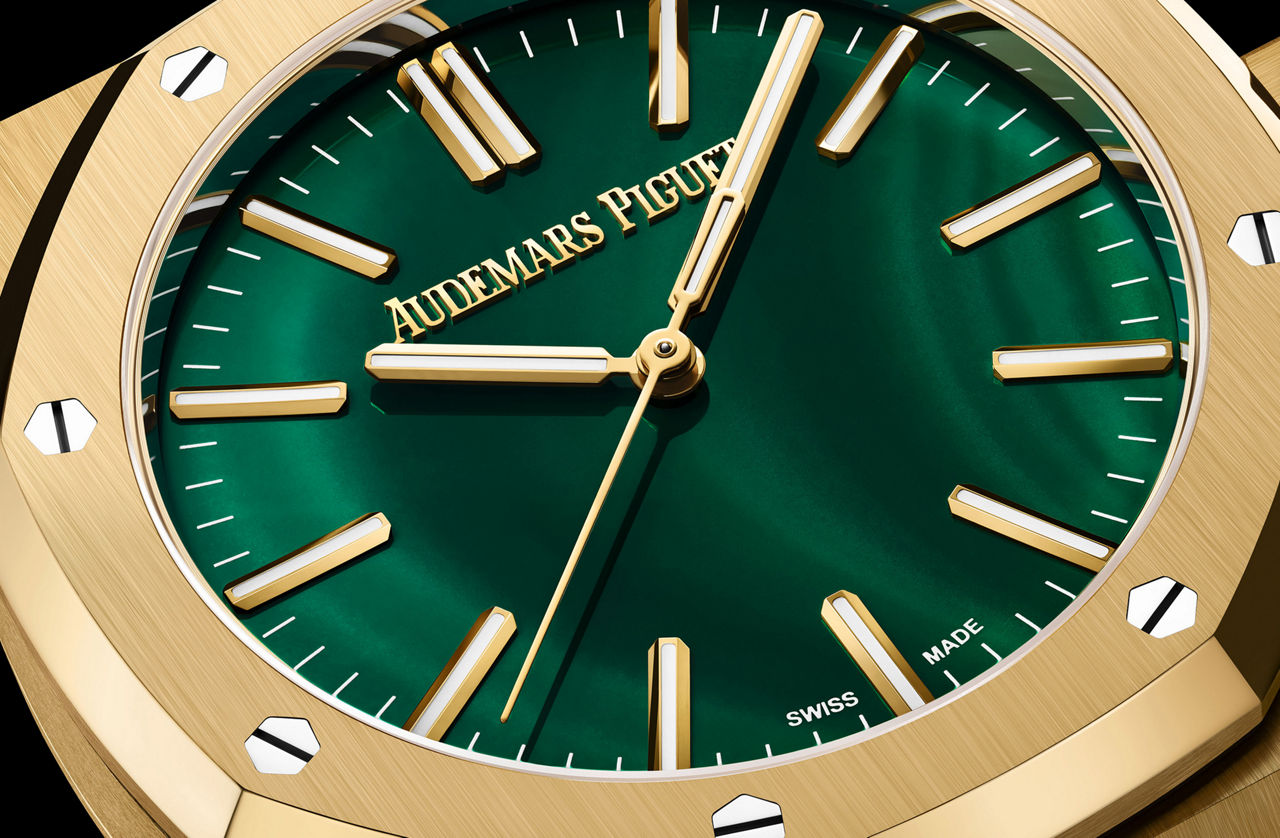
THE SCREWS THAT DO NOT TURN. Those eight exposed heads look like ordinary screws, yet each hexagonal head is trapped against rotation in a matching recess in the bezel. The assembly was secured by nuts accessed from the underside, compressing an oversized seal around the movement. This was real engineering rather than decoration, but it also broke one of luxury watchmaking's old habits: hiding the fasteners. The visible mechanism became the visual motif. Its carefully oriented slots now read almost like a second set of hour markers, giving the outside of the case a rhythm independent of the dial. AP's archive even documents early corrosion problems with steel screws and a move to more resistant gold fasteners.
STEEL DRESSED LIKE A PRECIOUS METAL. The original 39 mm Royal Oak reference 5402 wore stainless steel at a price and finishing level associated with gold watches. Large brushed planes on the case and bracelet met narrow, mirror-polished bevels; instead of a single smooth surface, each edge became a controlled line of light. The remarkable Calibre 2121, a very thin automatic movement with date, made it possible to keep the case unusually slender. AP's historical data lists a price of CHF 3,300 at launch and 100 metres of water resistance for the original design. A functional material was being treated with the care of jewellery.
THE BRACELET IS PART OF THE SHAPE. Viewed from above, the early Royal Oak is widest at the watch head and narrows progressively down the wrist. That is not an accessory choice. The interlocking metal links, articulated surfaces and disappearing case-to-strap boundary are part of the architecture Genta presented from the beginning. AP worked with case specialist Favre & Perret, dialmaker Stern Frères and bracelet maker Gay Frères to realise it. Each discipline had to produce the same visual language: straight lines interrupted by carefully polished curves. Remove the tapering bracelet and much of the Royal Oak's identity disappears, even though the octagon survives.
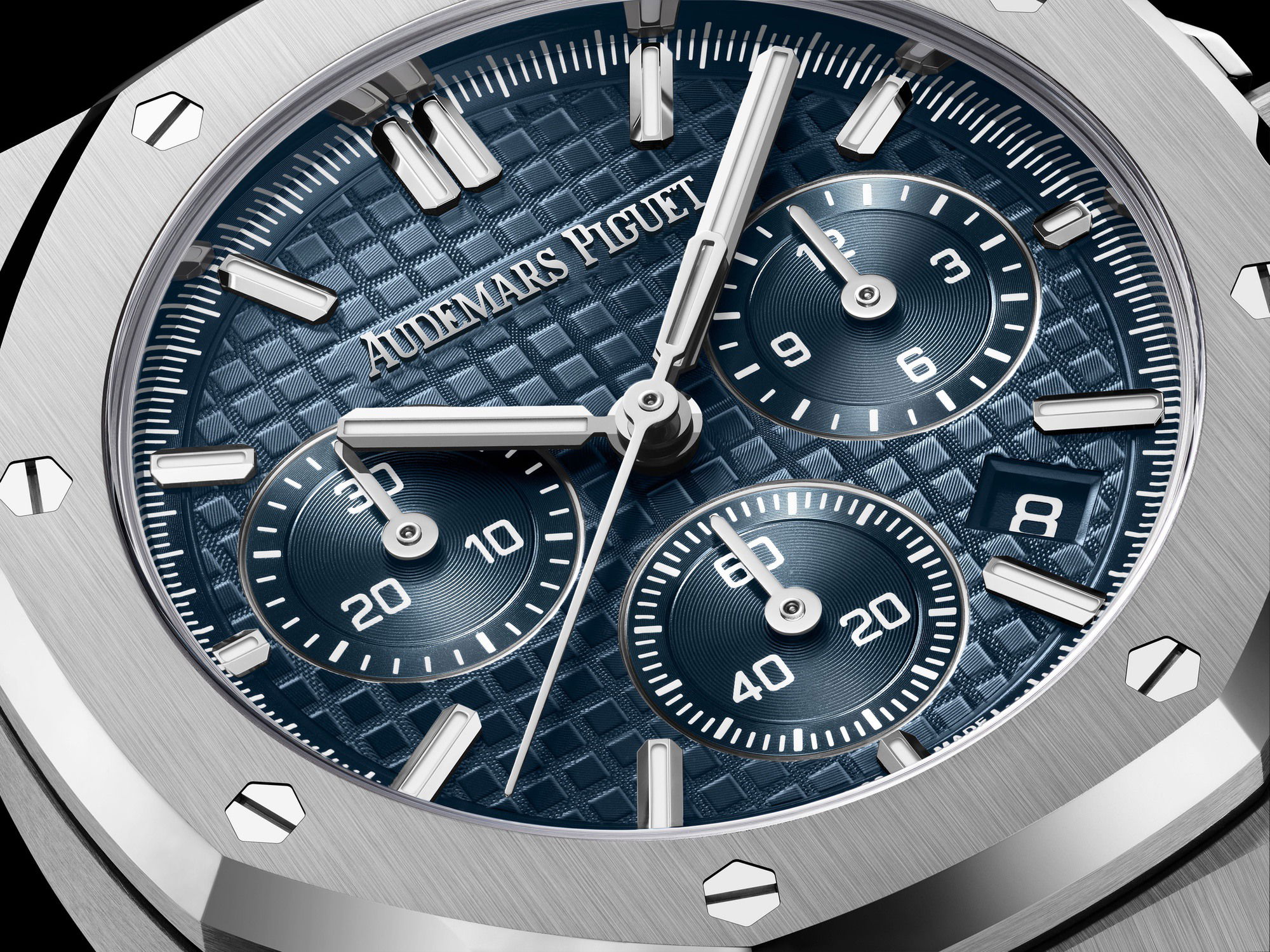
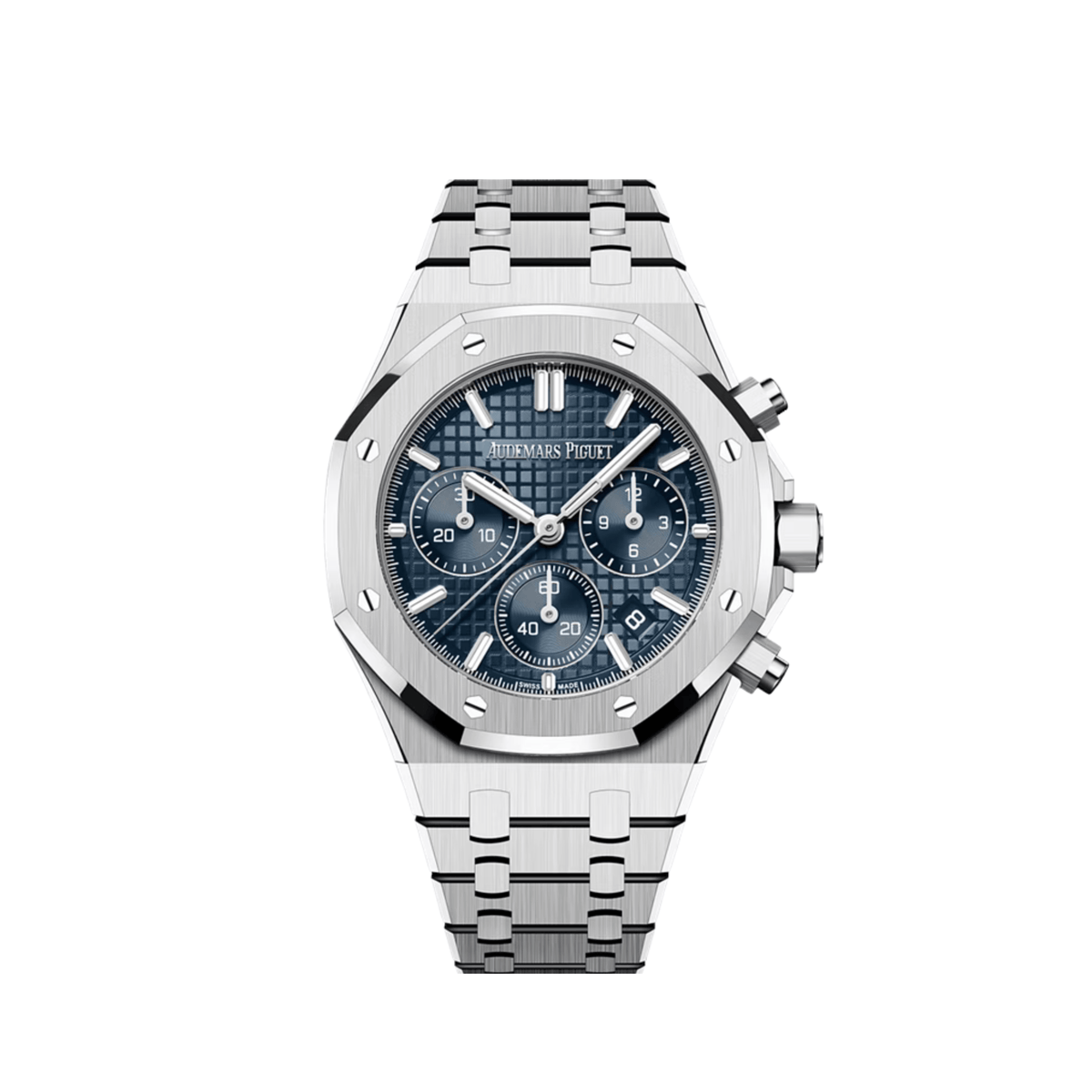
THE DIAL: GEOMETRY INSIDE GEOMETRY. The original blue T21 'Tapisserie' dial was not a simple stamped checkerboard. Stern Frères used specialised guilloché-copying equipment to generate a field of tiny raised forms and minute diamond-shaped intersections; its blue tone was known as 'Bleu Nuit, Nuage 50'. The dial created changing moiré reflections, an internal echo of the bezel's alternating matte and polished surfaces. A modern steel chronograph such as the 2026 reference 26450ST expands that grammar with three recessed registers, while keeping the blue grid and visible perimeter fasteners. Read our individual watch report: Royal Oak 38 mm Steel Chronograph
THE NAME CAME LATER—AND SO DID SOME OF THE MYTHS. Royal Oak was not yet the name when Genta made his first sketch. AP Chronicles notes that it was chosen more than a year and a half later, which rules out the familiar claim that eight-sided gunports on British Royal Oak warships dictated the bezel. Genta himself emphasised his helmet memory, although historians point out that a helmet's bolts alone do not explain the precise eight-sided outline. Intriguingly, they mention an octagonal parcel scale once used in AP's Geneva office as a possible indirect influence—not a proven source. Good design history leaves room for several observations instead of forcing one tidy origin story.
AN ICON WAS NOT INSTANTLY EASY TO MAKE. The original design demanded technically unusual tooling and extraordinarily careful hand finishing. AP's records document Genta's direct involvement with the white-gold prototypes, while the final steel reference 5402 entered the market in April 1972. Its commercial proposition was unsettling: why should a steel sports watch cost as much as gold? Yet 490 examples were sold in 1972 alone, according to the manufacturer. The first design's tension—pragmatic hardware executed with jewellery-like care—became the template for what we now call the luxury integrated-bracelet sports watch.
WHAT HAPPENS WHEN THE MATERIAL CHANGES? The blue ceramic of the 2026 Royal Oak Perpetual Calendar 26674CD makes a powerful test case. Steel's reflections are replaced by a dark uniform colour across the case and bracelet, and the dial becomes a complex calendar with moon phase. Yet the floating-looking octagon, eight pale screws and tapering bracelet unmistakably belong to the same family. Full watch feature: Royal Oak Blue Ceramic Perpetual Calendar


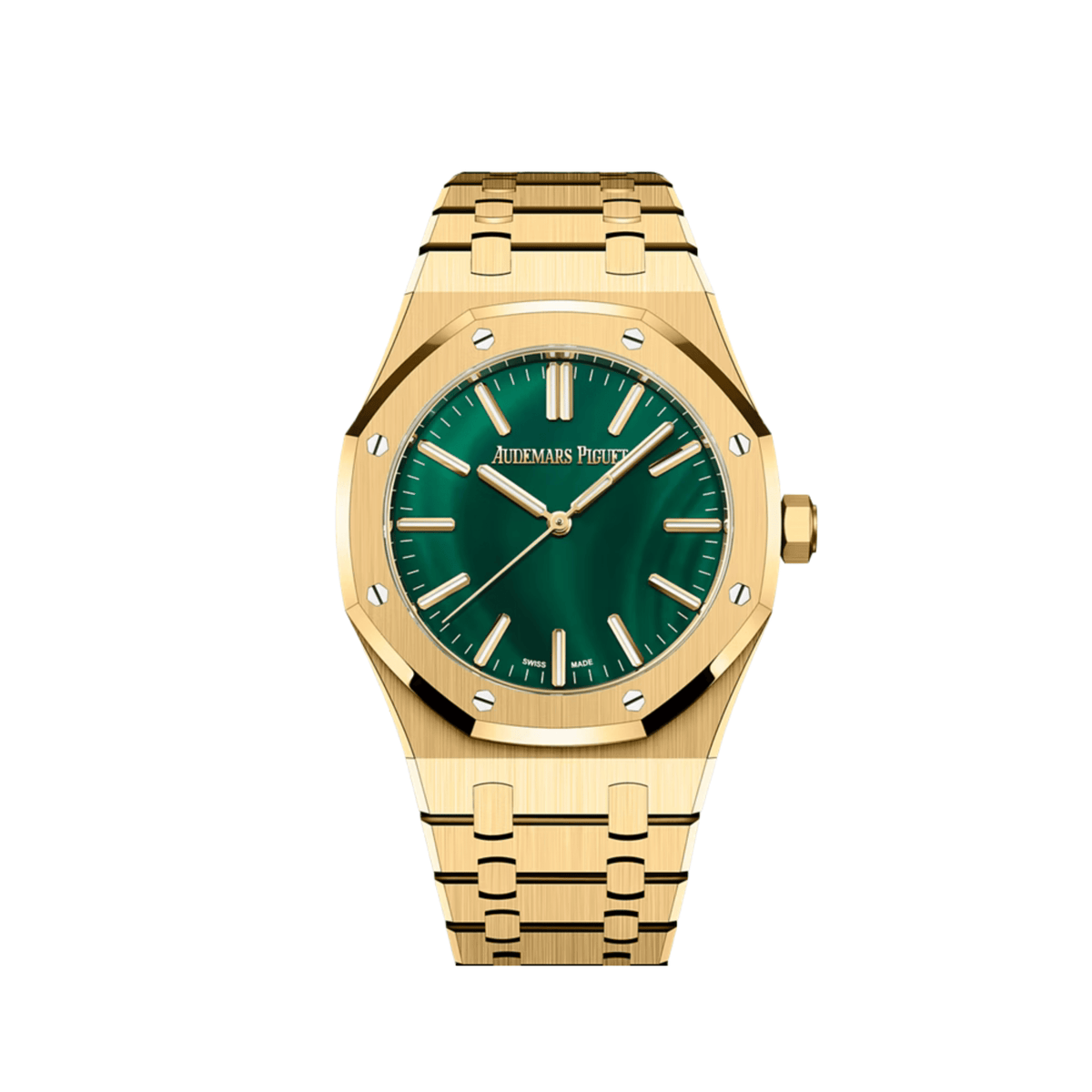
WHAT HAPPENS WHEN THE TAPISSERIE DISAPPEARS? The 2026 Royal Oak Selfwinding 15513BA replaces the mechanical grid with naturally banded green malachite. Its yellow-gold case preserves the precise outlines, but the stone introduces irregular, organic movement. It reveals something surprising: the design is sufficiently strong to lose one of its best-known ingredients. Explore the watch and close-up images: Royal Oak Yellow Gold Malachite
WHAT HAPPENS WHEN YOU CAN SEE STRAIGHT THROUGH IT? The 2026 'Jumbo' Extra-Thin Openworked 16204XT holds onto the original 39 mm diameter while pairing titanium with highly polished Bulk Metallic Glass. The transparent interior turns the movement into another intricate layer of geometry, but the external shell remains recognisable. Browse its individual images: Royal Oak Jumbo Extra-Thin Openworked. Chronolume also covers two further 2026 expressions: the titanium Royal Oak Perpetual Calendar Openworked Calibre 7139 in our Calibre 7139 article and the white-ceramic Serena Williams Chronograph in our Serena Williams edition article.


WHY THE SHAPE ENDURES. The Royal Oak did not become an icon because eight sides are inherently beautiful. It became one because the outer shape, fastening hardware, watertight construction, steel finishing, bracelet taper and dial pattern all reinforce one coherent idea. Its most radical move was to take components normally concealed by a luxury watch and make them part of its identity. New materials, smaller dimensions and ever more complicated calibres can change almost everything inside that frame. The watch still looks like the one Genta drew in 1970 because the design's logic remains visible. Historical references: Birth of an Icon; The First Royal Oak Cases; Royal Oak 5402 archive
Explore the watches
Audemars Piguet original Royal Oak 5402 (1972) · original Royal Oak 5402 (1972) ↗
Audemars Piguet Royal Oak 5402 A-series (1972) · Royal Oak 5402 A-series (1972) ↗
Audemars Piguet Royal Oak Perpetual Calendar ref. 26674CD.OO.1225CD.01 · 26674CD.OO.1225CD.01 ↗
Audemars Piguet Royal Oak Chronograph ref. 26450ST.OO.1356ST.01-B · 26450ST.OO.1356ST.01-B ↗
Audemars Piguet Royal Oak Jumbo Openworked ref. 16204XT.OO.1240XT.01 · 16204XT.OO.1240XT.01 ↗
Audemars Piguet Royal Oak Malachite ref. 15513BA.OO.1320BA.01 · 15513BA.OO.1320BA.01 ↗
Source & attribution
Related perspectives
Can a watch be both solar and automatic? Inside the rare hybrids that actually exist ↗
YEMA Granvelle Renaissance CMM.29: architecture under sapphire ↗
YEMA Superman Bronze CMM.10 lets the diver age with its owner ↗