Release Archive
URWERK UR-101 Green Mamba: when colour becomes an interface
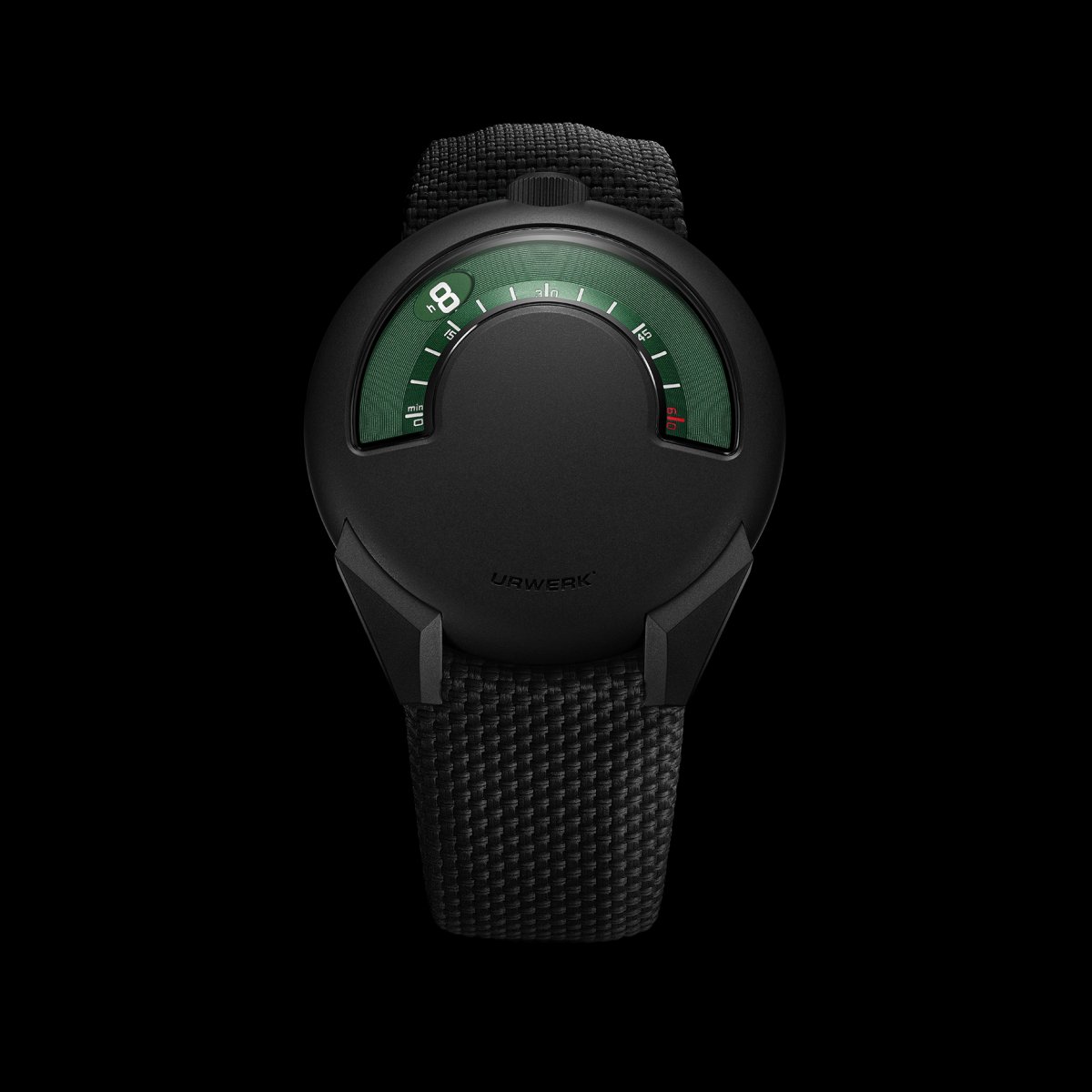
The UR-101 Green Mamba uses black PVD and an emerald minute track to clarify URWERK’s foundational wandering-hours display rather than simply decorate it.
- Release date
- Unknown
- Source published
- Not verified
- Added to Chronolume
- 2026-11-12
- Article published
- 2026-11-12
- Research checked
- 2026-11-12
Chronolume · Source-based analysis · Research checked 2026-11-12
Save this watch to revisit later.
Desk-based review of URWERK’s official product specification and six-image exact-model gallery, cross-checked against Monochrome’s dated launch report. No hands-on access, interviews or original measurements.
The analysis
URWERK’s UR-101 Green Mamba returns to the company’s foundational wandering-hours architecture with a deliberately narrow intervention: black out the case, illuminate the time path in emerald green, and let contrast do the design work. That sounds simple beside the engraved bronze UR-101 T-Rex and diamond-set UR-101 Diamond Sky, but it raises a useful question. Does colour alone create a meaningful new edition, or is the Green Mamba merely another finish on a familiar mechanism? The answer depends on whether the green minute arc is treated as decoration or as part of the watch’s interface.
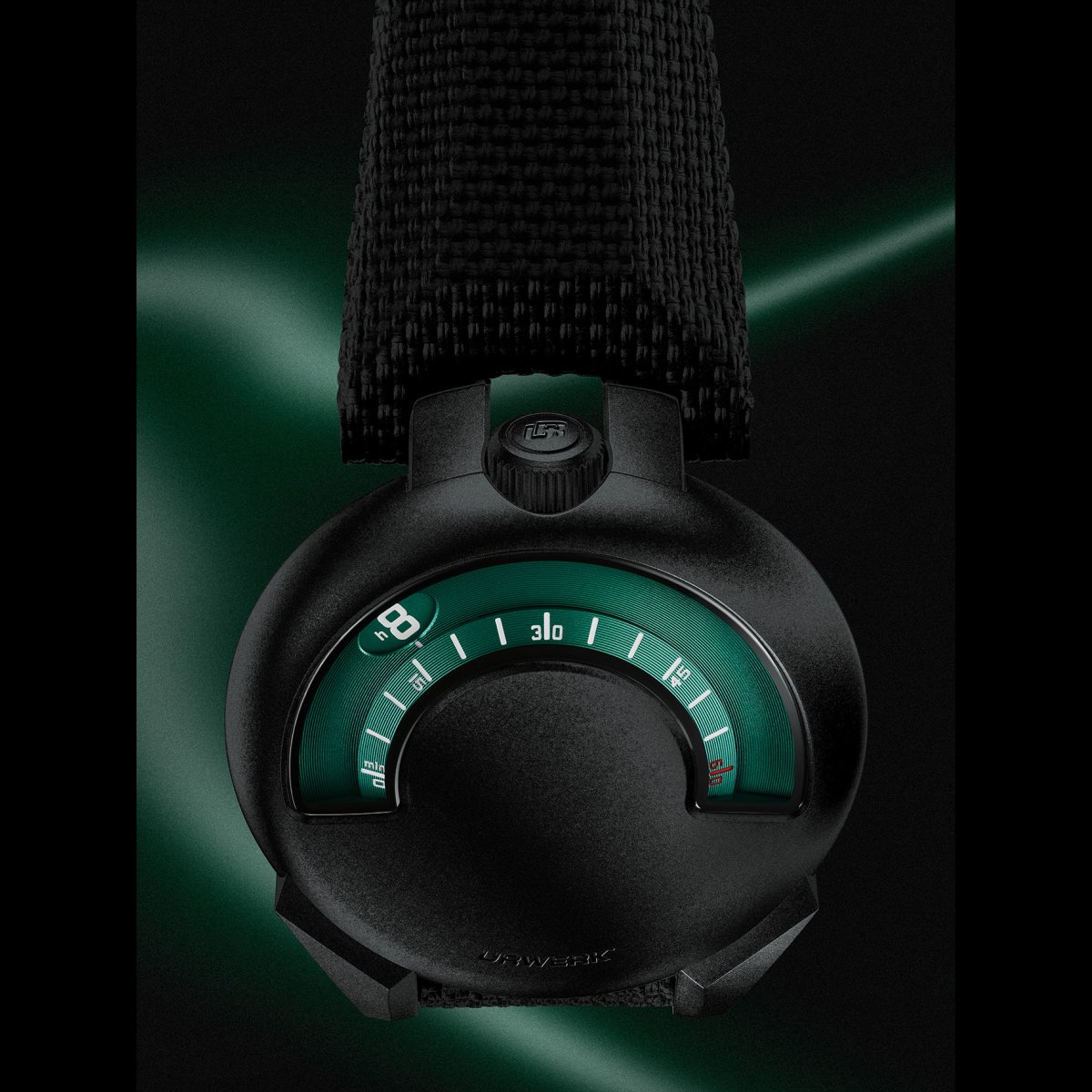
## The display is the design The UR-101 does not present time with centrally mounted hands. Two hour satellites rotate on a carousel behind a semicircular opening. The active numeral travels from left to right across a 180-degree minute scale; its position supplies the minutes while the numeral supplies the hour. At the end of the arc, the next satellite assumes the task. This system asks the wearer to read time as movement along a path rather than as an angle between hands. It is an unconventional display, but not an arbitrary one: the hour and its minute position occupy the same visual zone.
On the Green Mamba, the emerald scale and luminous markers sharpen that reading sequence. The colour is concentrated exactly where the eye must travel, while the matte black PVD-coated steel case and dark carousel suppress surrounding information. This is a source-based design interpretation, not a claim drawn from hands-on testing, but the official photography makes the hierarchy unusually clear. The green is not spread across the case or strap as a lifestyle colour. It marks the operational track, so the decorative choice also explains how to use the watch.
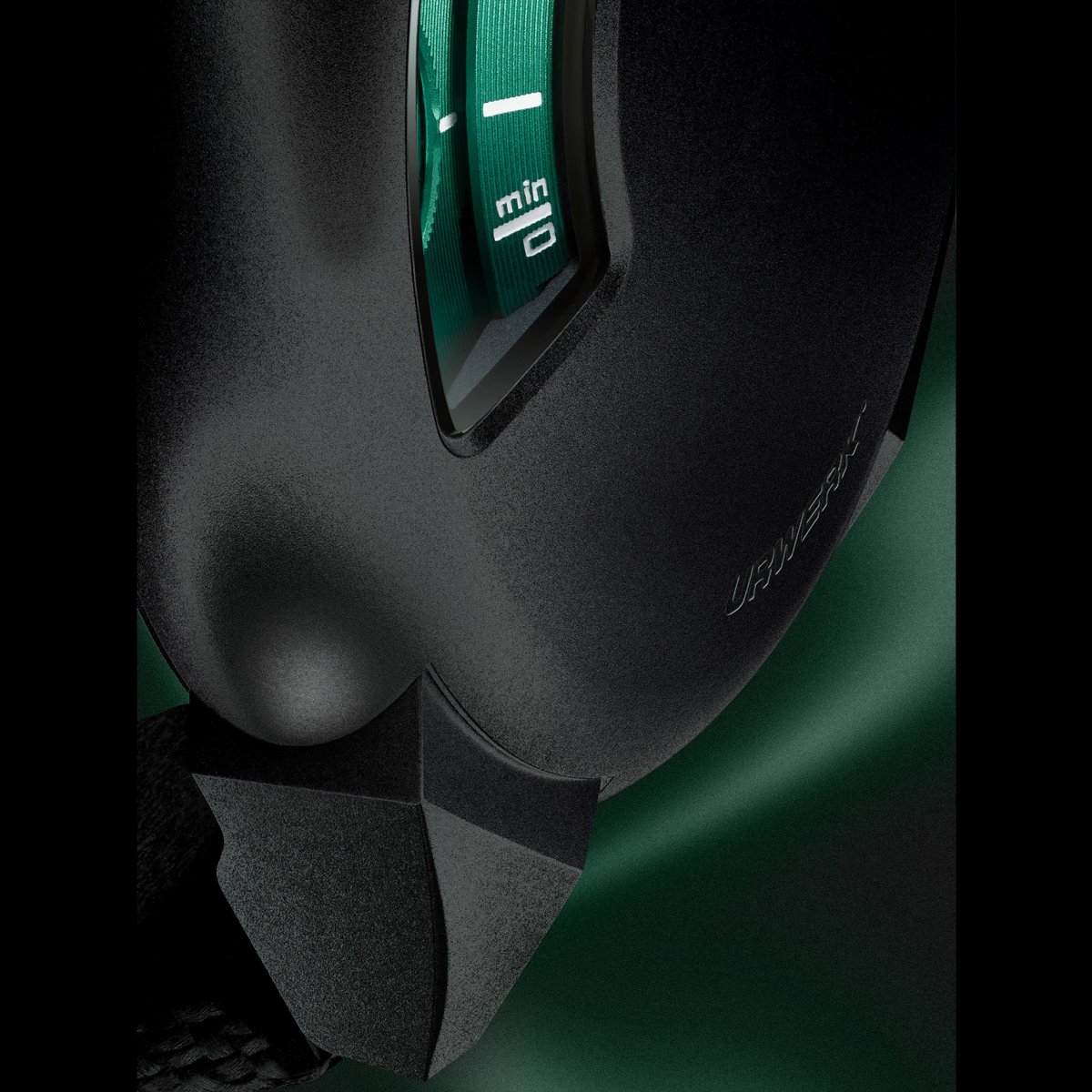
## A return to the starting point URWERK calls the UR-101 its starting point, and the model refers directly to the company’s earliest wandering-hours work from 1997. The 2026 edition therefore sits in an interesting position: it is historically retrospective for URWERK, yet it still looks radical beside conventional watches. Compared with the more complex UR-300 Time Quantum, which rearranges its display every hour, the UR-101 is almost concise. It uses two satellites, a single minute arc and no additional indications. Complexity is concentrated in the mechanism required to make a simple reading gesture possible.
The case measures 41mm according to URWERK and is pressure-tested to 3 ATM. Monochrome reports a thickness of 10.3mm, a useful dimension that is not stated on the accessible official collection page. The sapphire crystal has anti-reflective treatment, while the crown sits at 12 o’clock and is released through a pusher integrated into the caseback. That placement preserves the asymmetric case profile and keeps a conventional crown from interrupting either flank. A black rubber strap with calfskin lining and a black DLC-coated steel pin buckle completes the dark frame.
## The calibre discrepancy The available sources do not agree on the movement designation. URWERK’s current official UR-101 page lists calibre UR-1.02, with 28 jewels, a Swiss-lever escapement, a frequency of 28,800 vibrations per hour and a 48-hour power reserve. Monochrome’s launch report identifies an automatic UR-1.01V built on a Vaucher base, while giving the same jewel count, frequency and reserve. Because the calibre suffix is consequential, Chronolume has not silently chosen one version. The specifications table records UR-1.02 as the current manufacturer designation and preserves the UR-1.01V report as an unresolved discrepancy.
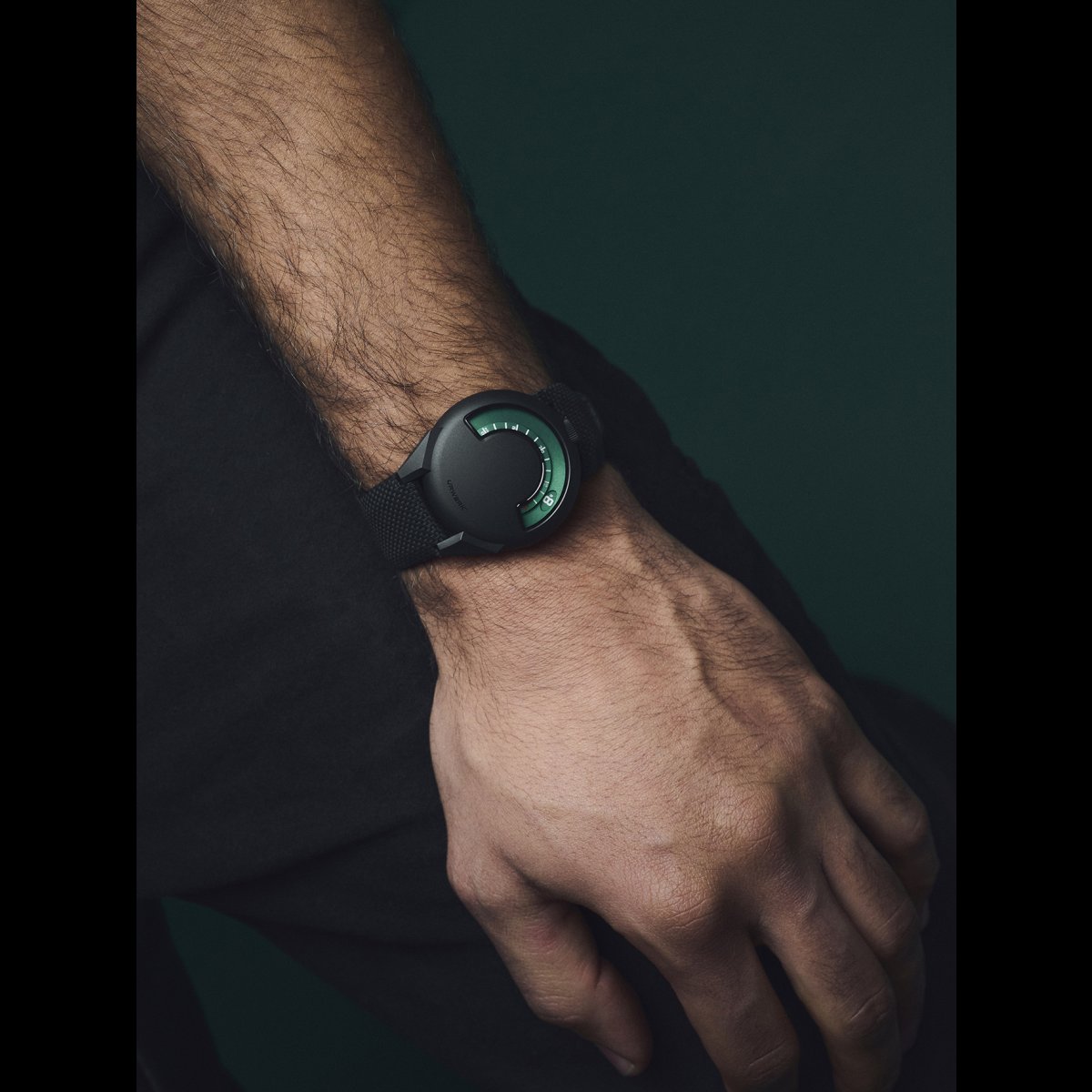
That limitation does not obscure the larger design comparison. The Green Mamba shares its basic case and display logic with the T-Rex and Diamond Sky, but rejects their surface spectacle. The T-Rex uses engraved bronze; the Diamond Sky sets 214 diamonds into steel. Here, matte black PVD and a single luminous colour create the identity. The UR-150 Golden Scorpion uses precious metal and a more theatrical satellite system to command attention. The Green Mamba works in the opposite direction: it makes the time track vivid and lets the housing recede.
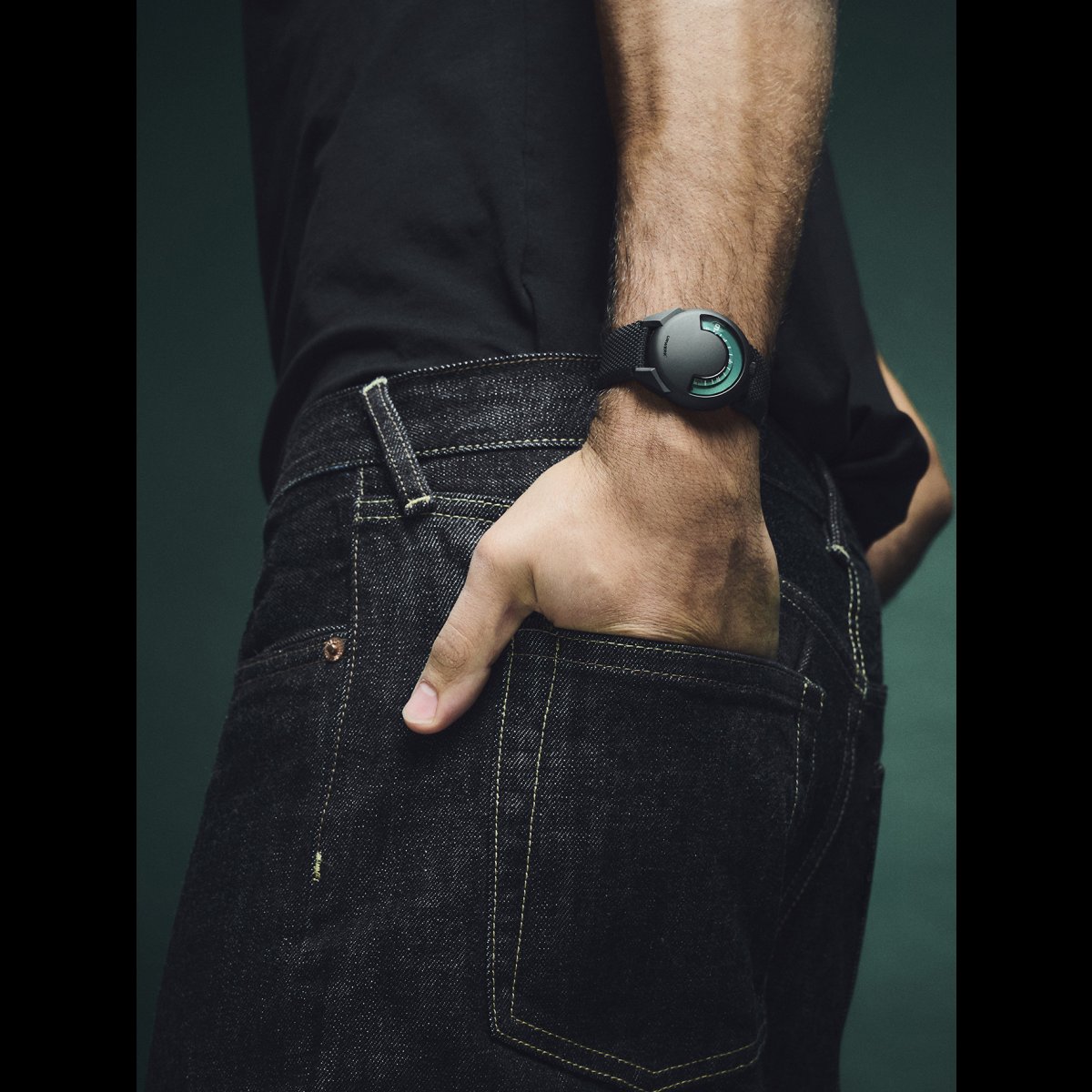
## Edition, price and availability Monochrome reports that the UR-101 Green Mamba is limited to 50 pieces and priced at CHF 33,000 before taxes. URWERK’s official page offers an enquiry route rather than public online checkout, and no regional delivery schedule is stated. Those details make this a scarce collector’s edition, but scarcity is not the editorial reason to prefer it. The stronger argument is that its finish changes the order in which information is perceived. A colourway becomes more than cosmetic when it improves the logic of the object.
## Conclusion The Green Mamba does not reinvent the UR-101, and buyers seeking a new complication will find more ambitious mechanisms elsewhere in URWERK’s catalogue. Its achievement is more disciplined. Black PVD turns the case into a visual enclosure; emerald green turns the minute arc into an instruction. The result is arguably the clearest contemporary expression of the original UR-101 idea: time travels, and the wearer follows it. That makes the edition defensible as design rather than merely marketing, although the unresolved calibre naming should be clarified by the manufacturer before anyone treats the technical record as settled.
At a glance
| brand | URWERK |
|---|---|
| modelReference | UR-101 Green Mamba |
| caseMaterial | Black-PVD stainless steel case and caseback |
| diameter | 41mm |
| thickness | 10.3mm, reported by Monochrome; not disclosed on the accessible official collection page |
| lugToLug | Not disclosed |
| crystal | Sapphire crystal with anti-reflective coating |
| dial | Two wandering-hour satellites on a rotating carousel with an emerald-green 180-degree minute scale; Super-LumiNova markers |
| movementTypeCalibre | Automatic; UR-1.02 on the current official page. Monochrome reports UR-1.01V on a Vaucher base; designation discrepancy unresolved |
| functions | Wandering hours and minutes |
| powerReserve | 48 hours |
| waterResistance | 3 ATM / 30m |
| strapBracelet | Black rubber strap with black calfskin lining; black DLC-coated steel pin buckle, reported by Monochrome |
| priceCurrency | CHF 33,000 excluding taxes, reported by Monochrome |
| availability | Enquiry via URWERK; regional timing not disclosed |
| editionSize | 50 pieces, reported by Monochrome |