Design & Culture
Small control, strong character: why watch crowns matter
Grip, geometry, gemstones and twin controls: archive watches from Zenith, Oris, Cartier and Farer reveal how a crown shapes a watch’s identity.
- Release date
- Unknown
- Source published
- 2026-11-15
- Added to Chronolume
- 2026-11-15
- Article published
- 2026-11-15
- Research checked
- 2026-11-15
Chronolume · Source-based analysis · Research checked 2026-11-15
Save this watch to revisit later.
Visual comparison of exact-model archive photographs, checked against official manufacturer descriptions and specifications. This is desk-based design analysis, without hands-on testing of grip, comfort or winding feel.
The analysis
A dial tells you what a watch displays. Its crown tells you how you are expected to approach it. This small projection is where fingers meet the mechanism: turning, pulling and setting become part of the design. Yet the crown is often treated as an afterthought beside a spectacular dial. Four watches already in the Chronolume archive show why it deserves closer attention. Their crowns offer four different answers to a simple question: how should a watch invite you to use it?
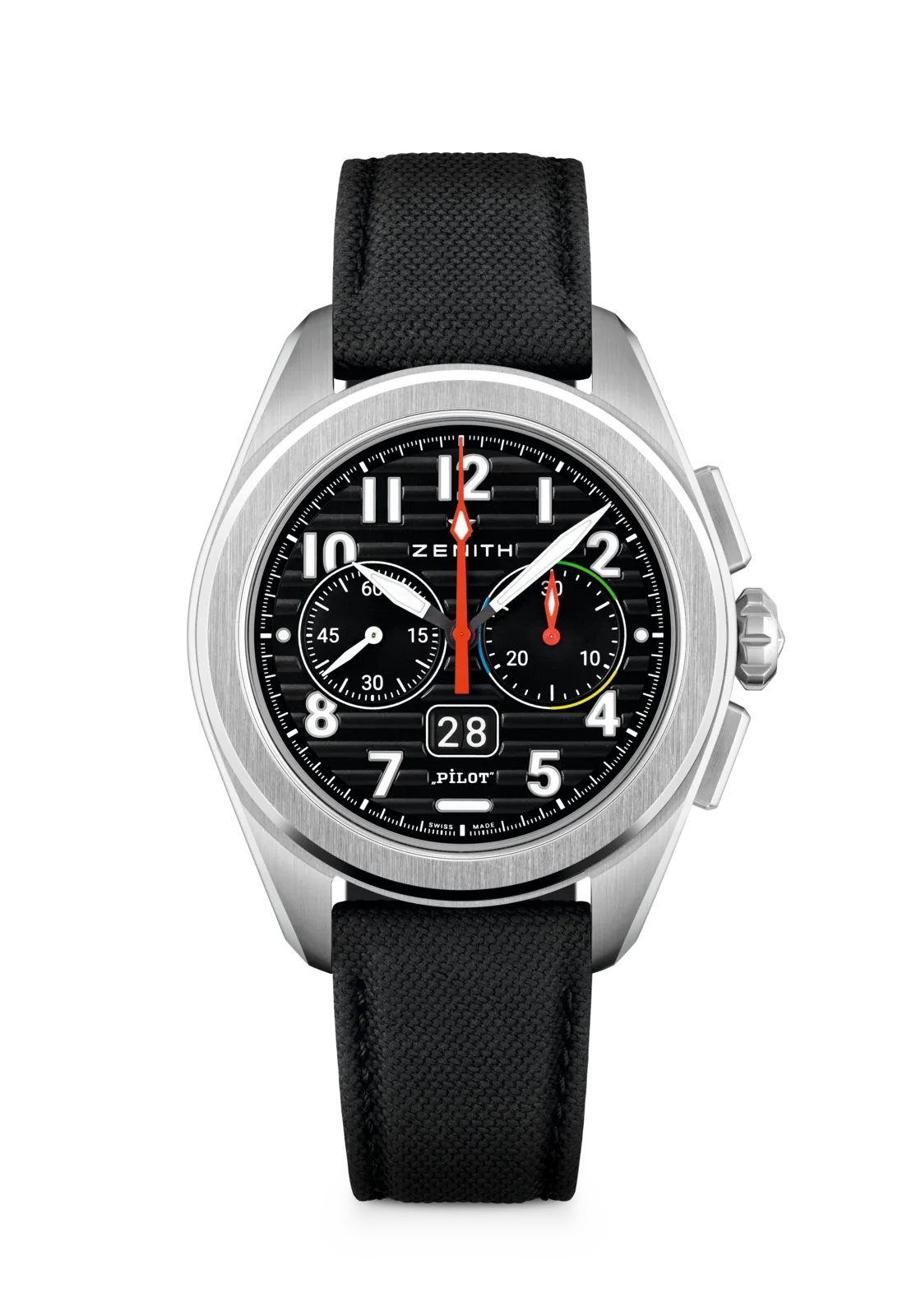
Start with the Zenith Pilot Big Date Flyback. Its broad crown has deep, widely spaced grooves, visibly distinct from the flatter chronograph pushers above and below it. The three controls make the right flank look like an instrument panel. The crown’s exaggerated relief also repeats the corrugated dial’s preference for substantial texture. From photographs, this reads as deliberate accessibility: a control that announces where fingers belong. That is a visual interpretation, rather than a claim about tested grip or winding feel.
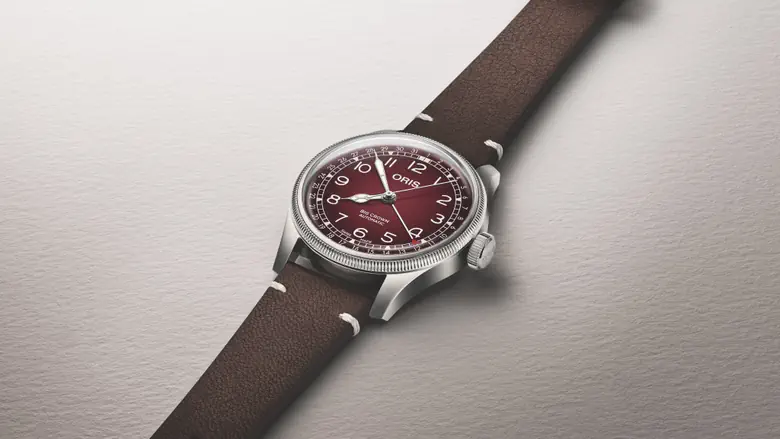
The Oris X Cervo Volante Big Crown takes a rounder, more nostalgic approach. Its prominent ridged crown sits beside a fluted bezel, turning two functional edges into a repeating pattern. Oris traces the family to 1938 and explains the oversized crown’s original purpose as adjustment by pilots wearing gloves. On this burgundy model, that practical inheritance balances the softer leather strap and curving numerals. The crown keeps the watch from becoming merely a romantic dial exercise.
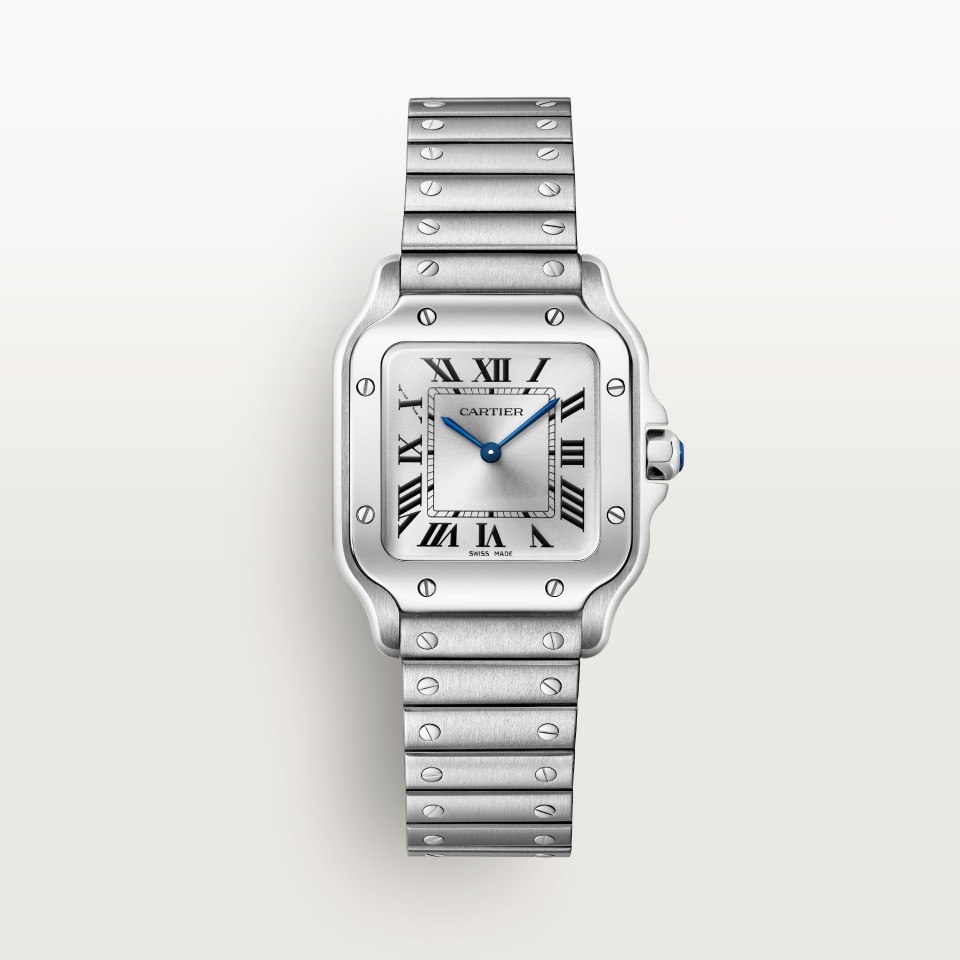
Cartier changes the conversation with the small Santos WSSA0082. The manufacturer specifies a seven-sided crown set with a faceted synthetic spinel. That distinction matters: this blue detail should not casually be called a sapphire or a rounded cabochon. The crown’s facets belong to the same geometric world as the square bezel and exposed screws, while the blue stone answers the hands. Here a control becomes a compact piece of jewellery without losing its place in the case architecture.
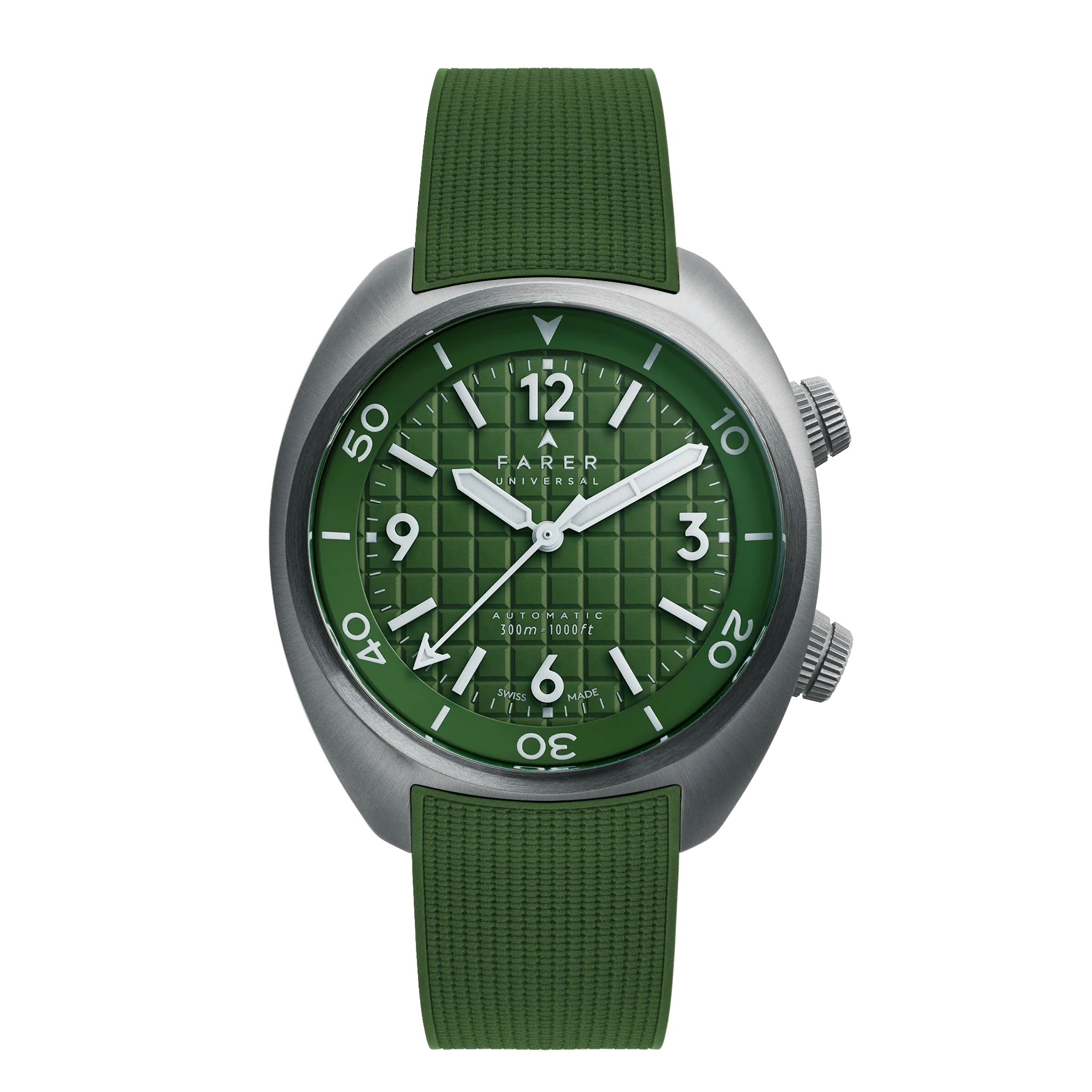
The Farer Hecla Hunter Green makes the crown plural. Its upper crown sets the time; the lower operates the internal rotating bezel. Farer specifies screw-down titanium crowns with crosshatched bronze caps. Moving the timing scale under the crystal leaves the outside bezel visually quiet, but adds another projection to the case. This is a useful design trade: a cleaner circular frame bought with a busier flank. The paired crowns explain that the watch has two different kinds of adjustment.
Protection can become an identity of its own. The Panerai Luminor surrounds the crown with its unmistakable bridge and lever. Panerai describes the protecting device as a signature of the collection. Visually, the surrounding structure becomes almost more memorable than the crown it shelters. Compare that silhouette with Cartier’s neat guards or Oris’s exposed round control: protection changes the entire outline, not just the engineering hidden beneath it.
These examples also reveal why bigger is not automatically better. Crown diameter, projection, texture and the space around it must work together. A dramatic crown can give a restrained case character; on another watch it can interrupt an otherwise coherent line. Photographs reveal those proportions, but cannot establish comfort against the wrist, ease of unscrewing or the precision of a setting position. Those questions need handling, and this comparison makes no claim to it.
Next time a watch catches your eye, follow the case around to its controls. Ask whether the crown repeats the watch’s geometry, introduces a purposeful contrast or tells you something about its operation. The strongest designs make those choices legible. A remarkable crown earns its attention by connecting the watch’s appearance to the small human gesture that brings it to life.