New Release
Zenith × J.N. Shapiro G.F.J.: when does a collaboration change the watch?
California guilloché reaches both dial and movement, turning Zenith’s second Double Signed Calibre 135 into a study of shared authorship.
- Release date
- 2026-11-12
- Source published
- Not verified
- Added to Chronolume
- 2026-11-14
- Article published
- 2026-11-14
- Research checked
- 2026-11-14
Chronolume · Source-based analysis · Research checked 2026-11-14
Save this watch to revisit later.
Official manufacturer announcement, technical specifications and exact-model press imagery were checked first; the closest predecessor was compared using Zenith’s dated manufacturer material; Gear Patrol was used only for corroboration of current US-market availability. Interpretation is explicitly desk-based.
The analysis
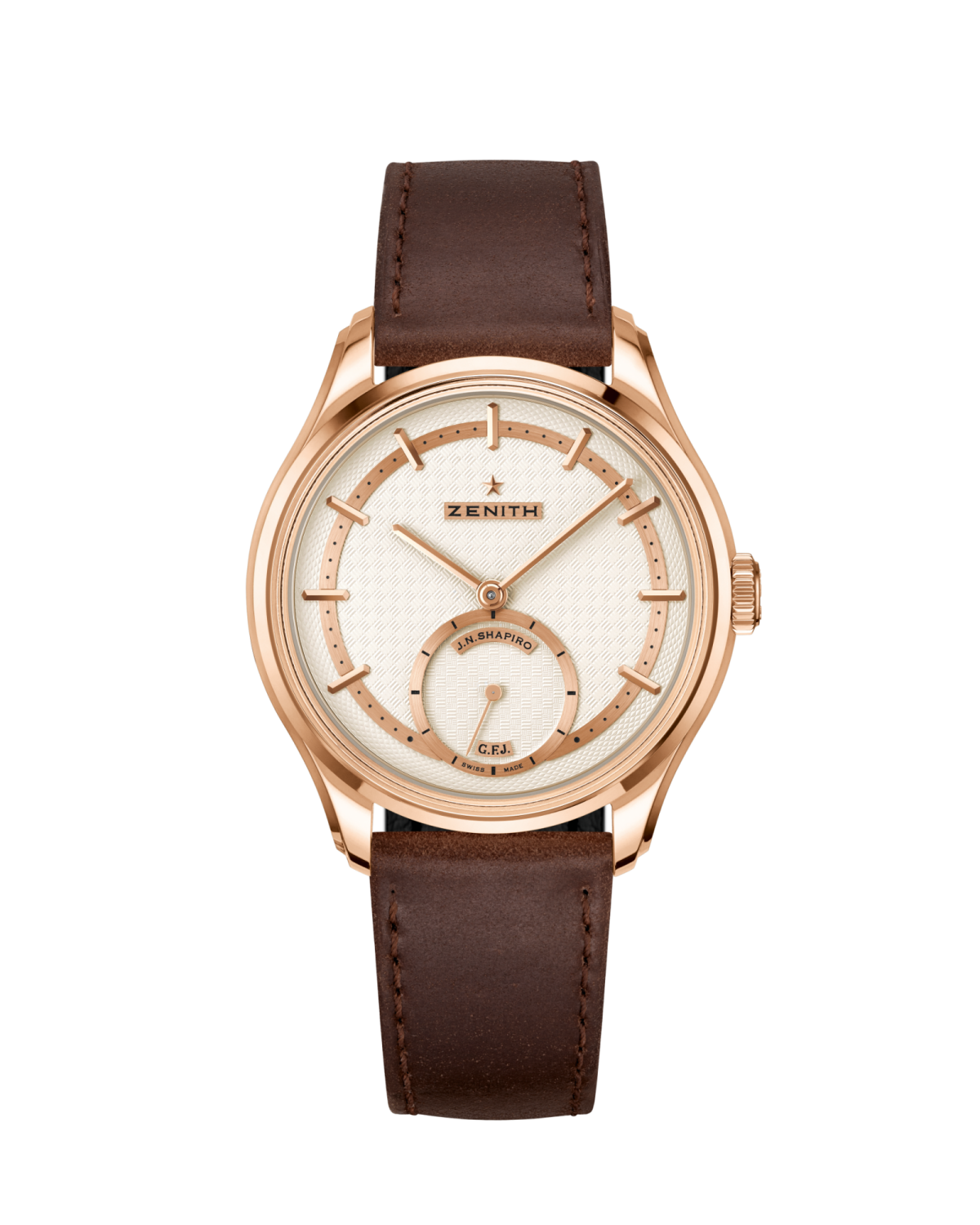
Zenith’s second G.F.J. “Double Signed” watch raises a more useful question than whether two prestigious names improve collectability: **when does a collaboration actually change the authorship of a watch?** With J.N. Shapiro, the answer is visible on both sides. The Californian independent did not merely add a signature to Zenith’s 39.15mm rose-gold G.F.J. It made the solid-silver dial in its California workshop and carried an American decorative tradition onto the Calibre 135 itself. That makes this 25-piece edition a test of whether a historic Swiss platform can absorb another maker’s visual language without becoming incoherent.
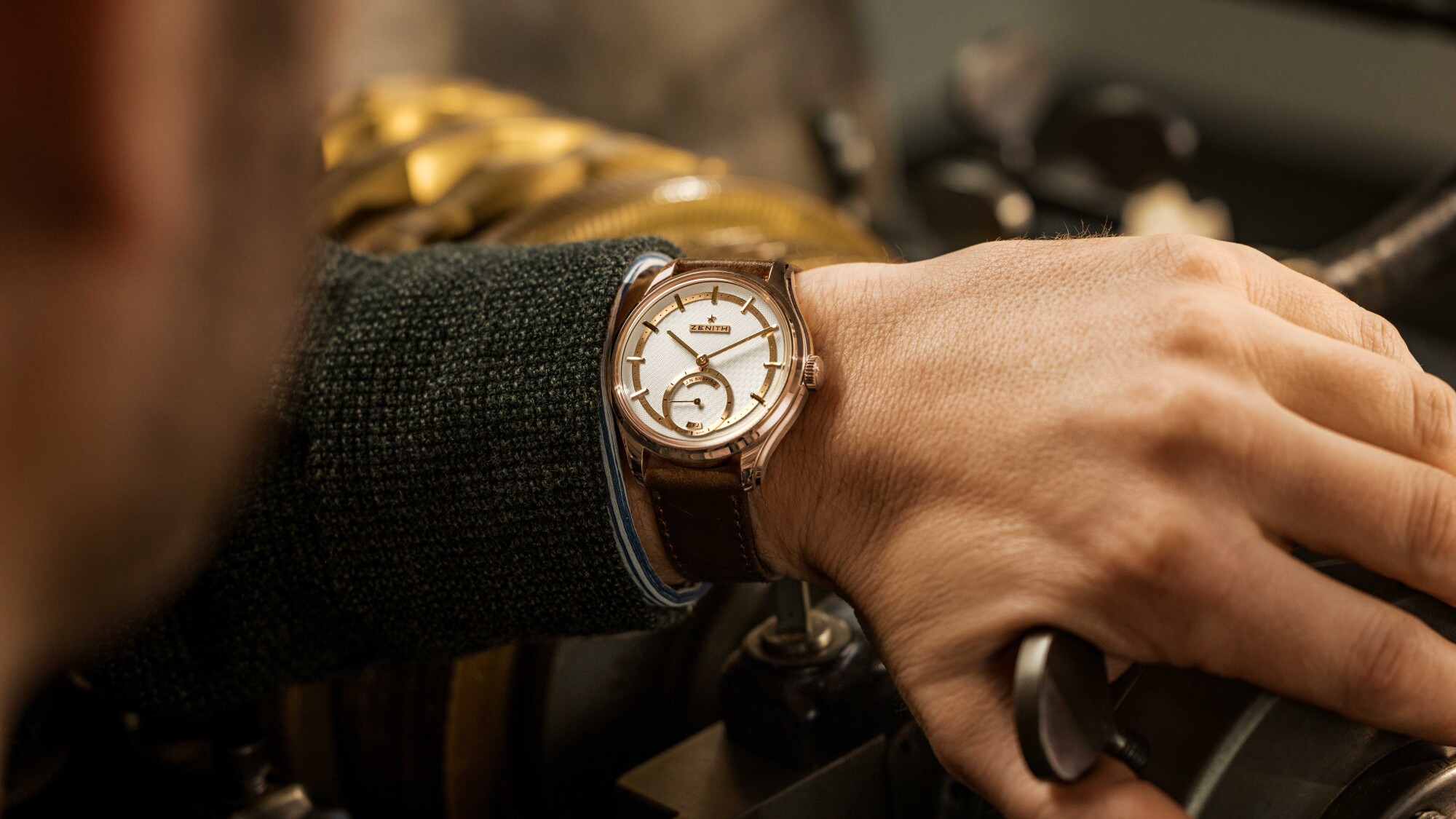
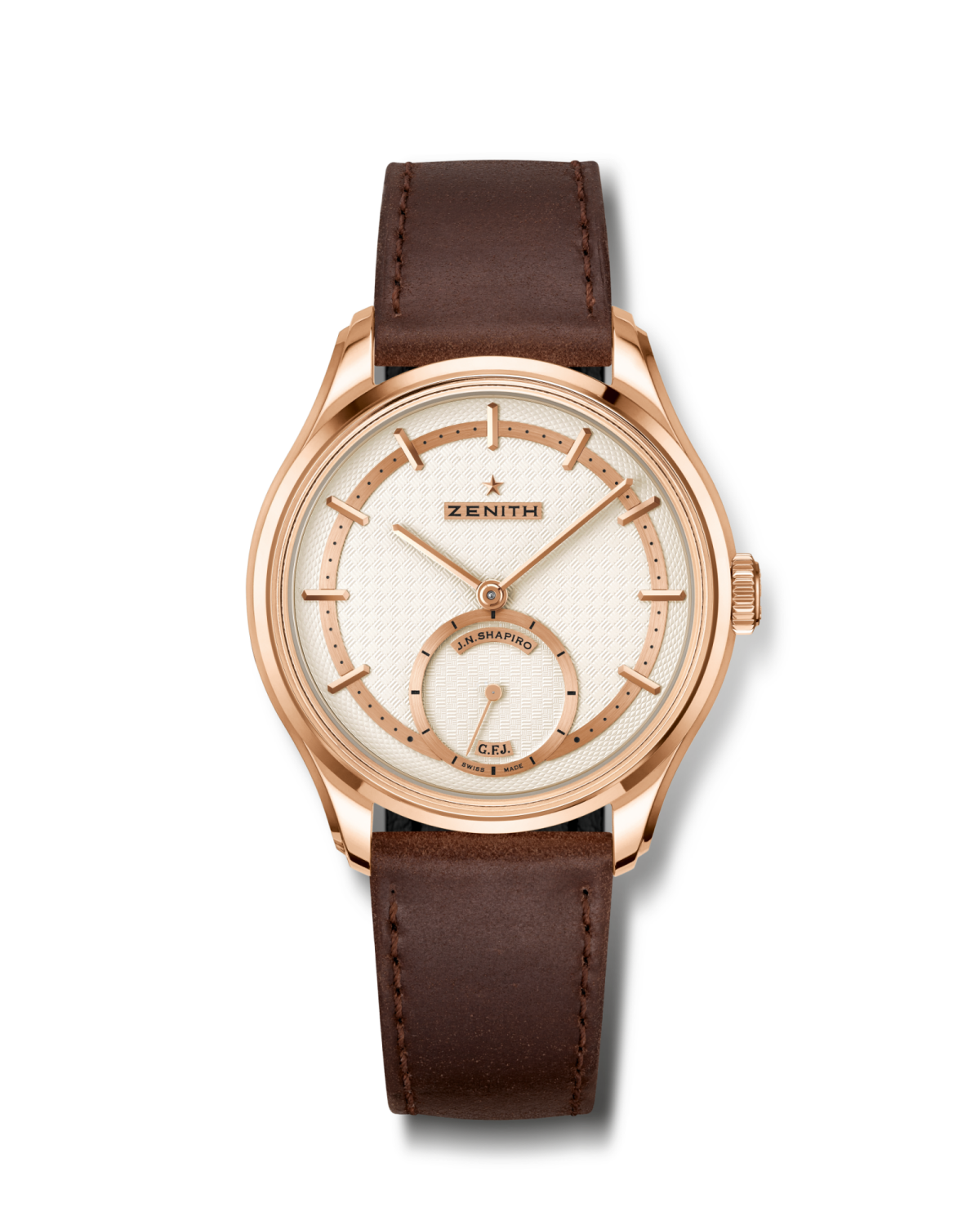
## A dial that establishes a hierarchy The dial uses three hand-cut guilloché patterns: barleycorn around the perimeter, basketweave at the centre and Shapiro’s Infinity Weave for the small-seconds register. This is dense decoration, but the patterns do different jobs. The relatively calm outer track separates the applied rose-gold markers from the more active centre; the small seconds is given its own texture rather than relying on colour alone. From the official images, the result appears legible because contrast comes from relief, direction and scale. That is a desk-based reading of Zenith’s photographs, not a claim about how the silver behaves in changing light on the wrist.
The applied rings, markers and signature plates are all 18K rose gold. Their warm colour connects the dial to the case while the rhodium-plated, faceted hour and minute hands keep the display from becoming uniformly warm. Zenith says the hands carry Super-LumiNova C1, a practical element within an otherwise formal composition. The important design point is that “Zenith | J.N. Shapiro” is not the collaboration’s main evidence. The engine turning is. Someone who ignored the signatures could still identify Shapiro’s hand in the dial architecture.
## The movement makes this more than the first Double Signed edition The closest comparison is the G.F.J. made with Naoya Hida & Co., launched in June 2026. That ten-piece platinum model concentrated its partner’s contribution on the dial and hands: engraved markings, blue urushi-filled numerals and restrained Japanese materials. The Shapiro edition changes a second layer. Its Calibre 135 bridges receive rhodium plating and damaskeening, a decorative pattern associated with historic American pocket watches and described by Zenith as combining elements of Geneva stripes and guilloché.
That difference matters because movement finishing is normally part of a manufacture’s identity. Allowing a collaborator to redraw it moves the project from surface styling towards shared authorship. It also gives the watch a coherent front-to-back argument: patterned metal on the dial is answered by patterned metal through the sapphire caseback. The J.N. Shapiro Infinity Series offers useful context for the independent maker’s established reliance on guilloché, but this Zenith is not a substitute for a Shapiro manufacture watch. The movement architecture, regulation and core case remain Zenith’s.
## The technical base stays deliberately conservative Calibre 135 is manually wound, runs at 18,000 vibrations per hour and provides 72 hours of power reserve. Zenith specifies a variable-inertia balance, Breguet overcoil, stop-seconds mechanism and spring-mounted jewel settings. It is COSC certified, and the manufacturer states regulation to ±2 seconds per day. Those are manufacturer claims rather than Chronolume measurements. The slow 2.5Hz frequency and large balance preserve the visual and technical character that make the revived calibre interesting, while the three-day reserve makes manual winding less demanding than the vintage inspiration might suggest.
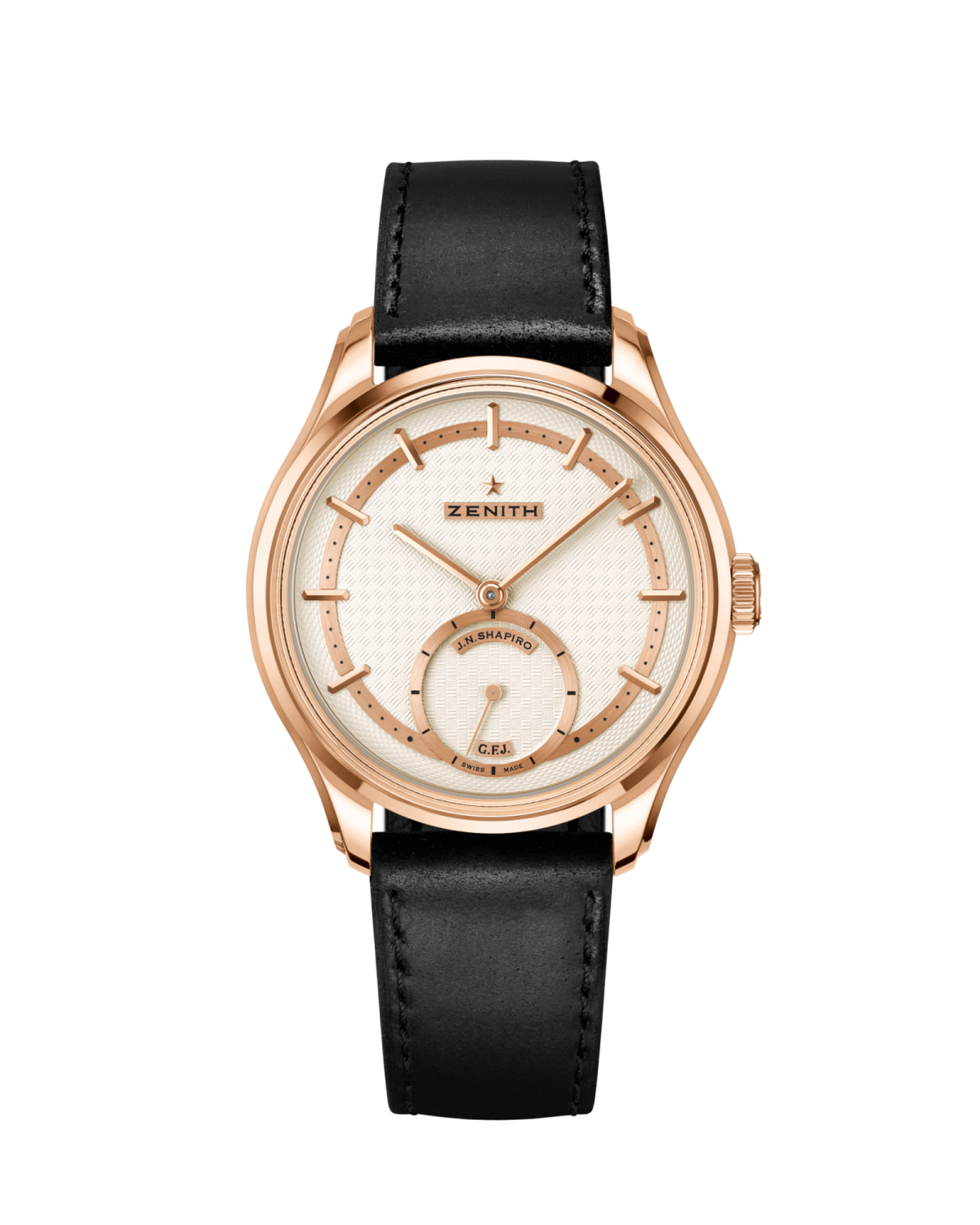
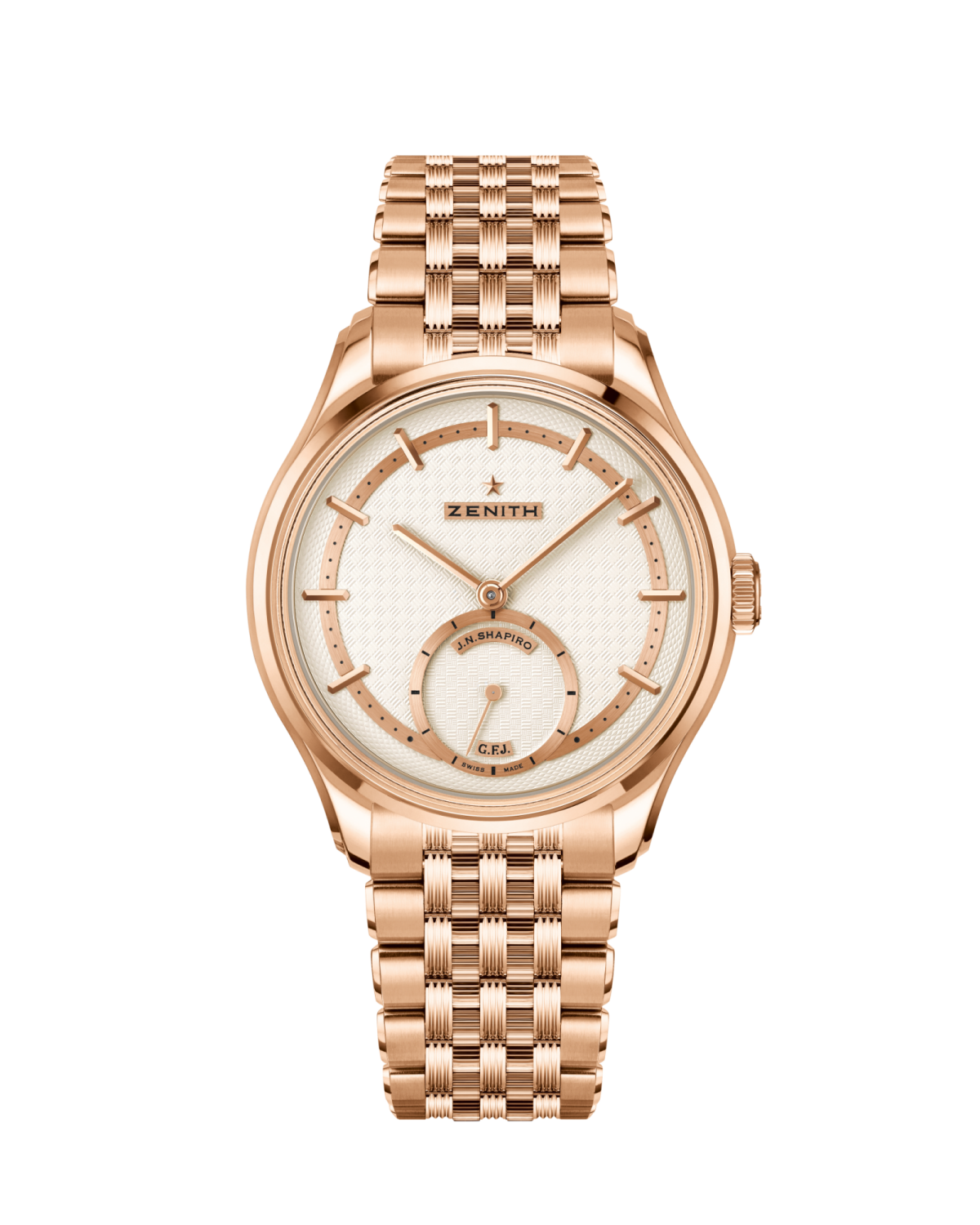
The case is 18K rose gold and measures 39.15mm across, with 5 ATM water resistance. Zenith’s checked press material does not disclose thickness or lug-to-lug length, so any conclusion about wrist presence would be premature. Three straps are supplied—brown Cordovan, beige nubuck alligator and black calf—with an engraved rose-gold pin buckle. A matching rose-gold bracelet is available on request. That flexibility changes the watch’s tone more than its basic identity: the bracelet makes it emphatically precious, while the darker leather keeps attention on the dial.
## Price, scarcity and the real reason to care Zenith lists the price at CHF 68,900 and limits production to 25 pieces. The earlier Naoya Hida version was CHF 58,900 in platinum and limited to ten, but this is not a clean material-value comparison. The Shapiro project includes a California-made guilloché dial and partner-directed movement decoration, whereas the Hida edition offered a different craft programme and greater numerical scarcity. Buyers are therefore choosing between distinct interpretations of the same platform, not a simple hierarchy of precious metals.
The convincing part of this G.F.J. is its restraint at the structural level. Zenith keeps the case proportions, chronometer architecture and basic display intact, then gives Shapiro two surfaces where authorship can be proven: the dial and the movement bridges. The result appears recognisably Zenith and recognisably Shapiro at once. That does not make the CHF 68,900 price easy to evaluate without firsthand inspection, and regional allocation was not disclosed in the checked manufacturer material. It does, however, answer the reader question. This is more than co-branding because the collaborator changed how the watch is made and how its mechanism is visually understood—not only what is printed on the dial.
**Sources:** Zenith official announcement and specifications, Zenith’s Naoya Hida Double Signed announcement and Gear Patrol’s US-market report.
At a glance
| Brand | Zenith × J.N. Shapiro |
|---|---|
| Model / reference | G.F.J. Calibre 135 Double Signed with J.N. Shapiro, 18.1865-1.0135/01.C215 |
| Case material | 18K rose gold |
| Diameter | 39.15mm |
| Thickness | Not disclosed in the checked Zenith press material |
| Lug-to-lug | Not disclosed in the checked Zenith press material |
| Crystal | Front crystal not disclosed; sapphire display caseback |
| Dial | Solid silver; hand-guilloché barleycorn, basketweave and Infinity Weave motifs; applied 18K rose-gold elements |
| Movement type / calibre | Manual-winding Zenith Calibre 135, COSC certified, 18,000 vph (2.5Hz) |
| Functions | Hours, minutes, small seconds; stop-seconds |
| Power reserve | 72 hours |
| Water resistance | 5 ATM / 50m |
| Strap / bracelet | Brown Cordovan, beige nubuck alligator and black calf straps; 18K rose-gold pin buckle; rose-gold bracelet available on request |
| Price / currency | CHF 68,900 |
| Availability | Exclusive limited edition; regional allocation not disclosed in the checked manufacturer material |
| Edition size | 25 pieces |