New Release
Anoma A2: can a Möbius strip become a wearable watch?
Anoma’s second collection twists its steel case and sapphire in opposite directions, using a hand-wound movement to keep the sculpture under 10mm thick.
- Release date
- 2026-11-26
- Source published
- 2026-11-26
- Added to Chronolume
- 2026-11-27
- Article published
- 2026-11-27
- Research checked
- 2026-11-27
Chronolume · Release archive · Based on Anoma Watches official product page; corroborated by Hodinkee and Fratello
Save this watch to revisit later.
What to know
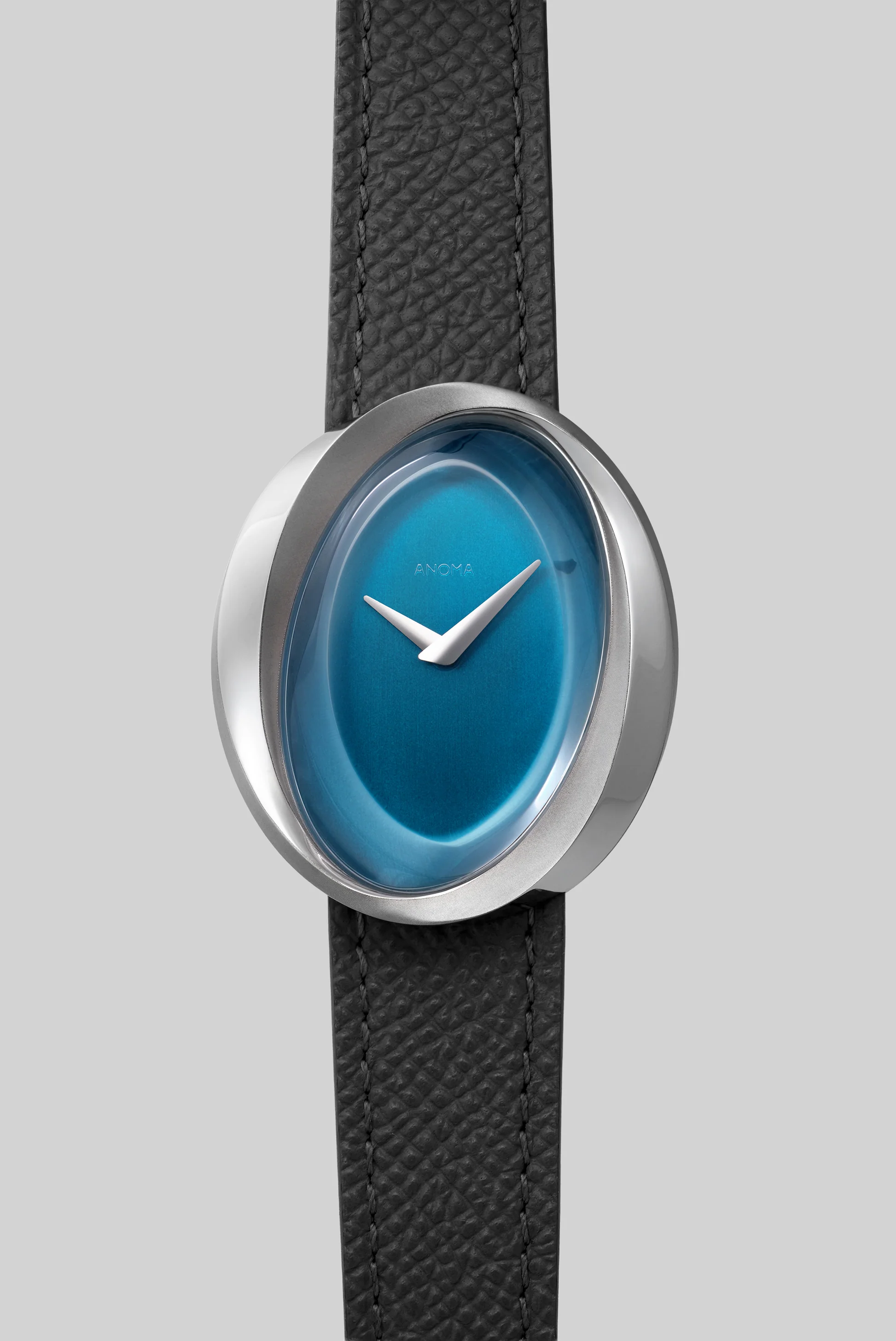
Anoma built its reputation on the triangular A1, a watch that treated the case as a designed object rather than a neutral container for a dial. The new A2 asks a harder question: can a shape inspired by a Möbius strip remain comfortable, legible and recognisably useful on the wrist? Its answer is not to print an optical motif on a conventional watch. Instead, the stainless-steel case turns clockwise around an asymmetric opening while a thick sapphire crystal twists in the opposite direction. That opposition is the design, and it changes how the watch reads from almost every angle.
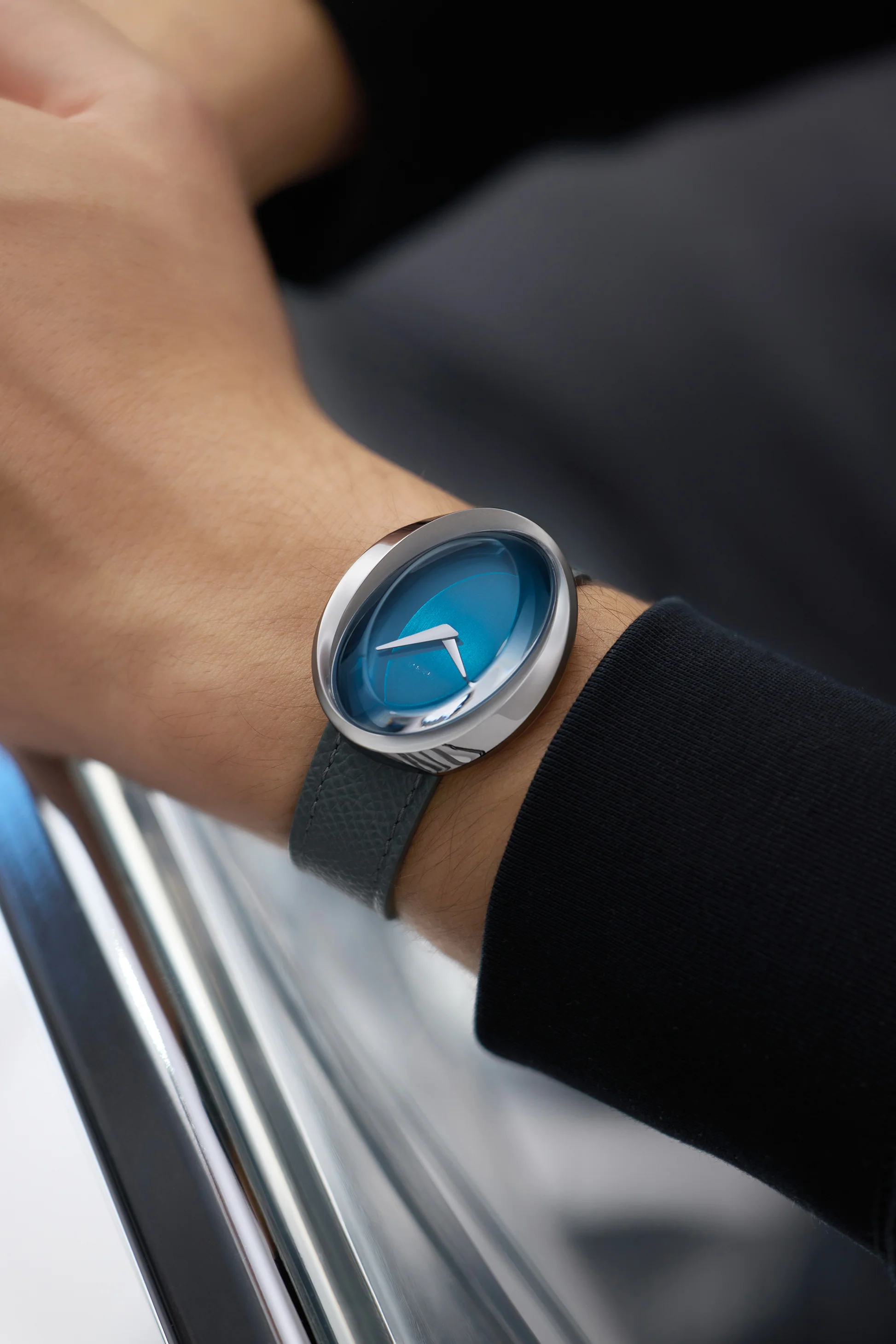
The case measures 41.5mm long by 35.7mm wide and reaches 9.8mm at the highest point of the crystal. Those numbers need context because the A2 has no conventional lugs and no single, round diameter. Anoma says it wears like a 38mm circular watch, while the underside slopes inward and the integrated strap removes the visual overhang produced by projecting lugs. This is a manufacturer claim derived from the geometry, not a Chronolume hands-on conclusion. Still, the dimensions explain an important part of the design: apparent volume is concentrated above the wrist rather than spread along it.
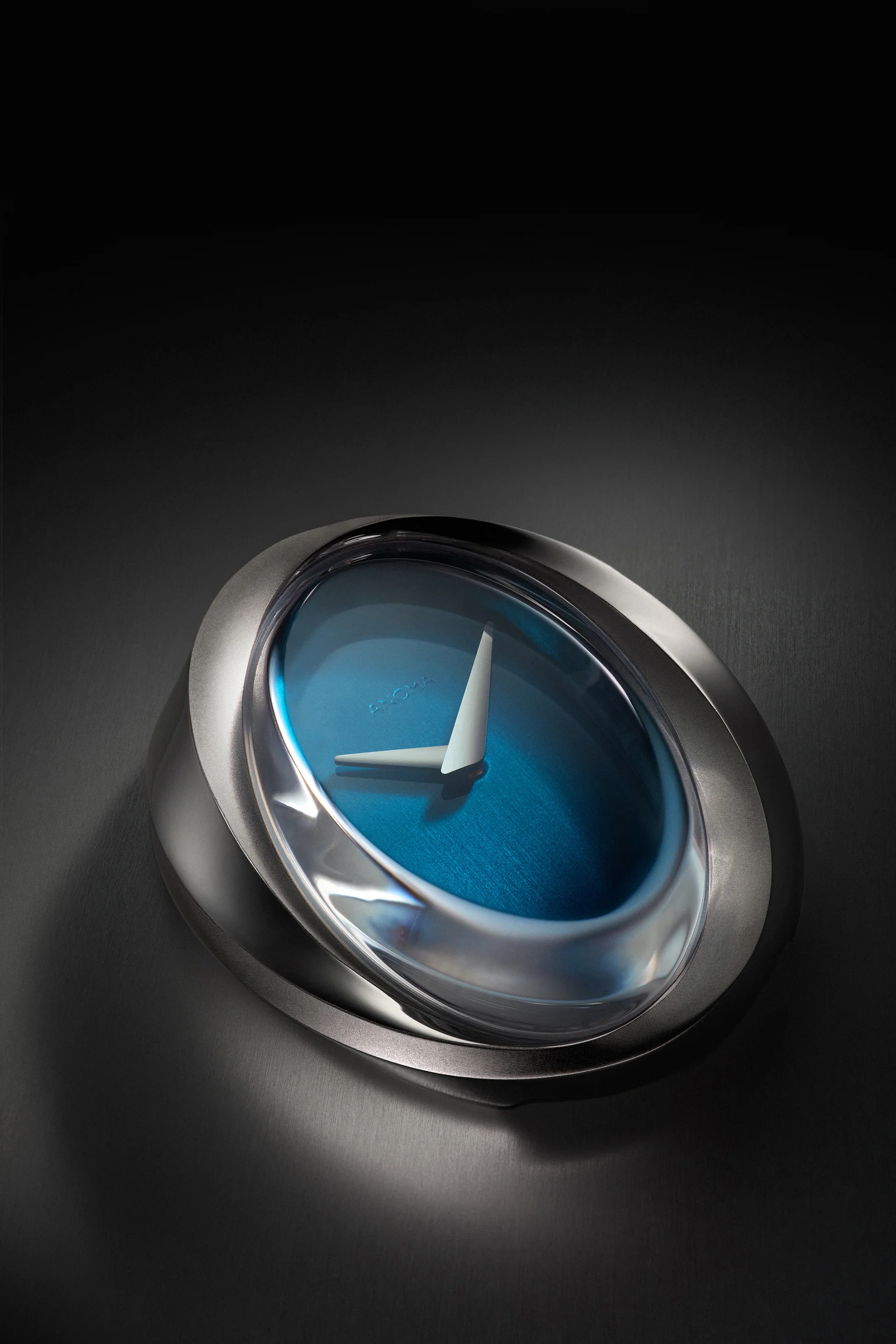
The most convincing detail is the conversation between metal and sapphire. The one-piece 316L steel case is mirror-polished on some facets and sandblasted on others, so its twist is described by light rather than by an engraved line. Above it, a 4mm-thick faceted sapphire turns the other way. In official photographs, the edge between the two materials sometimes disappears and sometimes becomes the strongest line in the composition. That is more than visual theatre. It prevents the A2 from becoming a simple oval dress watch with an unusual bezel, because the crystal participates in the architecture.
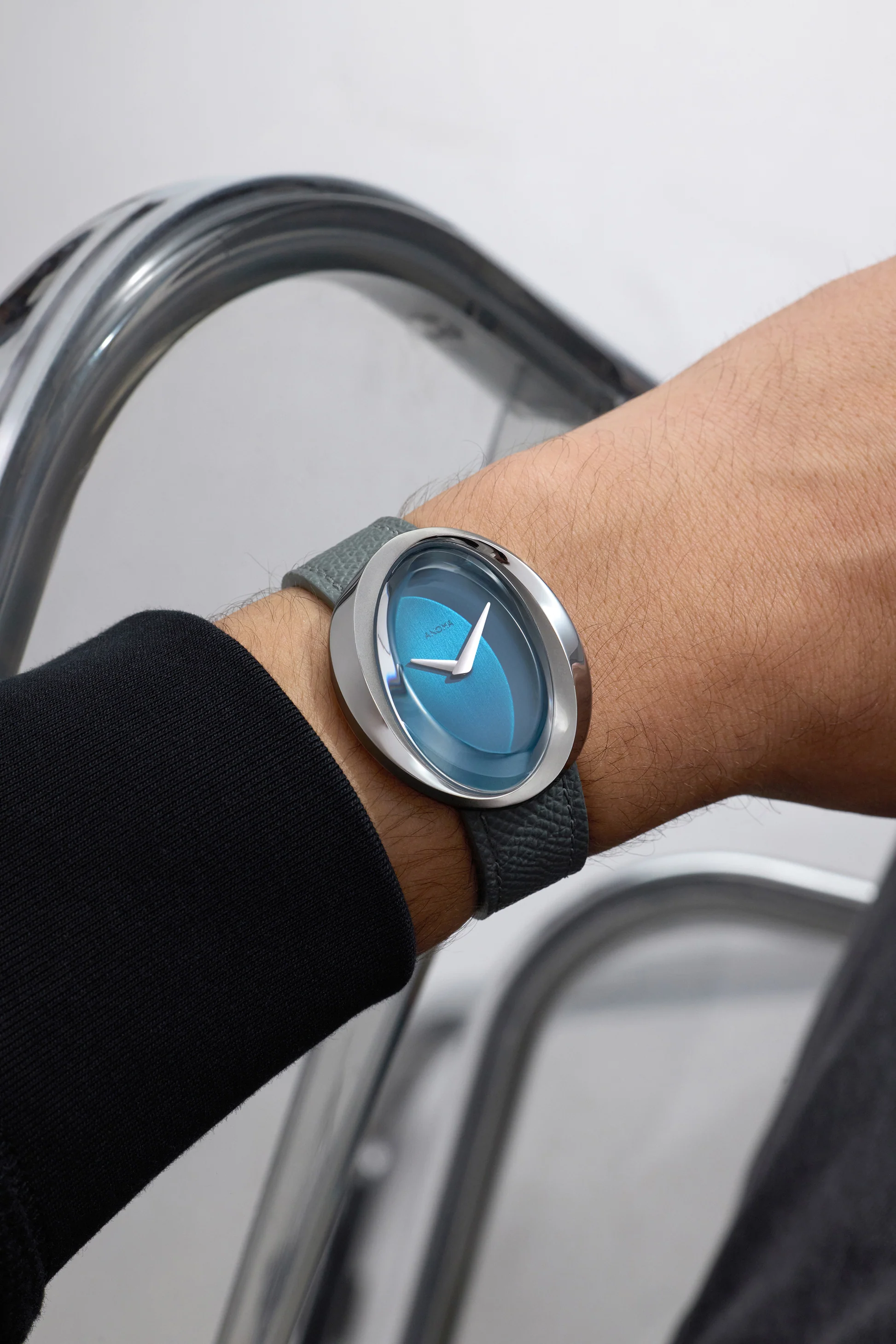
Inside that opening is a vertically brushed teal-blue dial finished with three layers of lacquer. The transparent logo at twelve can recede as reflections change, leaving the two hands to carry most of the information. Their domed, mirror-polished shapes take inspiration from Constantin Brâncuși’s Bird in Space and align into an abstract bird at 10:10. The absence of numerals, minute marks and a seconds hand makes reading approximate rather than instrument-like. For a reader who expects instant, exact time, that is a compromise. For this watch, however, extra printing would compete with the case’s moving boundaries.
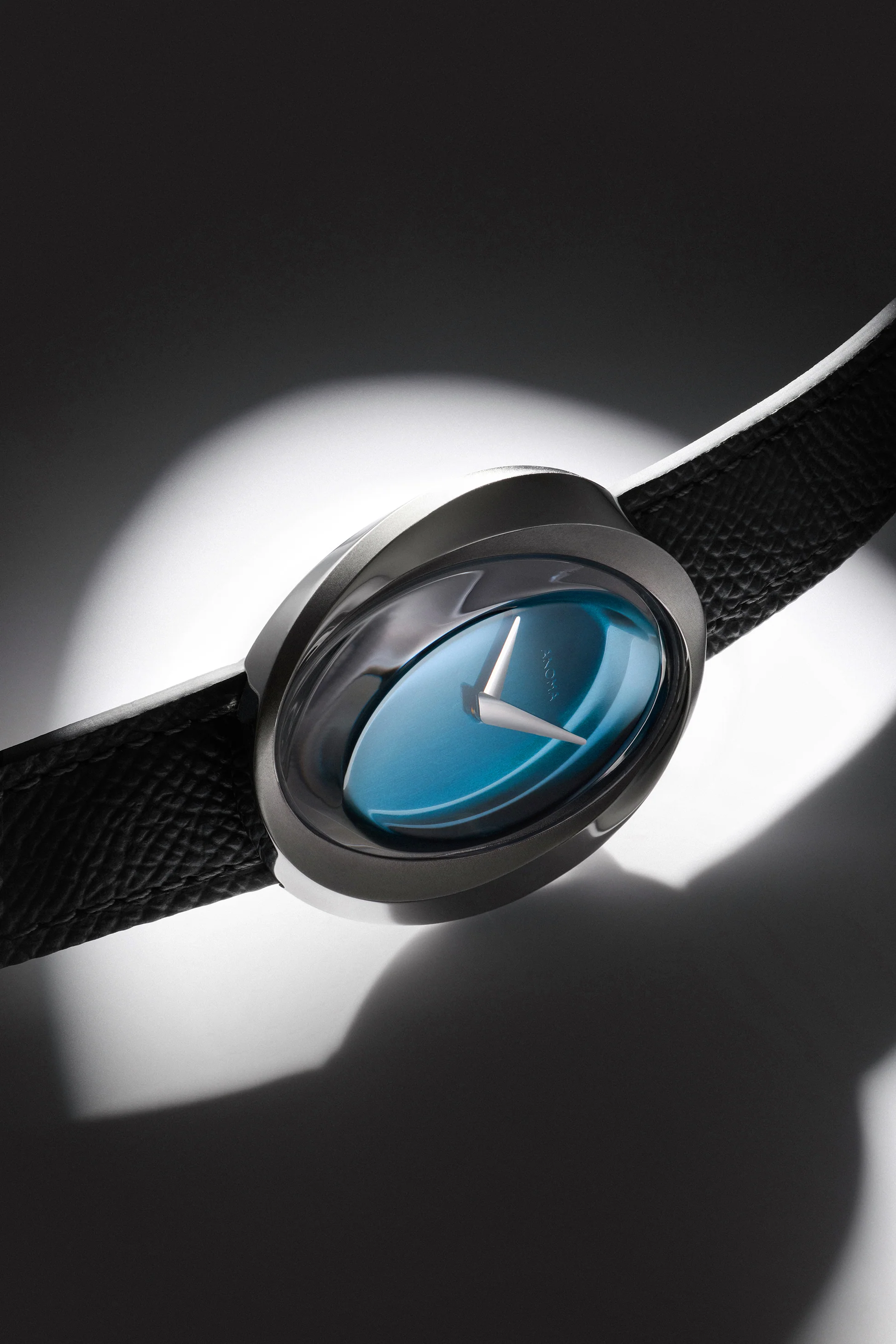
Anoma chose the manually wound La Joux-Perret D100 rather than repeating the automatic architecture used in earlier A1 models. That decision matters more than a specification-sheet upgrade. Removing an automatic rotor helps the watch remain 9.8mm thick despite the deep crystal, and daily winding fits the A2’s deliberate, object-like character. The official product page identifies the D100 but does not state a power reserve. Several dated independent reports list approximately 50 hours, while one report calls the calibre D101. Chronolume therefore records D100 as the authoritative designation and leaves the reserve qualified rather than presenting an uncertain figure as fact.
The closest comparison is Anoma’s own A1. Both models start with a strong silhouette, but their visual logic differs. The A1’s triangular form is read almost immediately as a boundary around the dial. The A2 is less stable: one side appears to rise while the other falls, and the counter-twisting crystal changes which edge feels dominant. That makes it less graphic and more sculptural. It also places the A2 within a wider revival of shaped watches without simply imitating a historic rectangular or oval case. Chronolume’s essay on asymmetric watch design offers useful background on why visual balance does not require mirror symmetry.
Price and availability require careful reading. Anoma’s official page opened the first order window from 26 November to 3 December 2026 and promises April 2027 delivery. The verified European storefront displayed £2,880 with taxes included during this review, while dated launch coverage consistently quoted £2,400 excluding taxes and duties. These are not competing conversions: they describe different tax presentations. The A2 is described as a core model rather than a numbered limited edition, but batch ordering means access is still time-bound.
The A2 succeeds as a design proposition because its movement, dial and ergonomics support the case instead of distracting from it. A busier display, protruding crown or automatic rotor could have turned the Möbius idea into a styling exercise. Anoma instead accepts the practical limits of a two-hand watch with no minute track and makes thinness, changing reflections and the act of winding part of the experience. Whether that trade is worthwhile depends on the reader’s priorities, but the answer to the opening question is coherent: the Möbius strip becomes wearable by being edited, not merely miniaturised.