Release Archive
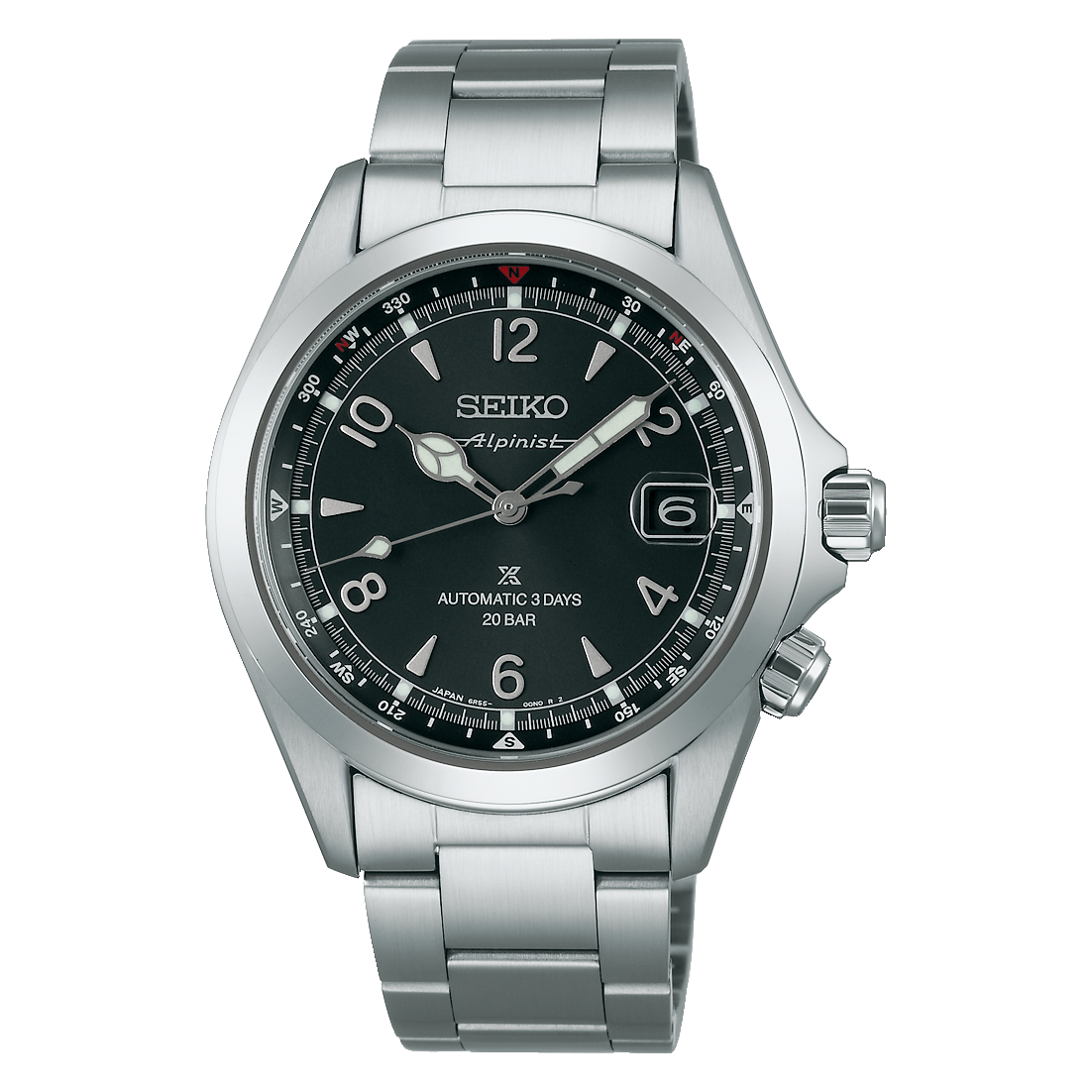
Seiko Alpinist SPB503, SPB505 or SPB507: choose the strap before the dial
Compared at Dutch list prices: €100 and 59 g separate the supplied configurations. What changes—and when the GMT earns its extra thickness.
- Release date
- Unknown
- Source published
- Not verified
- Added to Chronolume
- 2026-10-14
- Article published
- 2026-10-14
- Research checked
- 2026-11-03
Chronolume · Source-based comparison · Research checked 2026-11-03
Save this watch to revisit later.
Official specifications and photographs checked 3 November 2026; Chronolume calculations. No hands-on review. Prices labelled as Dutch list prices.
The analysis
The black, teal-blue and green Alpinists share their principal case and movement specifications. The more consequential difference is the complete configuration you buy. Seiko’s Dutch listings put the bracelet-equipped SPB503 and SPB505 at €1,080 and 147 grams, against €980 and 88 grams for the green SPB507 on leather. This is a comparison of fittings as well as colour.
What is genuinely shared
All three official pages list a 39.5 mm case, 46.4 mm lug-to-lug length, 12.7 mm thickness, calibre 6R55 and approximately 72 hours of reserve. Each has sapphire with a date magnifier, a rotating compass ring and a 200-metre rating. Choosing green does not mean accepting a lower movement specification; choosing a bracelet does not increase the stated reserve.
References compared
The table highlights differences; shared specifications are covered in the text. Prices retain their stated region and date.
| Reference / configuration | What changes | Source |
|---|---|---|
| SPB505J1 |
| Seiko official SPB505J1 product and Alpinist collection pages ↗ 2025-11-01 |
| SPB507J1 |
| Seiko official SPB507J1 product and Alpinist collection pages ↗ 2025-11-01 |
| SPB503J1 |
| Seiko official SPB503J1 product and Alpinist collection pages ↗ 2025-11-01 |

The €100 question
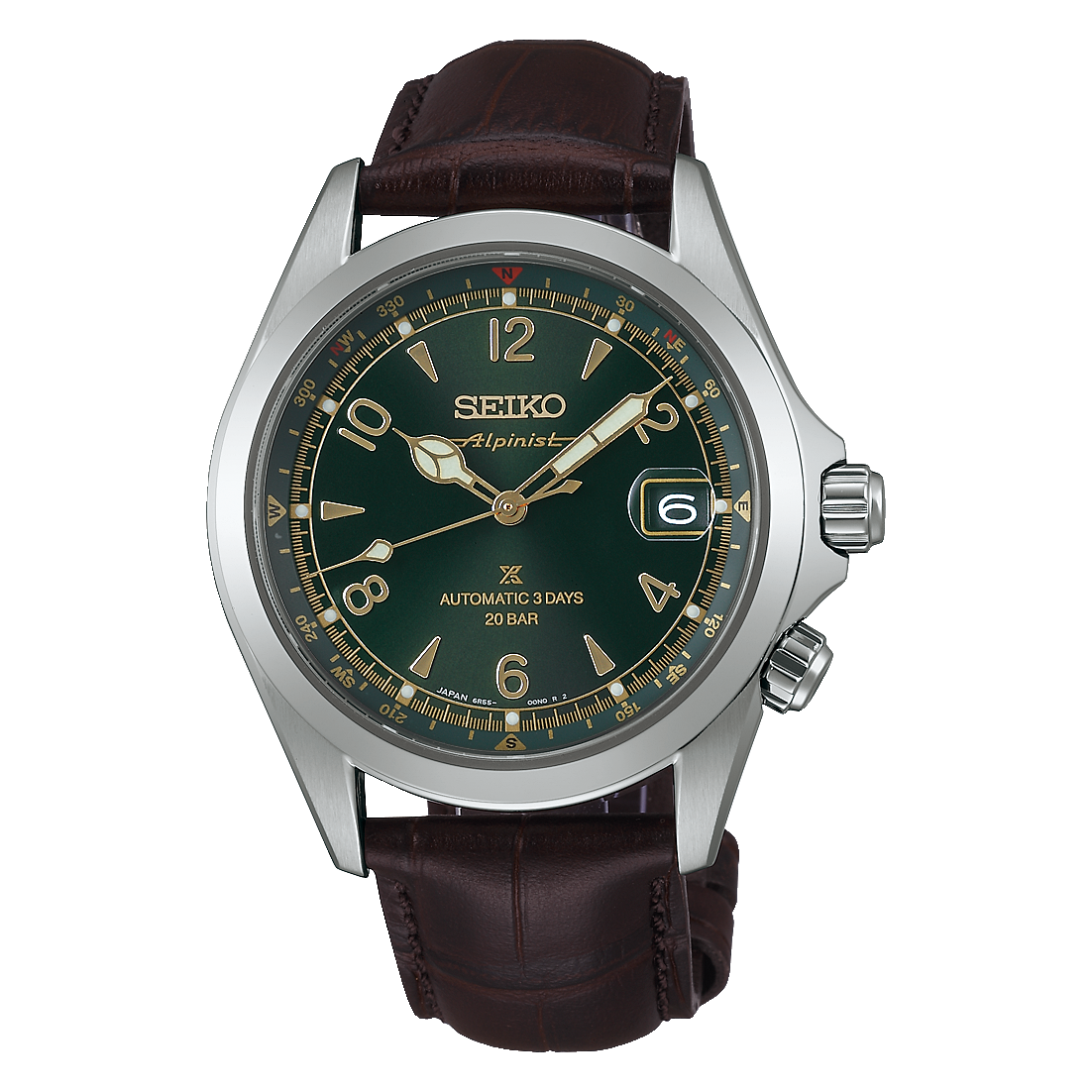
The two bracelet references are €100 above the leather configuration at the Dutch list prices checked on 3 November 2026. That difference is not a standalone bracelet price. The dial, handset treatment and supplied band change together, and a dealer discount could change the comparison. Request the price of the exact reference rather than subtracting catalogue figures to estimate a component’s value.
Why the 59-gram difference deserves attention
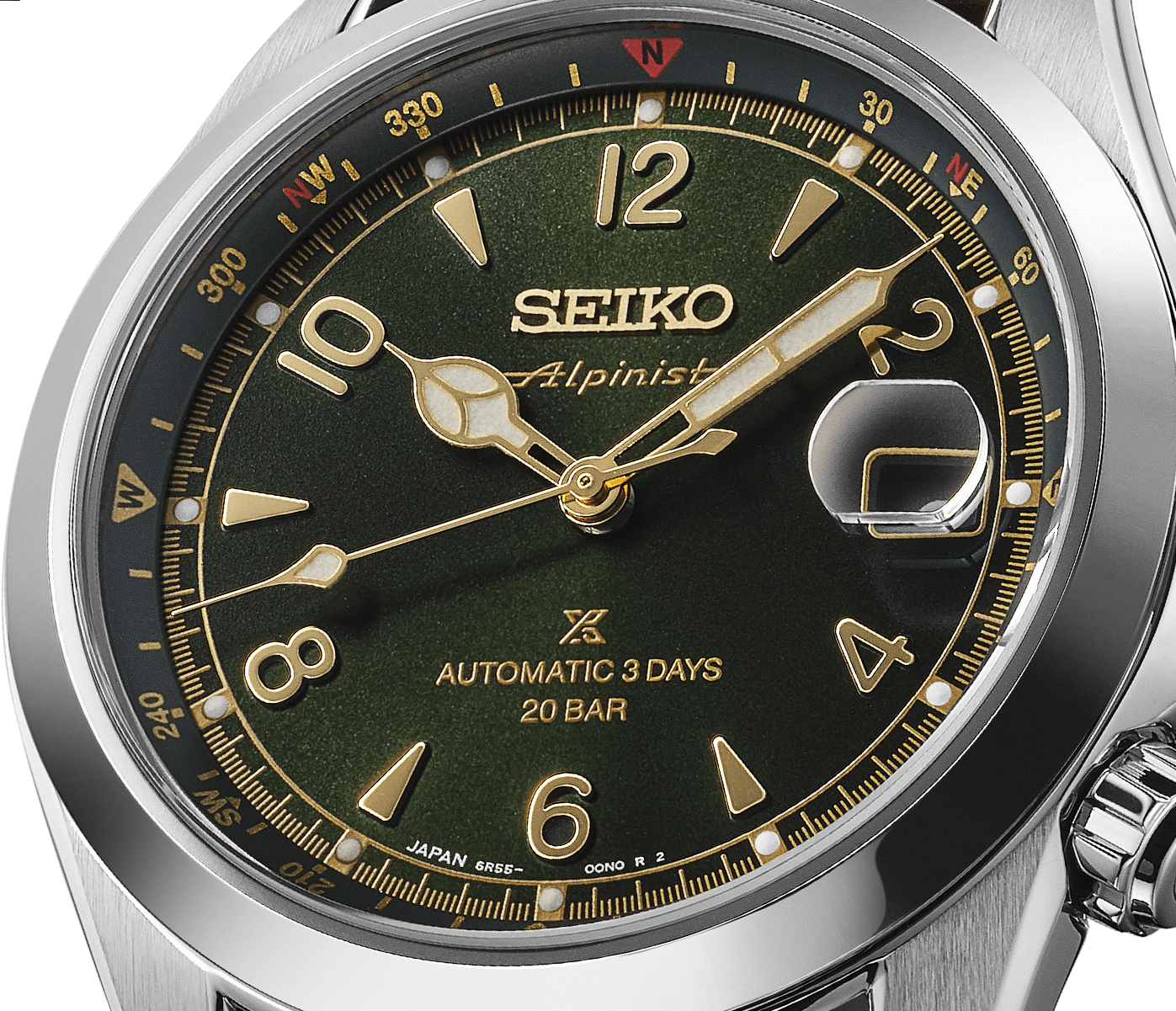
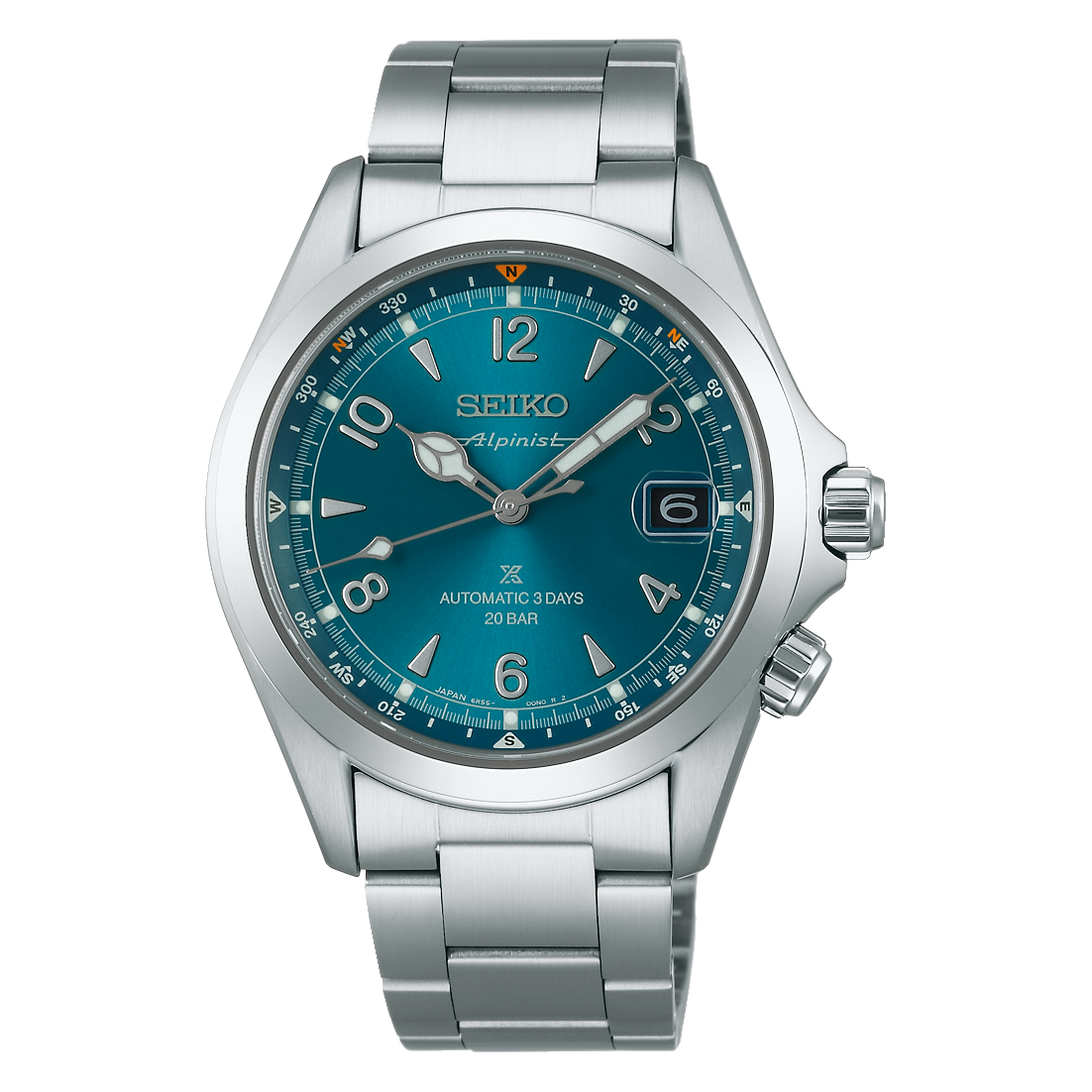
The difference between Seiko’s complete configurations is about 40 per cent of the listed bracelet-watch weight. It is a reason to try both formats even if you initially think the decision is only between green and blue. It does not establish comfort: bracelet sizing, leather stiffness, clasp position and your preferred tightness still need checking.

Bracelet first, colour second
If a steel bracelet is a requirement, SPB503 and SPB505 are the closest comparison. Their shared specification sheet lets you concentrate on colour and contrast in the supplied photographs. Teal-blue makes colour more prominent; black gives the surrounding steel and pale markings more emphasis. Choose the display you can read clearly under the lighting in which you use a watch, rather than relying on a studio image.
Green is a complete visual package
SPB507 combines green, warm dial details and brown leather. Its appeal comes from that relationship, not simply from placing a green circle inside the same case. A strap change can alter the effect substantially. If you intend to replace the supplied band immediately, compare the whole cost with the ready-made bracelet alternatives before deciding that the lower list price is a saving.
What the water-resistance number leaves unresolved
A case rating and a band choice answer different questions. The common rating does not make leather behave like steel in repeated wet use. Before choosing a watch for swimming or frequent soaking, follow the manufacturer’s instructions and consider the exact band. A separate water-tolerant strap may suit your routine, but its compatibility and cost need checking.
Does the GMT solve a problem you actually have?
Seiko’s SPB377 GMT uses calibre 6R54 and adds a 24-hour hand. Its official dimensions keep the 39.5 mm diameter and 46.4 mm length but raise thickness to 13.6 mm: 0.9 mm above these three-hand models. If you track another time zone, the extra indication has a purpose. If you mainly want the Alpinist’s case and compass-ring design, it adds another thing to read without answering a new need.
A useful order for trying them
First compare the side profile and how the lugs sit, then decide whether you want a bracelet’s weight and adjustment. Look at the date magnifier from your normal reading angle. Finally compare dial colours in diffuse and direct light. That order keeps an attractive photograph from making the fit and band decisions for you.
Our decision guide
Choose SPB503 or SPB505 if the supplied bracelet is part of the attraction; compare those two on dial preference. Start with SPB507 if you want the green-and-leather package or lower listed weight. Consider the GMT separately when its second time-zone display earns its extra thickness. These are personal-choice criteria, not a claim that one reference is objectively superior.
Evidence and limits
Specifications and Dutch prices were checked against Seiko’s official pages on 3 November 2026; GMT dimensions come from its UK page. These are not confirmed Belgian checkout prices or stock. Weight differences use manufacturer figures for complete watches. We have not worn or measured these examples, or independently tested accuracy, lume or comfort.
At a glance
| Movement | 6R55 automatic, hand-winding possible |
|---|---|
| Power reserve | 72 hours |
| Diameter | 39.5 mm |
| Thickness | 12.7 mm |
| Water resistance | 200 m |
| Crystal | Sapphire with date magnifier |
| Feature | Rotating inner compass bezel |
| Original availability | November 2025 |
| Lug-to-lug | 46.4 mm |
| Source price region | Netherlands; checked 3 November 2026 |