Design & Culture
Where the minute hand lands: six ways to design the edge of a dial
From a Lebois chronograph’s coloured scales to ATOWAK’s wandering hour, the edge of a dial determines how we find the minute.
- Release date
- Unknown
- Source published
- Not verified
- Added to Chronolume
- 2026-11-29
- Article published
- 2026-11-29
- Research checked
- 2026-11-29
Chronolume · Source-based analysis · Research checked 2026-11-29
Save this watch to revisit later.
Compared six official front views by tracing the minute indication against the surrounding scales. No wrist testing or timed legibility trials were conducted.
The analysis
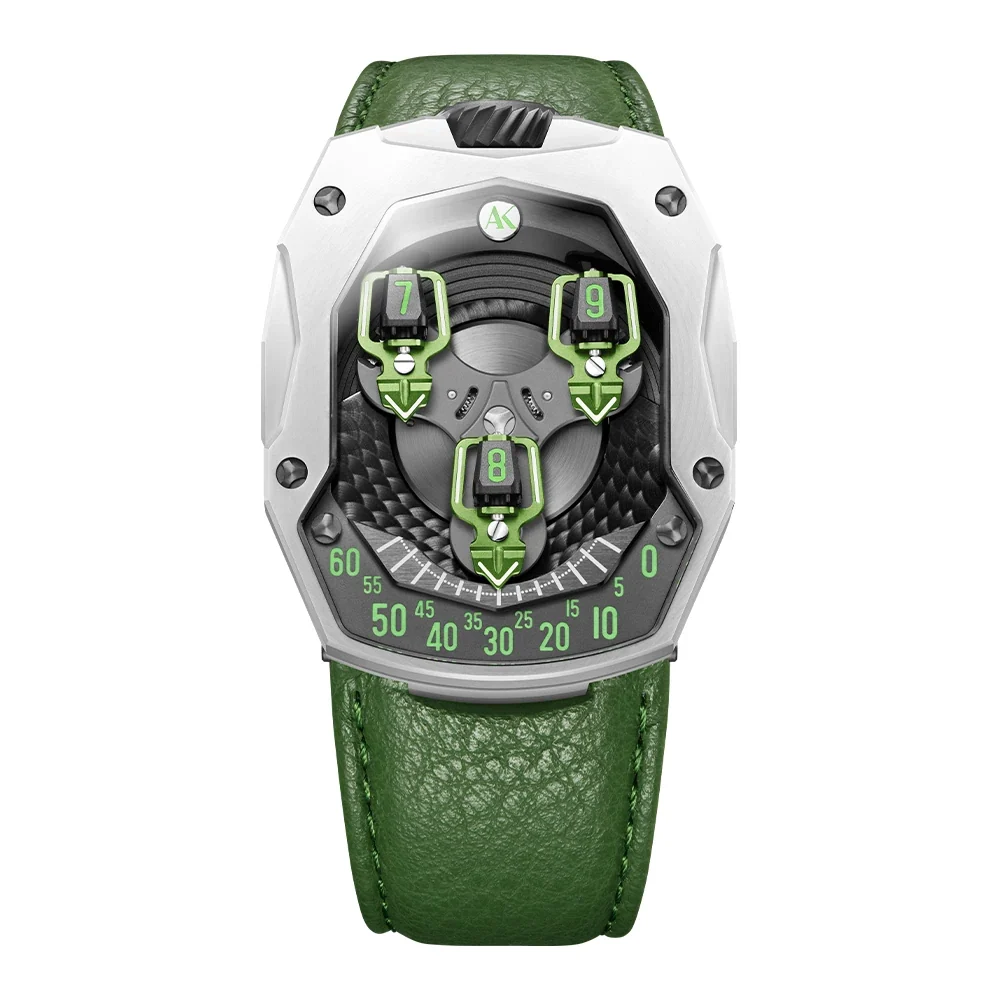
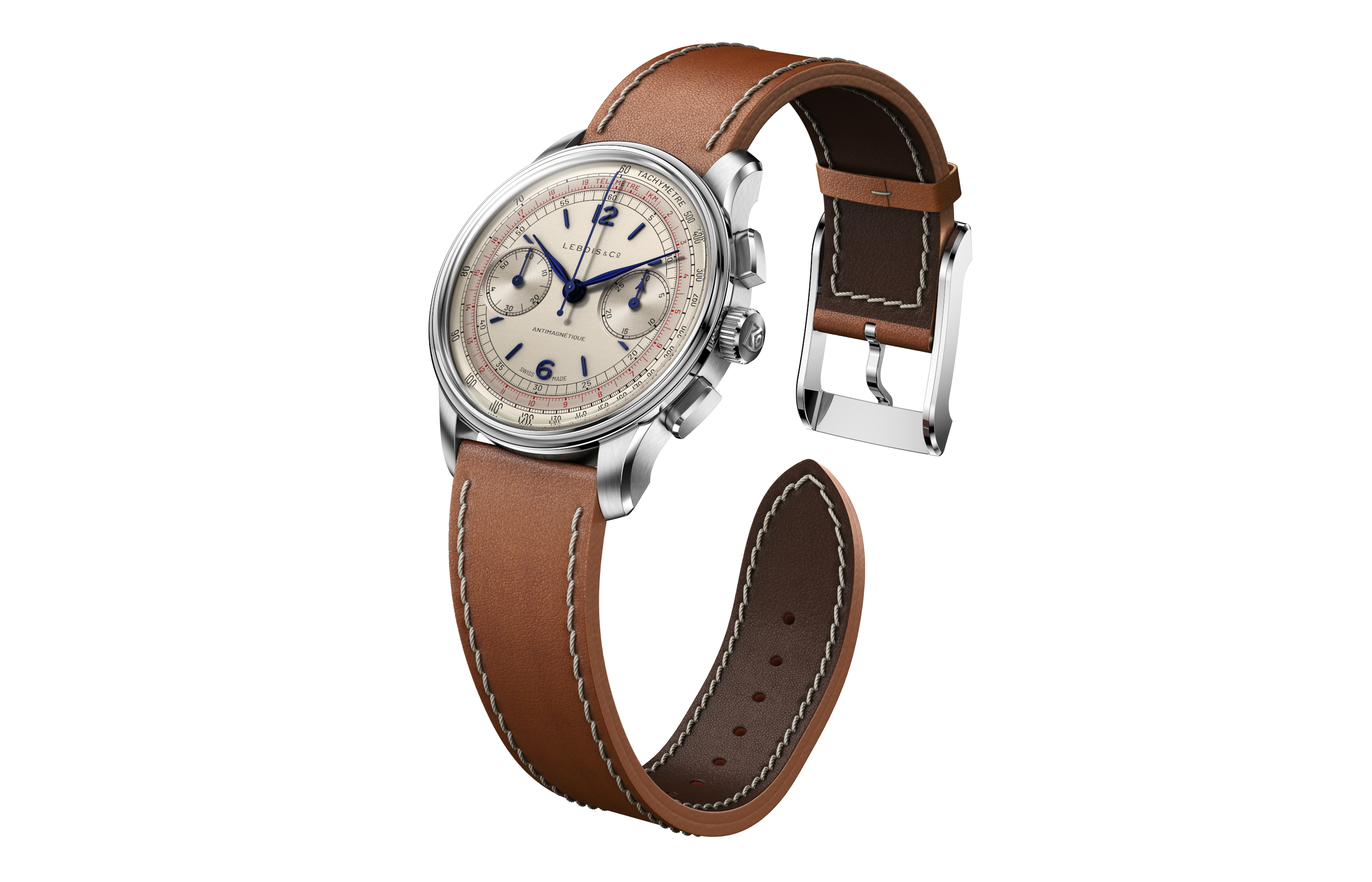
Cover the centre of the Lebois chronograph in the photograph and look only at its rim. You can still tell that this is a measuring instrument. There are numbers to land on and intervals to count. Now try the same exercise with the Anoma. The most interesting thing left in view is a boundary that seems to turn as it goes around the watch. Both designers have spent considerable attention on the last few millimetres of the dial. They have given that space entirely different jobs.
On the Lebois, the edge is where a hand becomes a pointer. Follow the long central chronograph hand outward and its position acquires meaning from the scale under its tip. The blue tachymeter and red telemeter let one moving part address two different questions. A buyer need never time a kilometre to appreciate the graphic ingenuity. The cost is visible too. Concentrate on one coloured track and its neighbour becomes interference. The hands can stay admirably simple because the reader does some of the sorting.
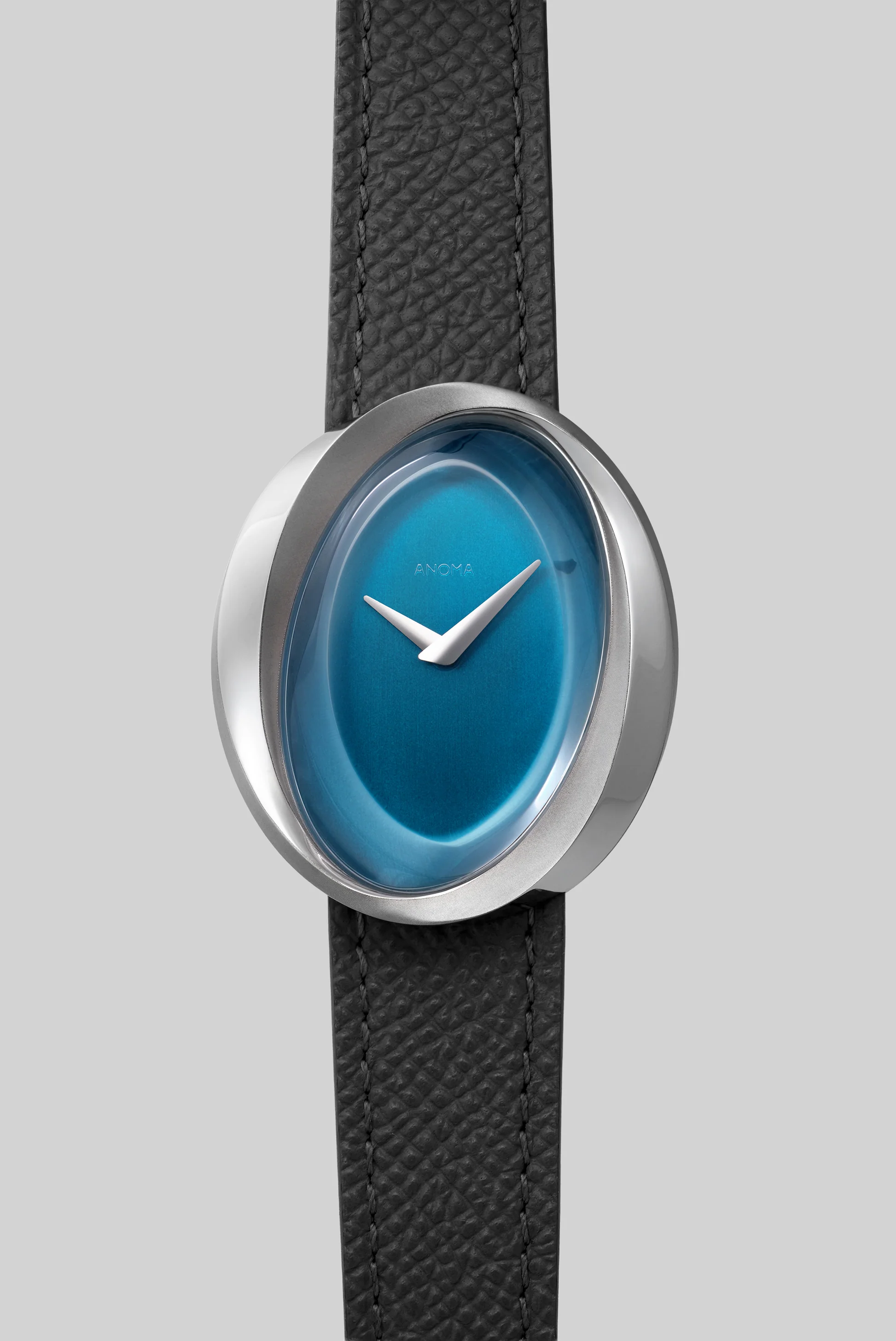
The Anoma A2 offers a particularly good counterexample. Its two hands travel over a field of teal with no printed minute track to catch their tips. Reading a time between the familiar quarter hours involves estimating an angle against an irregular silhouette. In exchange, the eye can follow a highlight across the case and crystal without meeting a row of marks that insists on a flat circular dial underneath. Add a perfectly ordinary railway track in your imagination. It would offer a useful reference and undo some of the very uncertainty the case was designed to produce.
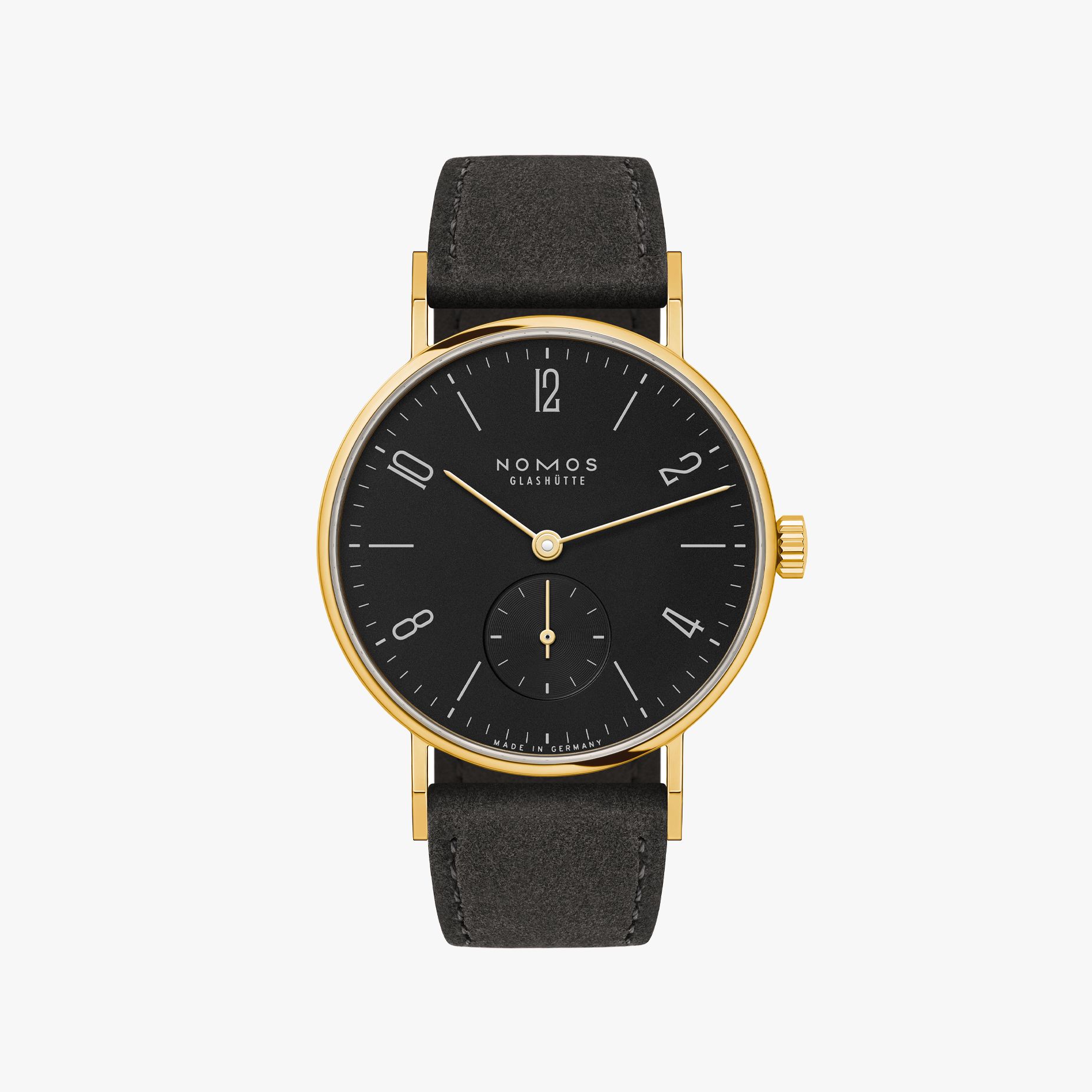
The black NOMOS Tangente gives us a control for that experiment. Here the straight hands, spaced numerals and marks around the circumference establish a geometry that can be grasped even with part of the face obscured. The minute hand has somewhere specific to arrive. The little seconds display has a smaller territory of its own. This division matters more than the simple count of things on the dial. A separate moving hand can make a watch easier to parse if its range is confined to a place where you know to look for it.
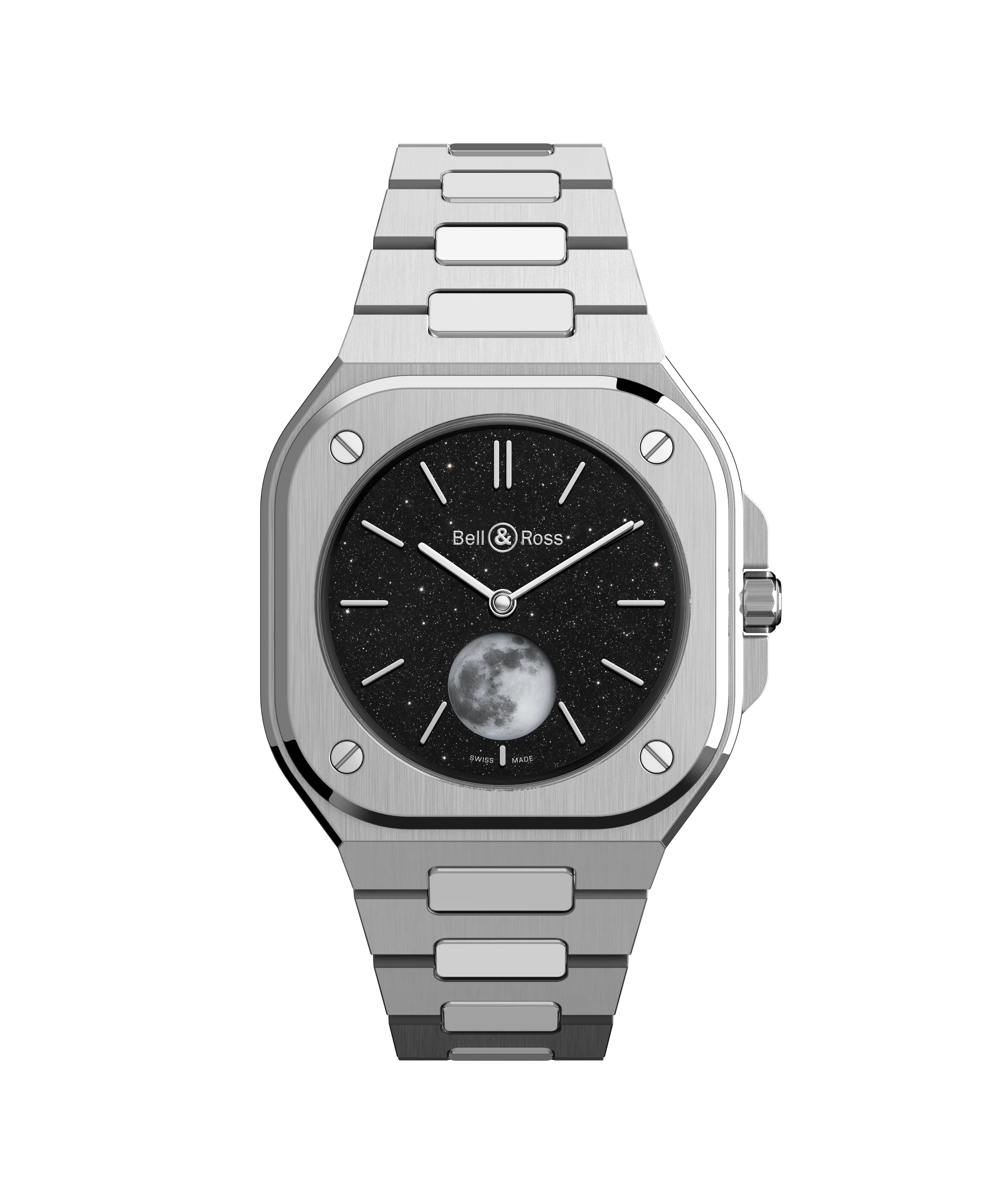
Bell & Ross puts a round dial inside the softened square of its BR-05 Moonphase. Compare the outside corners with the arc swept by the minute hand. The corners give the case a strong orientation, while the circular track supplies the scale the hand actually needs. The moon display has its own outline inside that arrangement. There are several shapes available to the eye, yet the hand that tells ordinary time never has to negotiate a corner. This is a neat solution to a problem that a photograph taken straight on makes especially easy to see.
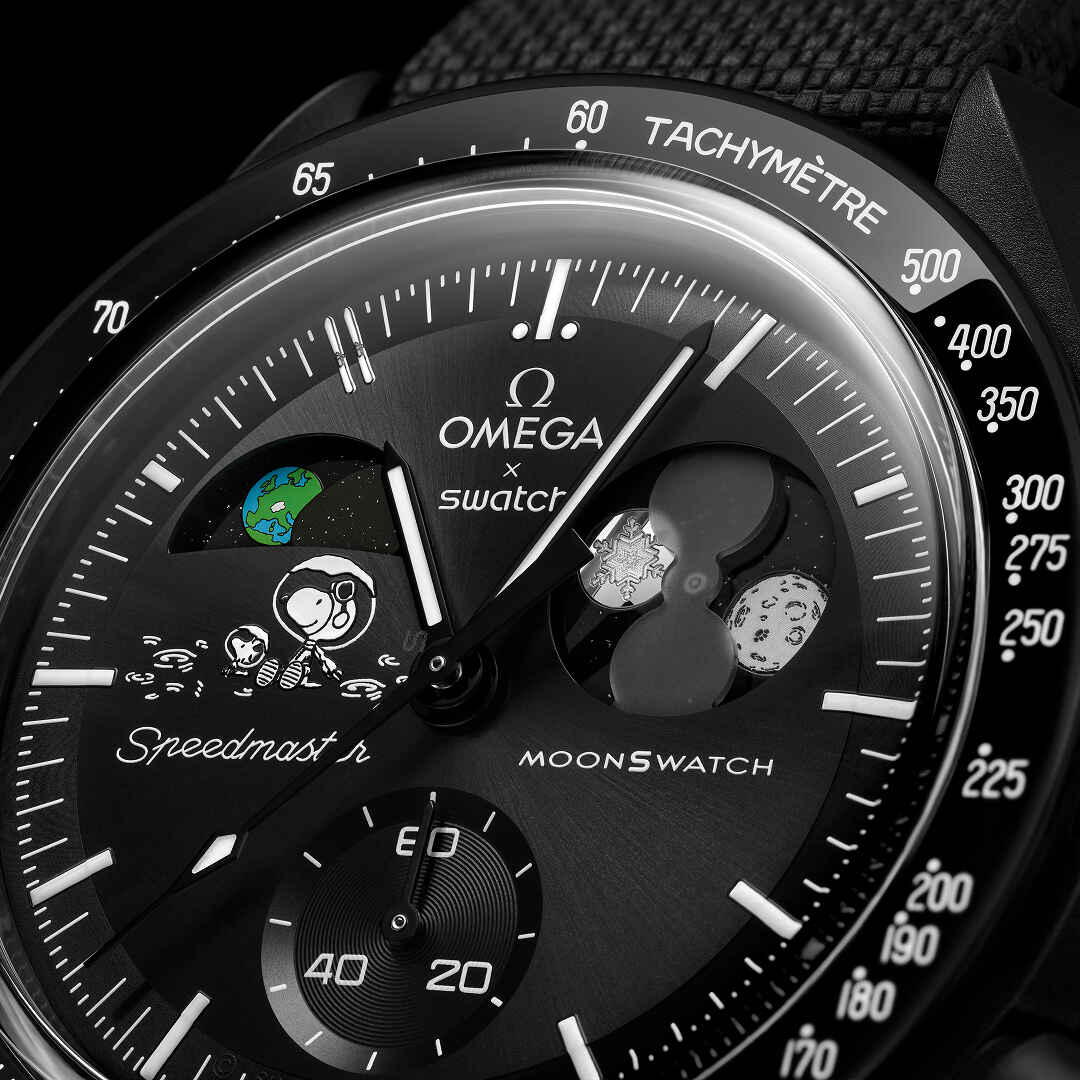
On the Silver Snowflake MoonSwatch, it is tempting to go straight to Snoopy or the engraved moon. Look outwards instead. The tachymeter on the bezel moves one whole set of numbers beyond the dial, leaving the interior to accommodate hands, registers and the two celestial displays. A larger field of printing has been split by a physical step. The step gives the eye an escape route when the centre gets busy. It also makes clear how much of the personality would survive if the illustrated details were covered up.
ATOWAK turns the relationship around again. On its Cosmofleet Ascent a wandering hour travels along a sector of minutes. To read it, find the active hour and follow its position on that short stretch of track. Most of the perimeter can be ignored. A photograph freezes the mechanism, which makes it a useful teaching aid but a poor test of how quickly a newcomer could read the moving display on a wrist. What these six pictures can establish is something narrower. Trace the end of the part that gives the minute and see what it meets. A scale, an empty field and a short arc each ask a different kind of attention from the person wearing the watch.