Release Archive
Krayon x PAC-MAN: when the game becomes the time display
The arcade characters do functional work: this is a change in the language of the sunrise display, not merely a logo on the dial.
- Release date
- Unknown
- Source published
- Not verified
- Added to Chronolume
- 2026-11-11
- Article published
- 2026-11-11
- Research checked
- 2026-11-11
Chronolume · Source-based analysis · Research checked 2026-11-11
Save this watch to revisit later.
Desk-based reading of manufacturer material and visual inspection of official images. No handling, measurements or interviews. Original announcement dates retained; availability and pricing omitted. Expanded on 11 November 2026 after checking official PAC-MAN material. Explains visual hierarchy, individual compositions and contrast with Magnolia, without implying an electronic game or tested reading advantage. Existing imagery, metadata and credits retained.
The analysis
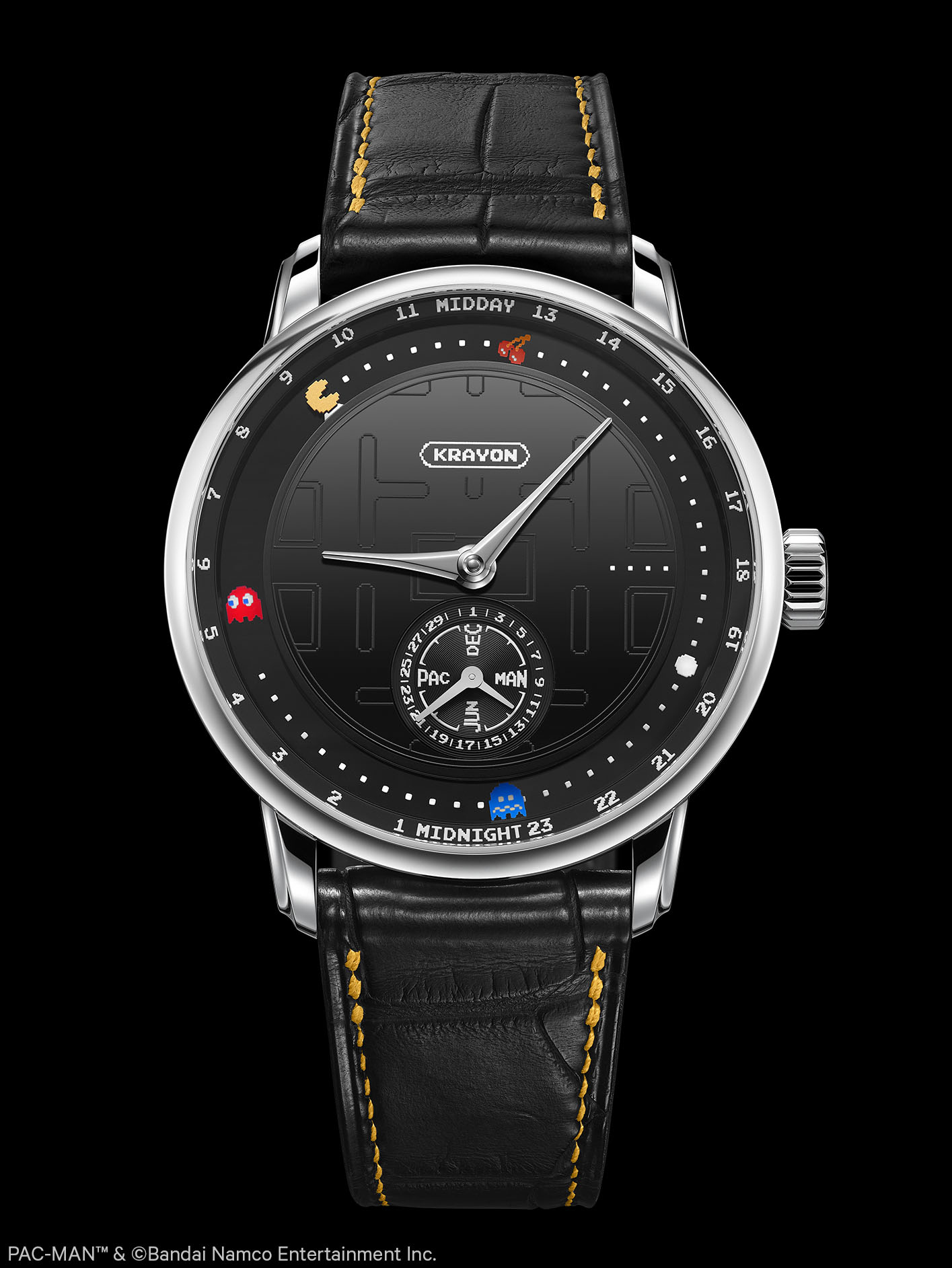
Most character watches ask a familiar figure to decorate an ordinary display. Krayon’s PAC-MAN series asks the character to help explain an unusual one. PAC-MAN travels around the 24-hour scale; a ghost’s eyes mark sunrise, while the large cookie marks sunset. Understanding the joke therefore also means learning the complication.
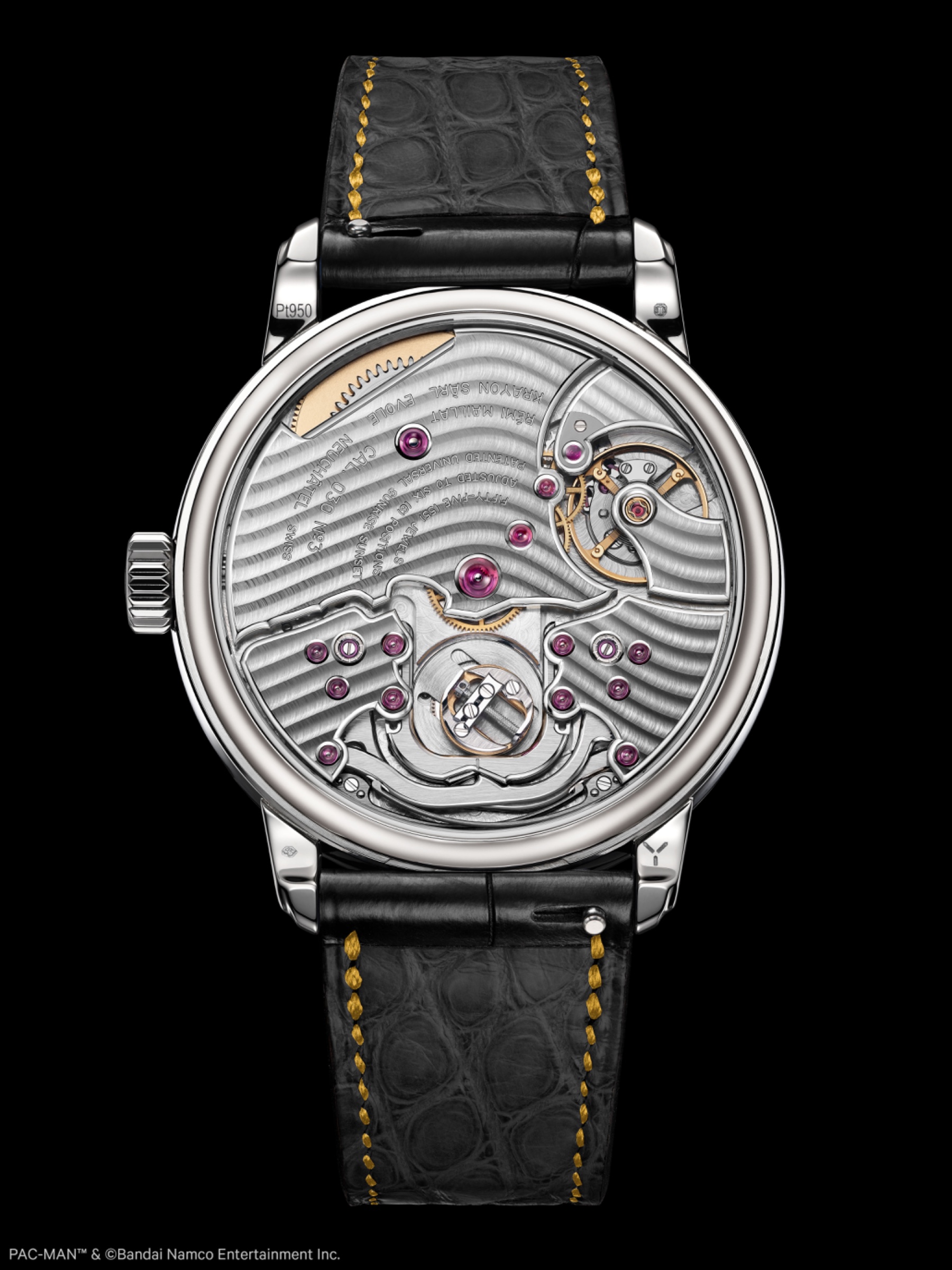
The manufacturer specifies 15 individually composed platinum pieces, each with a black onyx dial and hand-painted elements. The 39mm case houses the manually wound C030, with a stated 72-hour reserve. The central hands still provide conventional hours and minutes, so the playful peripheral display does not carry every time-reading task.
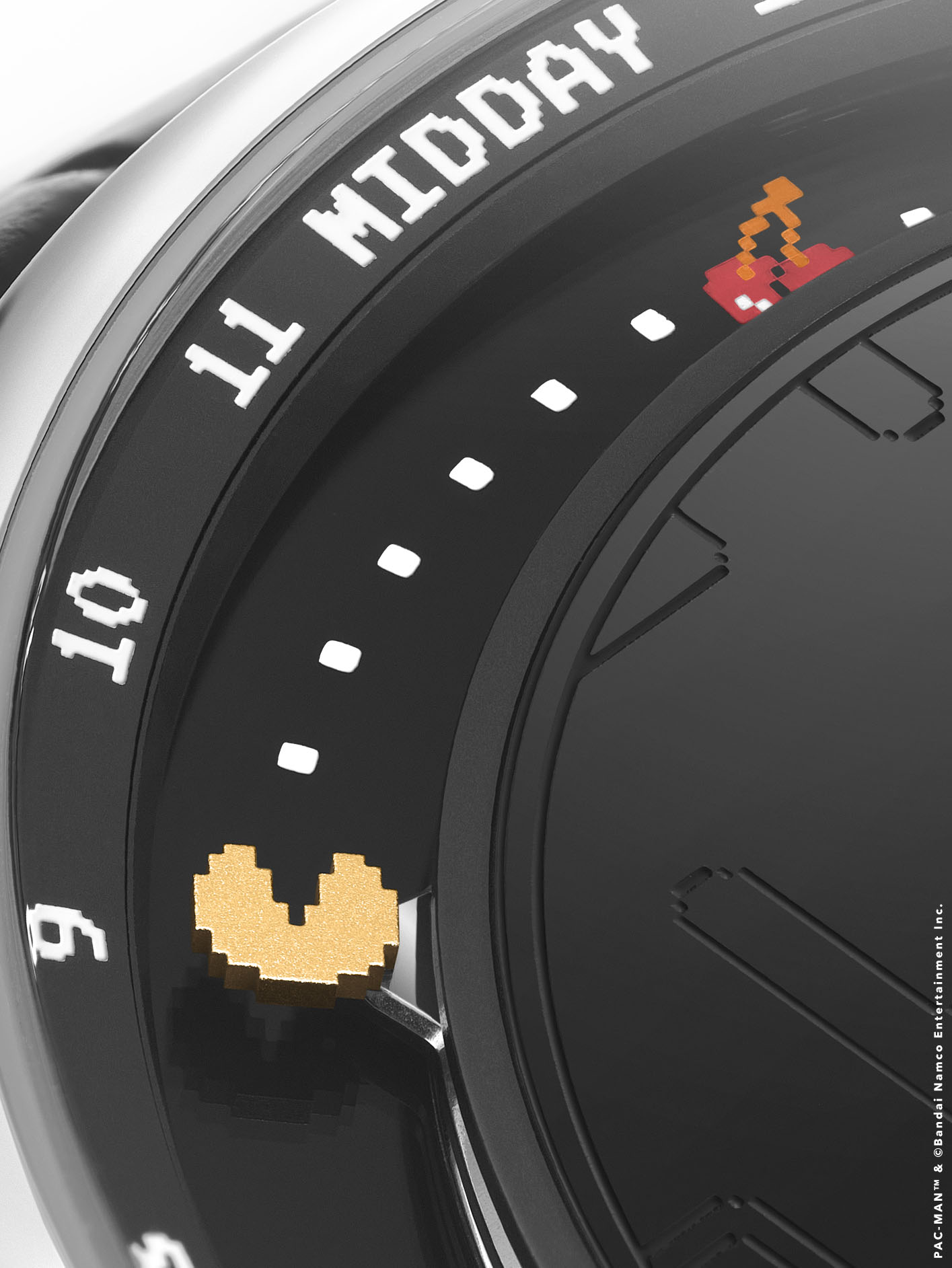
That separation is the interesting design decision. Familiar central hands establish an everyday reading, while the moving characters describe daylight. Whether this actually improves quick reading needs hands-on testing; official photographs establish the visual hierarchy, not its performance on a wrist.
The original press-release PDF is dated 23 March 2026. Krayon’s current press index transposes the PAC-MAN and Parhelion headings; the model-specific PDF is used here rather than treating this older announcement as new today.
The first thing to separate is the pace of the game from the pace of the watch. This is not an electronic game playable on the wrist. The characters translate a slow astronomical cycle into familiar symbols. That makes the reference more than a mascot applied to a conventional watch, but it also requires a new reading habit: the owner needs to learn what each character means in this particular mechanical setting.
The most useful comparison is with Anywhere Magnolia, where petals define the same sunrise-and-sunset subject. Magnolia makes the indication feel seasonal and contemplative; PAC-MAN supplies a sense of pursuit and changing modes. The underlying question remains similar: how much daylight is available for the chosen place and date? The cultural reference changes the emotional register of that information.
Black onyx provides a particularly deliberate background. It lets the bright characters stand apart rather than competing with a heavily textured field. In the official photographs, the central hands remain visually distinct from much of the game imagery. That separation matters because novelty can become tiring if every ordinary glance requires deciphering a complicated picture. Here, the more elaborate reading can be approached when the wearer has time to enjoy it.
The series also distinguishes an individual dial composition from a new mechanical model. Fifteen differently arranged pieces need not become fifteen unrelated stories. Their differences belong within the same account of how the display works. A prospective buyer should establish which pictured composition is attached to the actual offered watch; a representative photograph is not a promise that every character occupies an identical position on every example.
There is a useful limit to the nostalgia argument. Familiarity with a game can make a watch inviting, but it cannot establish finishing quality, ease of operation or investment potential. The appeal should survive a straightforward question: would the owner still enjoy reading this display once the first surprise has worn off? The answer will be personal, and it need not be justified by claiming that playfulness improves chronometric performance.
The watch is most convincing as an alternative language for an existing complication. It offers a reason to look again at sunrise and sunset, while conventional hands preserve a familiar way to read the immediate time. This analysis is based on Krayon’s documentation and photographs; it does not claim a wrist test or an independent assessment of the mechanism’s accuracy. Price and current allocation remain matters for direct confirmation.